Cadenza
Nudes? On the dangers of undressing our stars
On Wednesday, Oct. 7, 2015, full frontal nude photos of Justin Bieber hit the Internet. Snapped by an enterprising paparazzo, the photos showed Bieber on the deck of a villa in Bora Bora, where he was vacationing with model Jayde Pierce.
As you might imagine, nude photos of one of the world’s most visible and dissected celebrities arrived with a roaring fanfare. Men and women debated whether his penis was, in fact, big or small. Headlines urged readers not to view the pictures, which seemed ironic, given that those headlines brought the kind of attention to the photos they claimed to discourage. Bieber’s father weighed in: “what do you feed that thing. #proud daddy [flushed face emoji]” he trumpeted on Twitter.
This comes a little over a year after Celebgate, the last watershed moment in celebrity nudity. In August 2014, hundreds of nude photos, hacked from celebrity cell phones, caused an uproar on Reddit, due to the scale of the leak and high profile of its victims, including Kate Upton, Ariana Grande and Jennifer Lawrence.
Like the Bieber pictures, Lawrence’s inclusion in the leak sent brief but seismic shock waves through celebrity culture—rarely are stars of their caliber revealed so fully. The cult-like fan bases the two attract thrive, in part, on the mysteries these photos solved. When the distance between fan and idol disappears, what’s left?
This recent spur of intimate photos represents an inflection point in the history of celebrity nudity. For much of the 20th century, stars were able to use nudity as a strategy, appearing in racy films or magazine photo shoots as a means of deliberately altering or reinforcing their images.
Then came the sex tape, which brought viewers into Hollywood bedrooms. Rob Lowe and Tonya Harding were early victims of tape leaks, but the form didn’t take off until 1998, when a video of Pamela Anderson and then-husband Tommy Lee brought celebrity nudity into the digital age, achieving viral status before “viral” connoted Internet popularity.
From there, the floodgates opened. Some used sex tapes as promotional tools (Dustin Diamond, Tom Sizemore); many more fought to prevent their release (John Edwards, Jennifer Lopez). Scheming paparazzi took the next logical step, adding the up-skirt shot and “nip slip” to the sordid tradition of celebrity voyeurism.
Now, with the August 2014 iPhone leaks and Bieber pictures, celebrity nudity has landed in the free-for-all era, peeling back at new layers of privacy with less reticence than ever before. Nude photos of a major, global pop star would previously be met with a hushed titillation, passed around via message boards and cut-rate tabloid sites. Now, they’re plastered across the Internet, receiving attention from the likes of Salon, Slate and Vice.
Playboy shoots and sex tapes represented a kind of performance, intentional or otherwise. The performance has since been stripped away in favor of the informal. We’ve always enjoyed watching celebrities go about their daily business—the better to ground their aspirational lives in a recognizable reality—but there were limits, however slim. Those limits are quickly disappearing; everything is up for grabs.
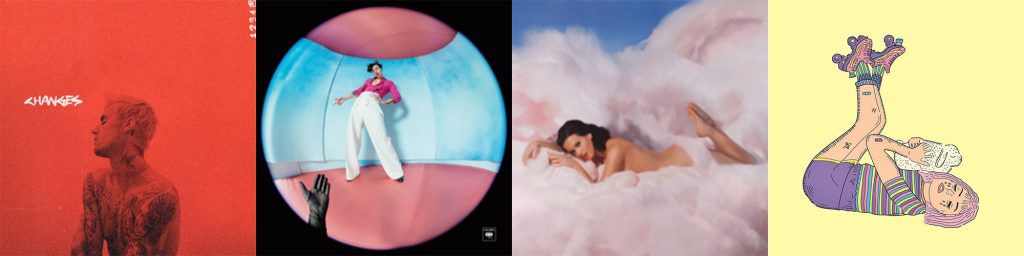
The question then becomes: How does this reshape our virtual relationships with celebrities? One might guess that, as less and less is left to the imagination, we’d lose the pleasures of constructed personas—that we’d no longer be able to treat stars as characters. And certainly, if someone like Beyonce were to fall victim to a nude photo or tape leak, the graceful perfection of her image would likely crack. But, on the whole, it appears we’ve simply learned to compartmentalize these violations: Celebgate seems to have receded into a mere footnote in Lawrence’s career, doing little to shake her perch among Hollywood’s elite. Bieber’s camp seemed relatively unfazed by the photos, steering attention towards his upcoming album by revealing its artwork two days later. And let’s not forget Kim Kardashian, who has become an industry unto herself since the seeming embarrassment of her sex tape with Ray J.
While it’s encouraging that celebrities don’t have to pay steep professional costs for unwarranted privacy violations, the speed with which we brush them off lowers the stakes of leaked photos and videos, creating an infrastructure for many more to come. Assuming the pace and scope of these intrusions does not subside, we’ll continue to face the tensions of celebrity voyeurism.
The appeal is obvious: Celebrities are beautiful and unknowable, due to the variety of fictional and non-fictional roles they inhabit. We delight in blending these personas to create idealized versions that suit our personal whims. The more information we can access, the more material we can use.
But are we obligated to draw any lines? If a photo has already leaked, what’s the harm in viewing it?
A lot, in fact. Leaked photos and videos gain resonance through views; if no one looks at them, they might well as not exist. We can argue that celebrities are fairly compensated for their loss of privacy through lucrative endorsements and labor contracts, but there must be limits to the solitude that can be bought. If not, the future of celebrity may resemble an Orwellian zoo of 24-hour access—in which case, we’ll have far more to worry about than grown men proudly tweeting about their sons’ junk.
Stay in Touch!
Get the latest and top news from StudentLife delivered to your inbox