Forum | Opinion Submission
Opinion submission: I’m a cultural anthropologist and I do rigorous scholarship

Danesh Temirbekova | Contributing Illustrator
You might think this statement is too banal to open an op-ed. But thanks in part to Chancellor Andrew D. Martin’s Report, it’s a very political claim these days.
Over the summer — a time when my colleagues and I tend to turn to our research, field sites, writing projects, and families — the Report on the State of Scholarship in the Humanities and Humanistic Social Sciences dropped. I, like my colleagues, was stunned when I read it.
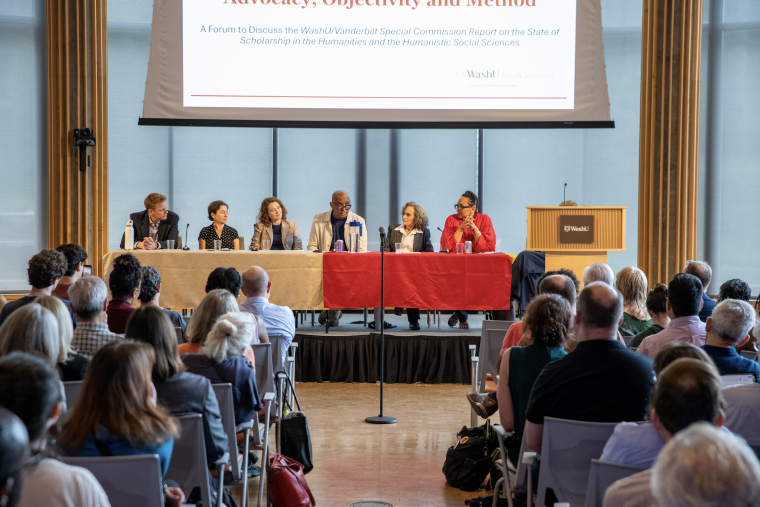
As members of last week’s Center for Humanities panel agreed, the report makes huge claims on little data. Among its many flawed assertions and seemingly biased analyses, it singled out anthropology as especially intellectually corrupted, unrigorous, and politically biased.
This is the very opposite of my experience with this scholarly community.
I chose to study cultural anthropology because of its intense methodological rigor, intellectual depth, and political and intellectual self-scrutiny. I chose it because of its longstanding ethic of questioning social reality and what it means to be human with an unflinchingly honest lens.
I fell in love with cultural anthropology as an undergraduate. The courses I took then taught me how to think critically, how to assess what is taken for granted, and how to imagine other ways of being. Anthropology is about unsettling norms, about turning careful attention toward what appears natural. This is also what makes anthropology dangerous to some.
Now, as a WashU-trained cultural anthropologist with an interdisciplinary focus, I have taken six semesters of graduate coursework, proposed and defended a research topic to a committee of expert scholars, conducted months of ethnographic and historical research, won external funding from one of the discipline’s most prestigious granting agencies, presented at conferences, developed four classes across a range of anthropological subjects (and taught or co-taught three of them), and written a seven-chapter dissertation with longstanding and intense analysis of my research, which I’ll defend this spring. This is what getting a Ph.D. in anthropology looks like for many of us — I am far from unique.
Our work requires rigor. To understand the depth of this rigor requires an understanding of what ethnography is — our primary method. Cultural anthropologists talk to people. We identify a population of people that our research is about, and whose experiences matter for answering our research question. We do this with careful scrutiny and peer feedback, assessing if our questions are, indeed, questions (rather than theses), and if they are answerable.
When we get to our field sites, we practice participant observation — observing how people go about daily life and activities, often by their sides. We do participant observation for weeks, months, and years, taking notes along the way, and asking lots and lots of questions. We conduct formal and informal interviews individually and in groups, often building months long or years long engagement with our research participants. How many interviews we conduct ranges from dozens to hundreds. For me, I conducted 68 interviews, a low estimate, and developed close relationships with 22 people over three to four years. I “observed” hundreds of others.
Once we get back from the field, we analyze. We interpret our data — our reams of notebooks, recordings, photos, books, artifacts — and iteratively ask “Does my interpretation hold up?” And “What else could explain this?” This qualitative analysis often looks like typing up notes, tagging them with interpretive themes, seeing how themes emerge across areas of data, and reiterating again and again. While the brunt of my research concluded in 2024, I still reach out to my interlocutors to make sure I’ve got the facts straight.
Our analysis, being qualitative, is based in writing. We work with each other in workshops, defenses, conferences, papers, seminars, discussions, and colloquia to evaluate our interpretations. We evaluate with harsh exactness how the data substantiates the interpretive claim and what data interrupts that interpretation. We continually ask ”Are these the right questions to ask?”
This is the definition of rigor — strict analytical precision.
Anthropologists seek to understand how people think and the social worlds they build. My years long research took me to a place I wasn’t from, to people I didn’t know before, and to ideas that were entirely new to me. I built my dissertation arguments through an analysis of their life experiences and family histories.
Again, I am far from unique. This is what anthropology looks like.
Our work is threatening to many people, especially those who want the social world and its norms to remain unscrutinized, or those who are uncomfortable with ambiguity or unsettling truths.
Scrutinizing social worlds requires flexibility. This is because social worlds are multifaceted, at times self-contradictory, and constantly evolving. And, as researchers, we are part of the social worlds we examine, even if distantly. Our flexibility is what makes our method robust. I’ve talked about participant observation and interviews, themselves flexible methods, but there is so much more that falls under the umbrella of anthropological research. We conduct surveys, record conversations (with permission), take photos, encounter artifacts, read histories and other cultural analyses, self-assess, and more. And this doesn’t even begin to mention the rich methodologies of my colleagues in the other subdisciplines of our field — archaeology, biological anthropology, and linguistics.
I am nearly finished with my Ph.D. dissertation edits and am preparing to defend it. Like one of the guiding principles of last week’s panel — to begin a conversation — I invite anyone who wants to better understand the rigor of cultural anthropology to attend a Ph.D. dissertation defense, which are generally open to the public. You’re welcome to come to mine.
Stay in Touch!
Get the latest and top news from StudentLife delivered to your inbox