Forum
Be mindful of buzzwords and appropriated language
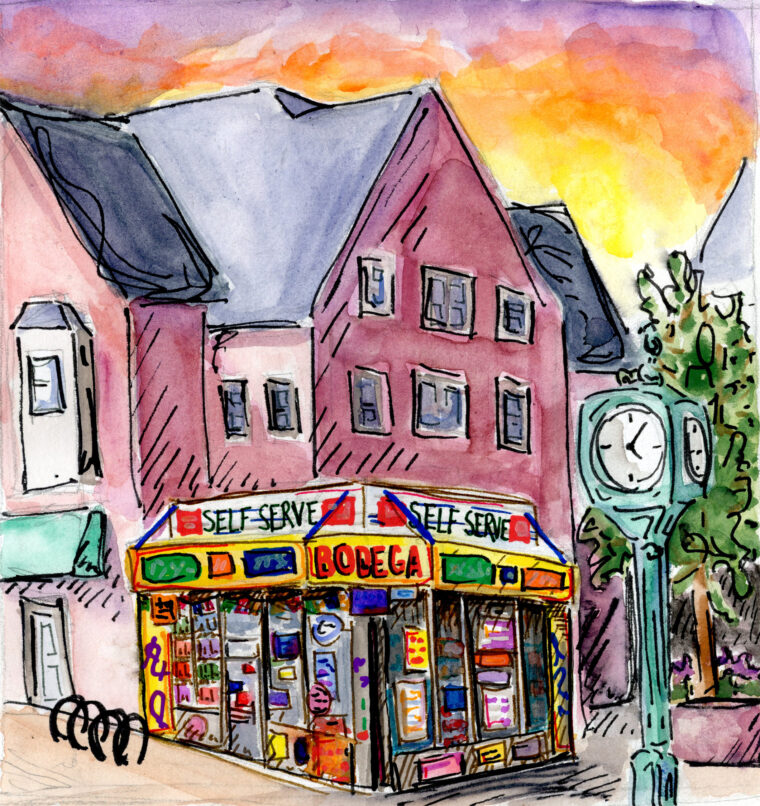
Leah Niebuhr | Contributing Illustrator
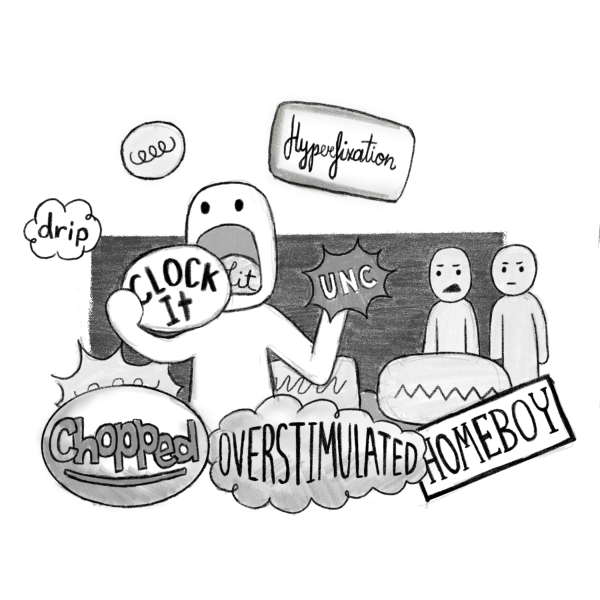
When was the last time you described yourself as “overstimulated” when too many people were talking at once? How often do you use or hear the words “chopped” or “unc”?
We have a language problem. Social media and artificial intelligence have allowed individual instances of appropriation and misunderstanding to proliferate on an unprecedented scale. People our age use words and phrases without knowing their origins or true meanings, and that has deep implications for our ability to communicate, our relationships with one another, and what we consider “valuable” or “intelligent” language.
Incorrect use of terms related to autism — the internet’s current DSM-5 item of choice to water down — is one category of this problem. The aforementioned “overstimulated” joins “hyperfixation” and “going nonverbal” among the words we use to describe the neurotypical experiences of getting overwhelmed, enjoying something, and not having anything to add to the conversation. The same problem lingers with OCD (“I’m such a neat freak, I’m a bit OCD”) and ADHD (“I’m all over the place, I’m so ADHD”), though people have more thoroughly exhausted these misuses, and it may be less socially acceptable to drop them into conversation.
Another example of misused language is the appropriation of African American Vernacular English, or AAVE, and Black culture, which non-Black people have rebranded as Gen Z lingo. Terms like “clock it,” “drip,” “homegirl” or “homeboy,” “lit,” and “unc” (and the list truly goes on) are treated as new productions of the TikTok machine although their histories and meanings go way back. AAVE as a grammatical structure dates back to the time of African enslavement in America. Not only do we misuse and misattribute them, but we rotate through and discard them like any old buzzword on social media, making meaningful cultural and conversational terms into supposed old news.
It is essential that we retain the ability to communicate clearly and be able to trust that we know exactly what we are saying. It can be easy to discount words when we so easily and quickly move back and forth between whatever our feeds bombard us with. But as the digital age accelerates microtrend cycles to unprecedented speeds, we cannot let the way we speak and write become incoherent and rash.
The influence of AI large language models is beginning to appear in our speech and writing, making it all the more urgent that we examine what may seem like microscopic effects on, ultimately, the way we think. As one of the primary modes of communication, language serves our pursuit of unity with one another. We cannot afford thoughtlessness in this realm.
Get curious about the words you see online and hear in daily conversations with your peers. Do a little search when you hear an unfamiliar term. Listen to people who know what they’re talking about. Read. Write. And know that no one in today’s world is immune to the disease of insensitive and incorrect language, but we can take steps to identify and combat the symptoms.
Stay in Touch!
Get the latest and top news from StudentLife delivered to your inbox