Forum
The new Bear Bodega is anything but a bodega
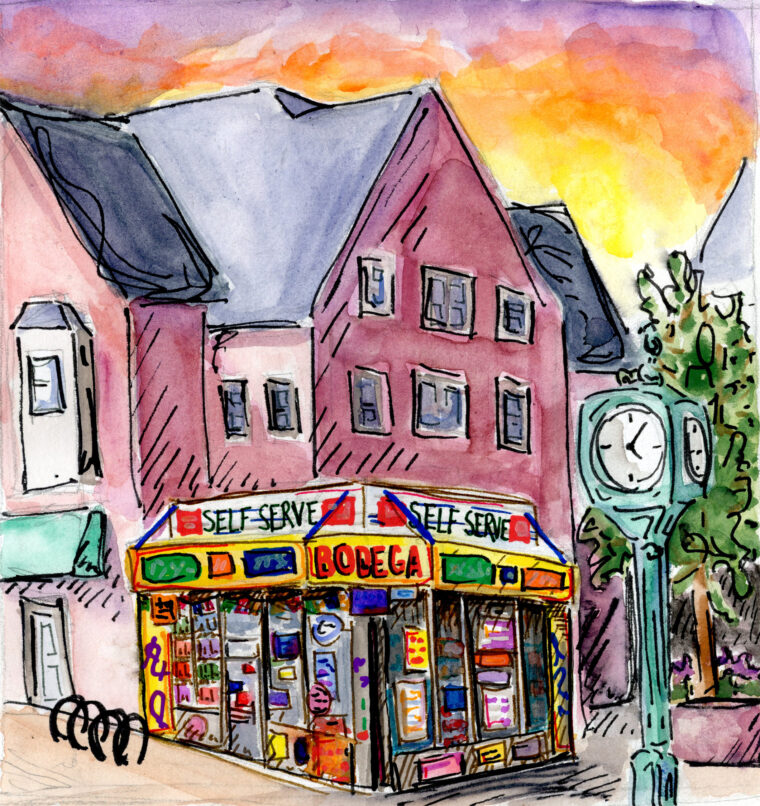
Ella Skye Heisel | Staff Illustrator
The other day, walking to my 10 a.m. class, I saw the new plastered vinyl stickers next to Ursa’s Fireside calling the new 24-hour convenience store the “Bear Bodega,” I was confused. I had heard lots of rumors about the store, but never once heard of its name. Using the word “bodega” to describe this new convenience store contributes to the erasure of Caribbean culture and traditions.
The word bodega originated in Spain during the 1800s and was first used to describe wine cellars. Over time it was adapted and used to describe convenience stores across the Caribbean. In the 1920s, the term was adopted in New York to describe Puerto Rican- and Dominican-owned corner stores which often sold hot food and hard-to-find Caribbean ingredients. Today, there is lots of debate about what makes a bodega. Some believe it needs to have hot food, others think it needs to be open 24 hours, but there are some ubiquitous aspects of bodegas: they are small businesses, often family-owned, and always of Hispanic origin.
My hometown, Lawrence, is about 85% Hispanic and has the second highest concentration of Dominicans in the United States — second only to New York City. Lawrence is a densely populated but small city, and due to its prominent Latine population, it has countless bodegas.
I spent most of my summers as a child at my grandma’s house. Her home sat in the middle of a one way street, but twice a week she sent me — along with my sister and my cousin — up the road to the bodega. Sometimes she’d request random ingredients for lunch. Other times, she handed over a $10 bill to split amongst the three of us. We would stand in the bodega, debating whether to spend the last 50 cents on a fruit barrel juice or a piece of candy.
Through this ritual the older man at the counter would often check in with us, ask us about how school was, and tell us to behave for our grandma. If we were short on money, he would tell us that we could pay next time. Sometimes he would even throw in a few extra SpongeBob SquarePants Krabby Patty gummies — my personal favorite.
The older man behind the counter was nicknamed “Security” due to his knowledge of everyone’s problems and the neighborhood gossip. He would often cover costs, knowing that people would pay him back after their next paycheck.
A bodega is more than just a convenience store — it is a social center. Neighbors would check in with one another, gossip about an ongoing divorce, or ask about your extended family back in the Caribbean.
The 24-hour convenience store follows a push students want for extended dining options. But the Just Walk Out technology follows a greater trend of what some label “convenience culture.” From food delivery apps to AI-driven productivity, there is a constant drive to create the most efficient and convenient business models. This comes at the cost of human interaction and further alienates workers from consumers.
The new Bear Bodega has no cashiers, no human connection, and no bodega man to take care of the community. It will be nothing like the bodegas I grew up with.
WashU students had the opportunity to submit names for the new 24/7 convenience store through a dining services survey. The winner got a reward. While I am not blaming the student who submitted this name, it was a moment of oversight for WashU to choose this name without thinking of the cultural significance that comes with the word “bodega.”
Dining services’ commitment to honor inclusive dining extends beyond accessibility and inclusivity of food choices — they also need to be conscious of how they represent a diversity of cultures.
Stay in Touch!
Get the latest and top news from StudentLife delivered to your inbox