Forum | Housing Guide 2025
St. Louis doesn’t need more off-campus Student Housing
 jun ru chen
 Jun Ru Chen | Contributing Photographer
When I look around St. Louis I see many changes from the landscape I grew up in. One of the biggest changes that strikes me is the uptick in Student Housing developments and other luxury apartments. These projects boast shiny details and rooftop lounges, marketed as an attractive option for students who want the off-campus experience. However, the experience provided is expensive and inaccessible to most native St. Louisans and low-income students. These developments are trying to create a new urban lifestyle, but they also raise the question of who can really participate in this lifestyle.
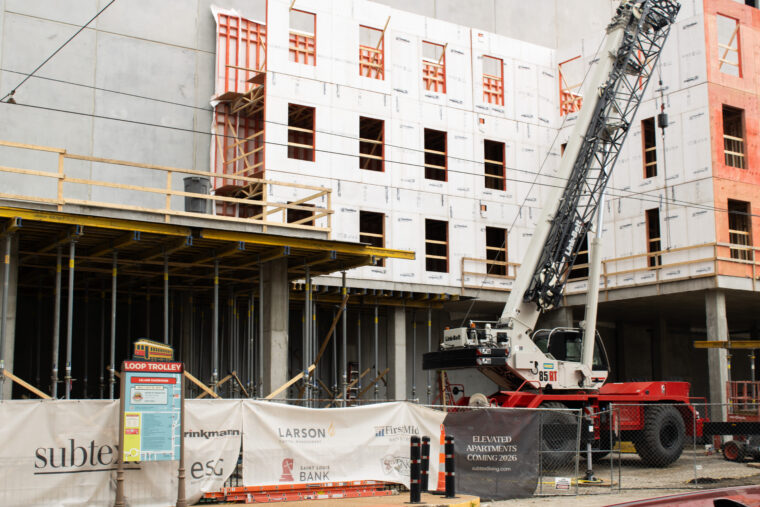
One example of these luxury student housing projects is less than a mile off campus. The LOCAL on Delmar is an apartment complex currently under construction that boasts amenities like a rooftop pool and hot tub, outdoor fire pits and grilling stations, and even a wellness suite with a sauna. This place markets itself towards students, with their Instagram full of pictures of college-aged students enjoying the scenery of St. Louis. They even follow me and other WashU students on Instagram to gain attention.
The prices of this development, however, are striking. A one-bedroom, one-bathroom unit begins at $2,105 per person. This is hundreds more than the average cost of rent in St. Louis, which is $1,331 for one bedroom. For students coming from places with higher costs of living, the $2,000 may seem cheap, but in St. Louis, this is incredibly expensive, with 28% of St. Louisans renting apartments for less than $1,000.
What makes housing projects like this so grim is that there are unhoused St. Louisans living on this same street. Luxury apartments like these contribute to a broader issue of gentrification and displacement in St. Louis. Large development firms buy up properties in St. Louis neighborhoods and build these expensive housing projects, which then drives up rent and cost of living for residents that have been living in the area for decades. Experts say that the West End of St. Louis is already experiencing this, and that while developers are making significant monetary gains from flipping these properties, residents in the neighborhood don’t reap the benefits.
These housing projects are also inaccessible to students who don’t come from wealthy backgrounds. These housing options aren’t marketed to students as a whole, but rather to affluent students who can afford to pay the steep rent prices of each unit. This makes it harder for lower-income students to find off-campus housing and perpetuates the economic divide on-campus.
I would love to see a revitalized St. Louis, one that doesn’t suffer from chronic underdevelopment. I don’t, however, believe that this should come at the expense of what the city really needs: affordable places for everyone to live. Creating high-rise luxury apartments in the areas of the city that already experience extreme wealth inequality does nothing but further the lack of access to housing in the city.
As WashU students, we should be aware of this, and make efforts to combat these disparities. These efforts benefit us as well, because if St. Louis has affordable housing for everyone, that includes us. So, before you sign the lease on your shiny new off campus apartment, consider how your choice of residence affects our city. Otherwise, that carefully crafted version of St. Louis you’re buying might not leave room for the version of the city already standing.
Stay in Touch!
Get the latest and top news from StudentLife delivered to your inbox