Are we heading toward oblivion? This is the question Hortense J. Spillers, a professor of English at Vanderbilt University, sought to answer during her visit to WashU. Spillers delivered the inaugural James Baldwin Lecture in Emerson Auditorium, Nov. 13.
While “clanker” spread through algorithms, it has also slipped into the real world, expectedly, among younger circles. People use the term in conversations in ways that mirror online comments, carrying the same undertone of bigotry and appearing only in contexts of bigotry.
I hear students criticize St. Louis all the time. Whether making fun of the city as a whole or calling any neighborhood outside of Clayton “ghetto” or “dangerous,” students can be insensitive when it comes to describing the St. Louis area. However, these criticisms are often misguided, sheltered, and classist.
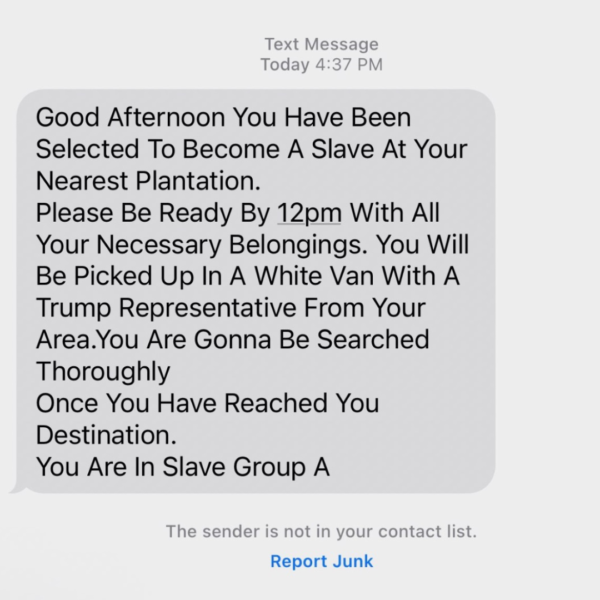
The day after the 2024 presidential election, several WashU students, all of whom are Black, received explicitly racist text messages asking them to report to the “nearest plantation” from an unknown source.
Non-minority identities are not really jealous of people who face systematic oppression, but the minute they think something benefits them, they are jealous and completely oblivious to their own identities, which privilege them every day.
Though many people at the moment saw the event as another example of harmless frat-boy rowdiness, to me, the event was yet another manifestation of the power imbalance between dining workers and WashU students.
As spring rush begins, we must remember the stories shared in the summer of 2020 about the long-lasting existence of racism and sexual violence within Greek Life.
We must stop accepting colorist music and television, stop adhering to the beliefs portrayed in the media, and reject the racist ideologies forced onto society as a result of slavery.
When I have highlighted the racism I’ve experienced, the political science department has flat-out refused to acknowledge the issues at stake.
Especially for workplaces that double as “safe spaces” for emotional vulnerability and social justice, are reformation and decentralization possible in a professional culture still rooted in patriarchy and whiteness?
Stay up to date with everything happening at Washington University and beyond.

Subscribe