Scene
110 years later: Commemorating the induction of WashU student film into the Library of Congress
Anna Dorsey | Staff Illustrator
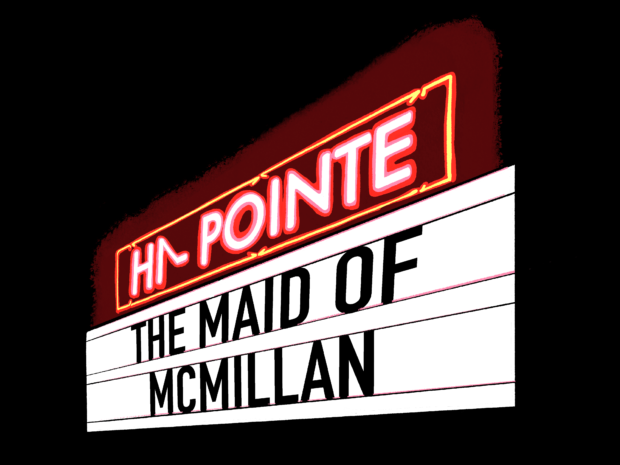
On Sunday, April 19, WashU students and St. Louis film fans sat down at the Hi-Pointe Theater in Clayton for a glimpse into the past. In 1916, the drama club, Thyrsus, put together a short film named “The Maid of McMillan” as a fundraising effort for the Younivee Surrkuss (the predecessor to Thurtene).
“The Maid of McMillan” begins with a charming and self-deprecating note from the producer imploring the audience to look at the film kindly, for it is the first ever student film. The film’s historical importance was cemented at the end of 2025 when it was inducted into the Library of Congress.
“The Maid Of McMillan” tells the tale of Jack Tower (Gordon Morrison, JD ‘18), a WashU college athlete, and his romance with Myrtle Maroon, a fellow student who resides in the women-only McMillan residential hall (now an academic building). The film takes many turns, following the characters through shenanigans and escapades, as they attend track meets, climb down from windows, and fight highway ruffians.
The film was directed by alums George Daniel Bartlett (JD ’20) and Donald Wilson Stewart (JD ’17). Donald later married Dean Marion McDaris (BA ’19), who plays the titular maid. There were also appearances by real members of WashU’s faculty at the time, such as track coach Bill Edmunds and Chancellor Frederic Aldin Hall.
“As it goes, the students got together, they wrote the script in four days, they shot it in four days, [and] they put it together. So for a very rushed job, it’s pretty sophisticated,” WashU’s curator of Film and Media Lydia Creech, said.
The WashU Film & Media Archive was the result of an initiative by filmmaker and alumnus Henry Hampton, who donated his own collection to the archive.
“Since then, when we’ve acquired new collections or looked to expand, we’ve focused on documentary, civil rights-minded materials (or social issues in general) and production. So what makes our archive unique is that we have all of the materials that go into a film, not just the finished product,” Creech said.
The film equipment needed to create this film would have been very expensive and highly inaccessible. J.D. Wooster Lambert, the cinematographer, happened to be personally interested in filmmaking, and managed to give the group access to equipment. The film was shot in 35mm nitrate, something that posed a series of issues in later preservation attempts.
“Nitrate [is] the chemical composition of the film material, and it’s infamous for being very volatile. Degrades quickly. It can catch on fire if it gets too hot, so that original was lost at some point in WashU’s history, but they had made a VHS copy, which is not the best fidelity wise, [as in] image quality, and then a 16 millimeter reduction print,” Creech said.
The archive later applied for a grant to digitally scan the film, put it back on 16mm and then blow it back up to 35mm.
“When we say restoration, we’re talking about not just the object, but the experience, or fidelity to the original,” Creech said.
At the end of 2025, “The Maid of McMillan” was officially recognized as the first student film ever produced after it was added to the Library of Congress. While taking 109 years between the film being produced and being awarded this title might seem like a lot, the process of deciding this was harder than it seems, as finding the definitive first of anything is a difficult task.
“As far as we know, doing the research, going back to the fan magazines, checking with silent film scholars, amateur film scholars, this is the first one that we have found that survived. Because the other thing [with] silent film, [is that] a lot of them are lost,” Creech said.
Nevertheless, after a century of being celebrated at WashU, this important bit of the past is finally being commemorated at a national level as one of the 25 films selected last year.
“The public can, once a year, nominate films that they think should be [in the Library of Congress], and then it goes to a committee and they sit down and decide on the 25 for that year, but none of us nominated it. So what that would mean is somebody from the Library of Congress would have been aware of it, possibly through doing the grant — the National Film Preservation (NFP) grant —because that is a federally funded grant,” Creech said. “Someone at the NFP office or at the Library of Congress would have seen our film and then remembered it and thought it significant enough to nominate it, which [is a] massive honor.”
Current members of Thyrsus who attended the Hi-Pointe screening left the theater feeling the legacy that the oldest club on campus left behind.
“As soon as we saw the intro, we were like, this is the same. This is us as it is now. So if you like the ‘Maid of McMillan,’ you’ll like our other productions,” the PR chair for Thyrsus, sophomore Stella Holidae, said.
Beyond its historical importance, “The Maid of McMillan” is a time capsule to another WashU.
“It’s just fascinating to see that was someone’s life before, and it’s changed so much, and yet it stays the same,” Thyrsus president, senior Alanis Preciado Higgins, said. “Seeing that in film, whether it’s in black or white, with or without voices, that there’s always that kind of WashU energy there. I really appreciated being part of that kind of history.”
“The Maid of McMillan” is more than just an old movie, it is an invaluable piece of history and a rare glimpse into the lives of students who walked the very same halls as us over a century ago. Each grainy frame preserves the memories of a WashU some of us can only imagine. The film was created before any university had a film department. Its very existence is a miracle, as many silent films were lost, melted down for the war effort, turned to ashes by unstable materials, or victims to the passage of time.
The Maid of McMillan is available online through the WashU libraries site.
Stay in Touch!
Get the latest and top news from StudentLife delivered to your inbox