Scene
Student artist FLXX: ‘Every few months I have a new magnum opus’
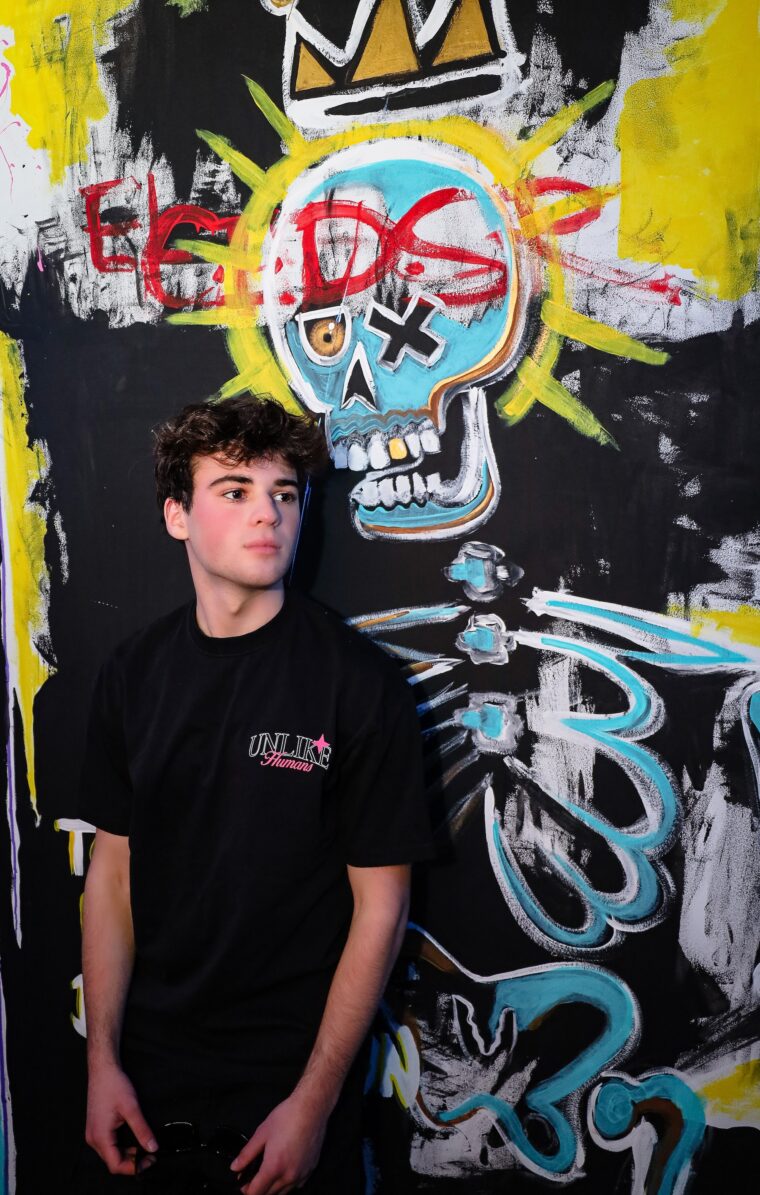
Sophomore Felix Harari, who produces music as FLXX. Photo courtesy of Felix Harari.
Getting a concussion knocks most people out and ruins their whole winter break. But for sophomore Felix Harari, professionally known as FLXX, his head injury during a vacation led to him producing “the best beat [he’s] ever made.”
That track he produced post-concussion would become “step wit me,” a smooth hip-hop track released this past November. “step wit me” is the lead single from his upcoming album “L.E.D.,” which will be released on March 13.
Harari, an Olin student with a minor in the business of entertainment, is a music producer from Brooklyn, New York. But because he’s a producer and not a rapper, you won’t hear his voice on any of the three singles he’s released so far. Harari considers his role to be that of a curator, who sends out beats and instrumentals to artists with the hope they’ll use them for their tracks.
“I see it like a puzzle, like you’re taking little pieces and creating your own kind of thing,” Harari said. “I’m always challenging myself to create something new … When I make music, especially with samples, it’s really like building a puzzle or a LEGO set. I see it as a physical thing. I’m not just imagining notes in my head, I’m visualizing where each sound is going to be and putting it in the right spot.”
With multiple generations of musicians in his family, Harari started piano lessons at a very young age.
“My grandpa played violin in the Russian army,” Harari said. “My grandma was my piano teacher, and my great-aunt also taught me piano … By the time high school came around, I was very sick of it.”
Still, Harari has remained fascinated by music and often considers new ways to create.
“I’m definitely always thinking about music,” Harari said. “People have voices in their heads; I have sounds in my head. Not really like beatboxing but tapping my fingers along to some sort of rhythm I had or whatever it was, just creating in my head.”
A summer camp friend’s producing skills pushed Harari to start learning the process. Harari initially taught himself production with just the Koala Sampler mobile app before he progressed to a more advanced program, with YouTube tutorials guiding his way.
“It was a very good way for me to start learning the basics of where drums should go and what sounds to use, simple mixing techniques. And then after the summer, I got back home, and I downloaded FL Studio on my computer. Then I just became obsessed with it,” he said.
That obsession became a constant, and Harari often feels producing music as a full-body sensation, which pushes him to create a similar feeling for his audience.
“When I create, I’ll be visualizing where everything should go, but my body will also be moving,” Harari said. “I’ll hear a sample or a melody, and I’ll bob my head in a certain way or tap my feet in a certain way. How ever my body physically moves is how I want the music to be because music should move people.”
Harari has continued his music education at WashU, taking courses including Music 1320 – Digital Audio & Multitracking: An Introduction to Electronic Music and Music 130 – Composition Workshop. In the latter, he met another WashU student, Christian Bean Royal, who goes by the stage name of Beany Bop. After hearing one of Harari’s beats in class, Royal was inspired to collaborate with the producer.
“A few weeks later, he sent me back a demo that was insane,” Harari said. “It was the first time I heard someone rap so perfectly and capture the exact feeling I wanted when I created it.”
Harari had sent over the backing track for what would become “step wit me,” and their collaboration has proven extremely successful.
“I really, really love that beat. [“step wit me”] is definitely my favorite. I still think every few months I have a new magnum opus, but right now it’s definitely still my magnum opus.”

The cover for “step wit me”, drawn by Harari’s brother, Ben. Photo courtesy of Felix Harari.
Since then, Harari has continued collaborating with a variety of artists whom he has connected with online. This includes Danielle Carr and Newman on the relaxed and moody track “Breaking Bread,” which came out on New Year’s Day, and the West Coast-inspired “Come Alive,” featuring Mac Infinity and Maji, released on Jan. 29. All those tracks will appear on his soon-to-be-released debut album “L.E.D.”
After his first head injury resulted in “step wit me,” a second concussion led to him creating a new EP, titled “Lovestruck!,” which will be released soon.
But producing isn’t all smooth sailing. Harari has had to dismiss artists from projects, ask them to rewrite verses, and manage each of his tracks from conception all the way to their public release.
“I always have in the back of my mind, ‘Oh, I have to make sure to text this person today and to make sure this thing gets done,’” Harari said. “But then once I get the verse, and once I have everything finished, it’s very rewarding. And it feels great to be able to create a project with 20 different artists, which is [the] total for the album.”
In “L.E.D.,” Harari wants to create a West Coast-inspired LP full of vivid sounds and textures.
“I’m making it in my college dorm room with my LED lights and everything, but it’s also that the whole album is very bright and [a] throwback [to the] 2000s. When I listen to the beats I created for it, I just feel like it’s all full of bright colors, like neon,” Harari said.
Harari prefers to listen to albums from start to finish and hopes to create an emotional journey across “L.E.D.’s” track listing not only for his listeners, but also for himself.
“I decided that the first track on the album would be called ‘Let ‘Em Doubt’ and the last one would be called ‘Let ‘Em Die,’” Harari said. “The album is a progression from when I first started making music. There was a lot of doubt. Then, throughout the process of creating the album, from going from the first track to the last track, it’s like letting that part of me die off. Because you can’t do something great if you doubt yourself.”
Stay in Touch!
Get the latest and top news from StudentLife delivered to your inbox