Scene
Rooted in St. Louis: Outside of textbooks, learning from the flora of Missouri
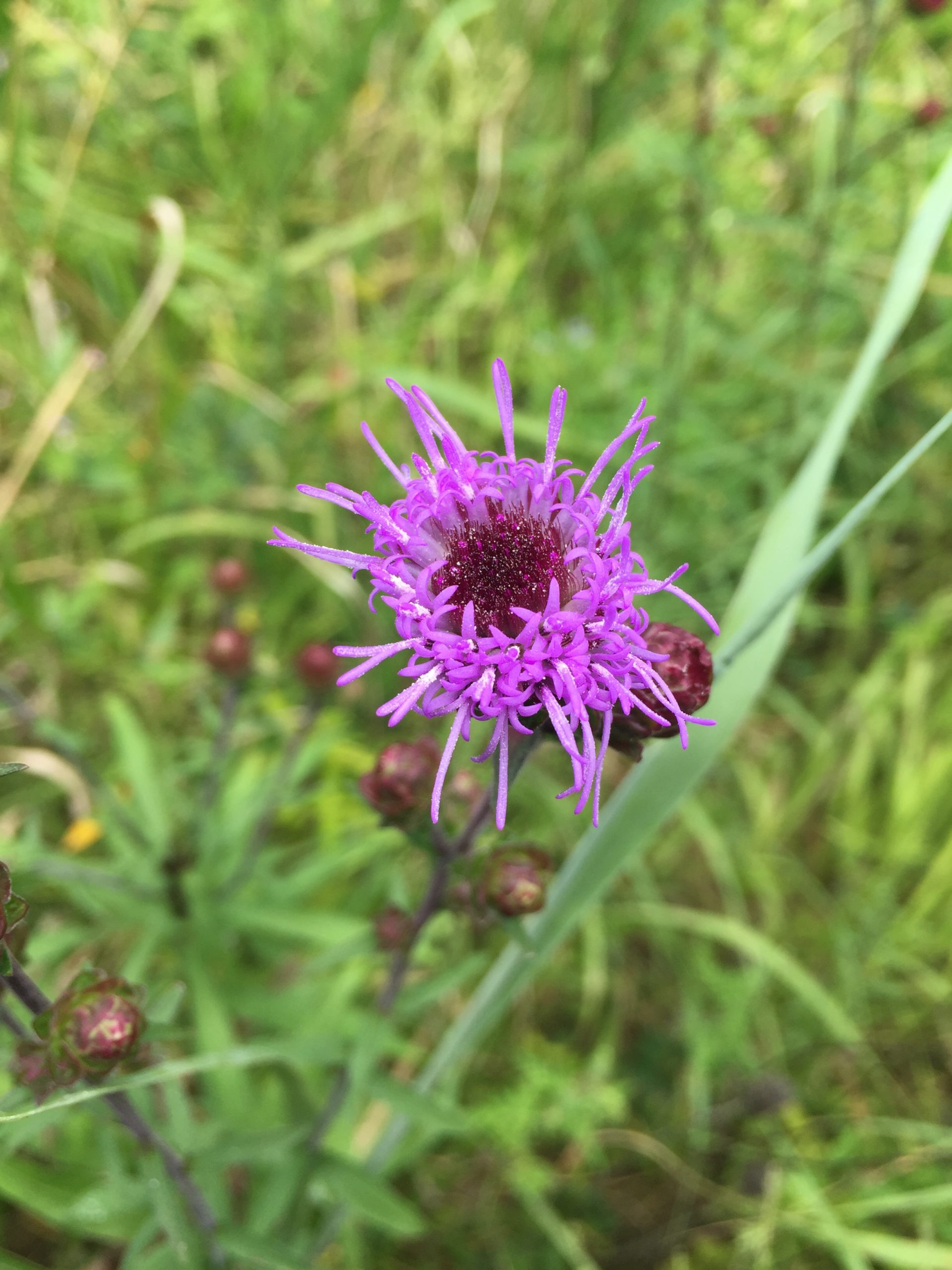
Liatris squarrosa, a wildflower found in Shaw Nature Reserve, an extension of the Missouri Botanical Gardens. (Photo courtesy of Michael Barash)
The flower that smells the sweetest is shy and lowly — William Wordsworth
Sophomore environmental biology student Michael Barash is really excited about oak trees — but he’s also developing a greater appreciation for the entirety of the plant world, partly due to his internship at the Missouri Botanical Garden (MoBot).
Among our leafy friends in the plant kingdom, trees often hog the spotlight; against the majesty of an ancient oak, common grasses and wildflowers cannot easily compete.
This “plant blindness” causes a major imbalance in scientific knowledge of the natural world. As a research assistant at MoBot, Barash is working to correct this blindness. “We really don’t know a lot,” he said, “we know a majority of the animals that are out there, but we are really missing a lot about how plants work.”
Barash’s earliest plant research was decidedly arboreal. As part of the Pathfinder program, Barash took a class with biology Professor Stan Braude, and dove headfirst into the oak taxon (or group of related species) for a project. Through that class, Woody Plants of Missouri, he found that he admired the trees’ intelligence.
“Oaks are pretty sneaky trees,” he said. As part of their evolutionary arms race with squirrels, oaks vary their acorn release, called masting. After a few years of starving out the furry critters with scant acorns, the trees will drop them all at once. Most astoundingly, the trees seem to sync up through some unknown method of communication.
Barash discovered the research position, which he began last summer, through the Living Earth Collaborative, a partnership between Washington University, the St. Louis Zoo, and MoBot encouraging biodiversity research. Before then, he said, he had only been to the garden once, for their holiday light show.
Of the garden’s purpose, Barash said: “plain and simple, a botanical garden is focused on biodiversity. That’s what takes it to a different level from a normal backyard garden.” But the garden itself is just a sliver of what MoBot does.
“Botanical research can be a lot of different things,” Barash said. Many of Barash’s fellow researchers used the institution’s renowned herbarium, which houses over seven million plant specimens from across the globe to conduct research on genetic drift within species and inform practices of environmental restoration.
Barash’s research is decidedly local, focusing on herbaceous (that is, non-woody) plants in the Ozarks. “Missouri is wild,” he said, describing the variety of habitats he encountered. “In the Ozarks, there are about 2,000 native wildflowers and grasses. A stunning amount of diversity.”
The Ozarks are primarily home to open woodland and meadow environments dominated by such herbaceous plants. Perhaps the most beloved of these open habitats are the Missouri glades: “these glades are mega-packed with diversity, with plants that aren’t even found two miles away,” Barash said.
Among the most common plants in the area are the milkweed family (genus Asclepias), and aster flowers like daisies (genus Asteraceae). Tons of grass and sedge species are present too, though only a trained eye can identify them: “they are very indistinguishable if you’re not very good,” Barash said.
Barash worked on restoration: “I was doing research on what native seeds are available for purchase in the Ozarks, determining if there were any biases in the seeds’ availability,” he said. His preliminary results suggested that only 37% of native herbaceous species were available.
In continuing his research this semester, Barash is expanding into the animal kingdom, using camera trapping to determine the predator-prey relationships of endangered plants. “If you’re looking at a particular wildflower that’s constantly getting eaten,” he said, “you want to know what’s eating it.”
The mystery of plants continues to intrigue Barash, especially germination, which is one of the major black boxes that remains in the plant world: “many plant species will sit out there without growing for ten years,” he explained.
But for someone without this interest, this research might seem irrelevant. Barash emphasized that even learning about obscure grass species is crucial for understanding the environment.
“It’s a cumulative process,” said Barash. “We work on biodiversity not because it’s the only way to save the earth, but because it helps us practice working with the world we have. We don’t need to bring the world back to where it was 1,000 years ago, but we certainly should work on living with the earth that we have now.”
Stay in Touch!
Get the latest and top news from StudentLife delivered to your inbox