Scene
Increasing inclusivity: All WU campus tours fully wheelchair accessible
Washington University tour leaders are paving a new way to increase campus accessibility.
A new and improved, stairless tour route has emerged, and the Wash. U. visitor experience has been altered forever. Senior Assistant Director of Student Volunteers Tori Neason provided insight on the recent revamping.
Prior to this fall, Wash. U. traditionally had two types of tours: a “typical,” stairs-included tour, and one more accessible for those with disabilities. But after running into situations where available tour guides didn’t always know the accessible route, Neason and her colleagues decided to consolidate the two routes into one that eliminates the use of stairs, making all campus tours completely wheelchair accessible for the first time.
“We found it important to just have one route that all of our guides knew like the back of their hand that was accessible for all of our guests so that we weren’t inadvertently asking people to self-identify as needing the accessible route,” she said. “Or, for folks that may or may not have invisible disabilities, requiring them to do something they’re not comfortable with.”
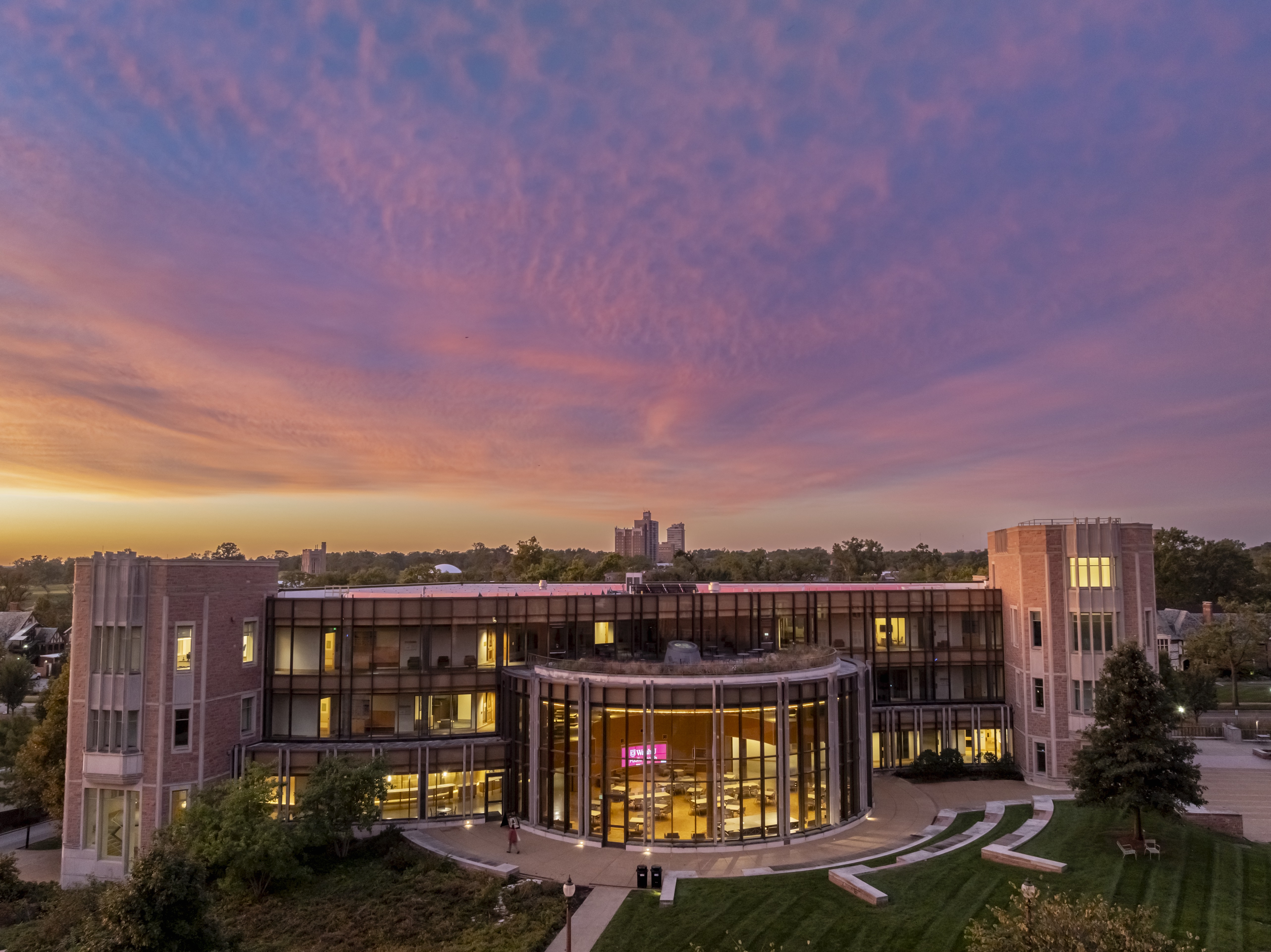
With construction on the East End leading to the opening of the Sumers Welcome Center facility, the University was provided with the extra push it needed to execute the change.
“We took that opportunity to rethink everything we were doing with our visit experience,” Neason said.
The new tour cuts out stairs at three or four different points around campus and ultimately serves as a much more standardized experience. All tours depart from the Gunter Family Plaza outside of the Welcome Center, then move toward key highlights, like Olin Library and the recently-added showroom in Umrath House on the South 40.
When asked about any challenges that have emerged from the tour redesign, Neason spoke about the importance of reinforcing consistency. Tour guides may feel inclined to just take the stairs if there are no visible mobility aids in their group, but this ignores the possibility of someone in that group being more comfortable if stairs were avoided.
“We can’t see that, so in the grand scheme of things those 15 extra steps and the 10 extra seconds it takes you are worth it for someone to feel like they could fully participate in the tour,” Neason said.
It all goes back to Wash. U.’s expressed commitment to being inclusive, which Neason admits, “we weren’t necessarily doing before, when we had to kind of try and scramble to accommodate someone.”
Alexa Miller, president of the Student Tour Leaders (STL) and a senior in the College of Arts & Sciences, remarked that the transition to full accessibility was easy. Being so involved with tour guiding, she expressed that she finds it very rewarding to be that first impression and voice of guidance for prospective students.
“I remember how terrifying it was not knowing where I was going to end up, and I felt like my tour guide would really make or break my experience,” she said. “…It’s a great way for me to constantly remind myself why Wash. U. was the right place for me.”
Since the new tours launched this fall, the process of redesigning and testing for accessibility primarily occurred over summer.
“We were out walking the entire day,” said Neason, who noted that she and her colleagues were constantly checking for any issues and monitoring how long it would take to run through the tour.
While no feedback explicitly mentioning the accessibility change has come up in visit evaluations, Neason explained that she “actually think[s] that’s a good thing.” To her, it’s more important to be conscious and thoughtful about the way you’re doing something than to accumulate praise and attention for it.
The revamped, fully accessible tour serves as a landmark change in the way Wash. U. welcomes visitors, and it may be the first of many. While Neason doesn’t expect to see any upcoming changes to the actual route, a recently piloted technology for microphones could receive further investment in the future.
“So instead of projecting the voice [of the guide] in an outward speaker, there are synced headsets that you give to every visitor,” Neason said.
There’s obviously much to consider in terms of feasibility, but this type of upgrade could be very beneficial to the campus visit experience–aiding people with hearing loss while simultaneously saving the vocal cords of tour guides everywhere. It also underscores that even at an institution as old and established as Wash. U., there exists a continual commitment to find areas that could use improving.
Once you’re a student at Wash. U., it’s easy to forget that there was ever a “first time” encounter with the University you now call home. But whether you’ve been here for a month or are going into your last semester here, improvements like this allow the University community to welcome newcomers with the same open arms that drew current students in–offering opportunities and accessibility for all.
Stay in Touch!
Get the latest and top news from StudentLife delivered to your inbox