Academics
Pre-med students begin preparing for new MCAT
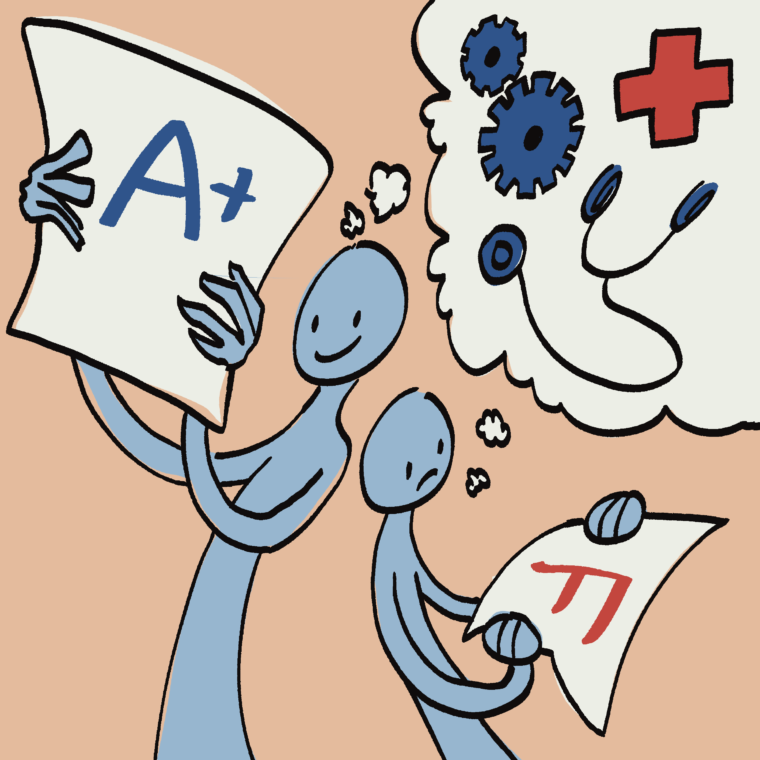
As the final administration of the current MCAT exam approaches, pre-medical school students are conflicted about which version of the exam to take.
The American Association of Medical Colleges, which administers the MCAT, announced that it was creating a new version of the exam to be released in 2015 that would focus on a new generation of doctors. At seven and a half hours, the 2015 test will be almost twice as long as the current version, and will add sections about psychology, sociology and biochemistry.
Washington University’s many pre-med students must now choose if they want to register to for the final version of the current MCAT in January or wait to take the new exam in the spring. Although many students are looking forward to the new exam, others are anxious to take the current version. The AAMC has not yet published an official practice test for the 2015 MCAT, further complicating students’ decisions.
Eric Chiu, Kaplan Test Prep’s executive director of pre-med programs, believes that the new test will impact the way pre-med students prepare for admission. He noted that students would now have 11 prerequisite classes instead of eight.
Chiu added that some students were concerned that medical schools might prefer scores from the new version of the exam to the current version.
“Some of the survey data we got back actually shows that schools are split on it, and there’s no clear reason to wait to take the new MCAT from medical schools’ perspective,” Chiu said.
Valerie Ratts, associate dean of admissions at the Washington University School of Medicine, said that the college has no preference on which exam applicants take.
“An individual has to decide what is best for them and they have to take into consideration in preparing for the exam when is the best time for them to prepare and when is the best time for them to take it, and I think those are things that are more important than which test they take,” Ratts said.
Carolyn Herman, associate dean in the College of Arts & Sciences and pre-health advisor, said she does not foresee problems for University undergraduates adapting to the additional work.
“I don’t think most of our students are actually going to struggle to fit the course work in,” Herman said. “Really we’re talking about adding one course—sociology—which doesn’t seem all that burdensome.”
She noted that the University’s foundational biology courses cover about 95 percent of the new MCAT topics in biochemistry, and that many pre-meds take Introduction to Psychology.
In addition, the University already offers a course entitled Sociological Approaches to American Healthcare.
Herman adds that pre-med students must also focus on clinical and medical experience, service, letters of recommendation and research.
Ratts also believes the new sections of the MCAT will lead to a better generation of medical professionals.
“I think the new MCAT was designed to try to better assess…the type of student for a physician in the future,” she said. “It will better understand cultural differences and social differences that influence health and that will make the test even better than it’s been in the past.”
Pre-med freshman Jaya Prakash is supportive of the new version MCAT.
“I think that three new subjects, even though it makes the test tedious and more difficult…gives you better insight into a person’s ability to handle medicine, so I guess in the bigger picture it’s more beneficial,” she said.
Prakash is also pleased with the addition of the social sciences. She is very interested in biology but also plans to minor in psychology.
“I think that sociology is important because I think doctors need to understand not only the science behind medicine but also…how people work, how they think, how they act in groups.”
She added that psychology will be helpful in dealing with patients who also suffer from mental disabilities.
Stay in Touch!
Get the latest and top news from StudentLife delivered to your inbox