News
Title IX limitations decrease autonomy for fraternities when penalizing members

Holden Hindes | Senior Photo Editor
Two years after Title IX policy changes, fraternities have developed alternative methods to remove alleged perpetrators of sexual assault from their organizations.
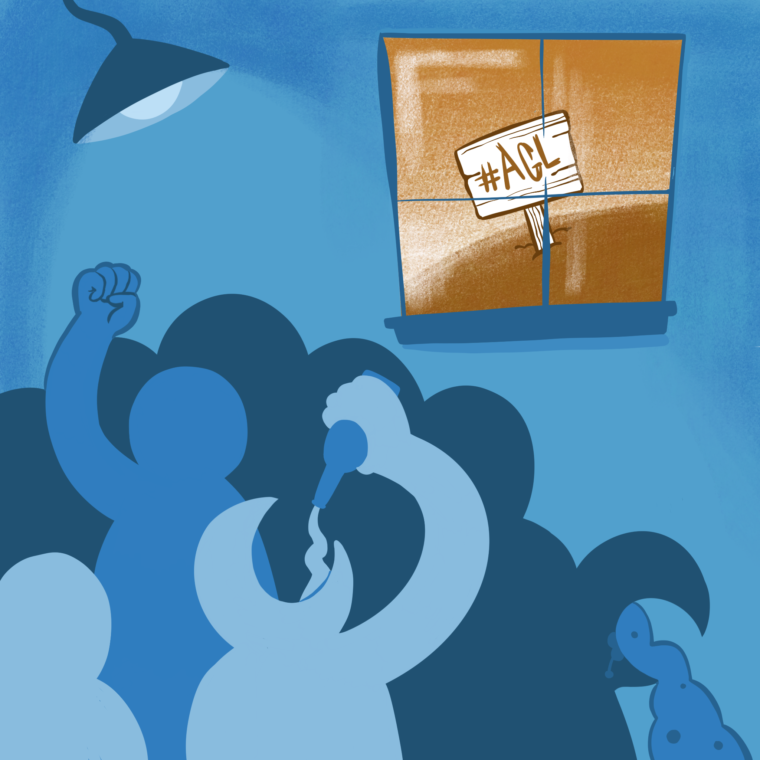
During the 2019-20 school year, the Abolish Greek Life movement led to nearly half of affiliated students dropping their organizations, but the drop in membership wasn’t the only significant change for Greek organizations on campus. 2020 was also the year that then-acting Secretary of Education Betsy DeVos made changes to Title IX, a federal civil rights law that prohibits discrimination on the basis of sex in any federally funded school, including Washington University.
DeVos made numerous changes to Title IX to establish that students should be treated as innocent until proven guilty. Her policy changes makes it impossible for student organizations to suspend, sanction, or otherwise punish members of their groups for accusations of interpersonal violence, until an official Title IX investigation deems them responsible.
As student organizations continue to navigate potential allegations of assault and harassment, some students have expressed discontent with the limiting nature of DeVos’ Title IX alterations, including fraternity members.
A senior in a fraternity, who wished to remain anonymous and will be referred to in this article as ‘Member Z,’ explained that Title IX cases can unfold over long periods of time. Devos’ regulations prohibit fraternities from taking action against alleged perpetrators, regardless of the length of the investigation.
“One of the frats had a four month investigation where a brother was being investigated by Title IX,” Member Z said. “He was coming by the house and they couldn’t tell him to leave because of the rule, but they were pretty sure he did it and didn’t want him there.”
In some cases, fraternities have been able to internally and informally handle accusations without going to Title IX, sometimes at the request of the survivor.
According to a junior on the executive board of one fraternity, who wished to remain anonymous and will be referred to as ‘Member A,’ survivors have come directly to his organization because they do not want to file a Title IX complaint.
“Having Title IX involved is a significant step,” Member A said. “Truthfully, a lot of victims don’t want to go to Title IX, [they] don’t want to go through that process because it’s incredibly re-traumatizing.”
Sexual assault is a statistically underreported crime; only 12% of sexual assaults on college campuses are reported. In a 2019 survey, responses from 3,810 undergraduate students at WashU indicated that 17.3% of students experienced a sexual encounter that was non-consensual, coerced, or did not include ongoing active consent.
However, the University Sexual Harassment Investigation Board reported just 61 Title IX investigations between 2013 and 2022, 34 of which ended with the accused individual being found responsible.
Title IX Coordinator Jessica Kennedy explained that if a fraternity chooses to informally ask a member to drop, rather than kicking them out, is not a direct violation of Title IX policy.
“As long as they don’t force that person to leave, they’re allowed to ask, they are allowed to appeal to their desire to protect the fraternity or the a cappella group or whatever it may be,” Kennedy said. “They can certainly appeal to that, but they’re not allowed to remove that student.”
Another complicating factor includes guidance from national organizations; when seeking guidance, many fraternities have to refer to national bylaws that provide very few or even contradictory guidelines for handling assault accusations.
For example, Alpha Delta Phi’s website offers current versions of their constitution and bylaws, neither of which mention the words “sexual assault” in any capacity. While the organization has a sexual assault module in their member toolkit, this resource does not provide information for how a chapter should move forward if a member is accused of assault.
Some national organizations have information that directly contradicts the federal laws set by Title IX.
For example, the 2021 edition of the Sigma Phi Epsilon National Grand Chapter Bylaws states that if a chapter member is alleged to have been involved in a sworn declaration or official notice of an interpersonal violence incident, the student must be suspended until all University, police, and legal investigations into the matter are completed. A fraternity would be violating Title IX if they followed these Bylaws.
Similarly, the Alpha Epsilon Pi 2021-22 Chapter Operations Guide states, “In most situations, the Brother should be suspended until the case has been resolved. This is for their benefit as well as the chapter’s benefit.”
The Sigma Chi governing laws also include that their Chapter and Membership Accountability Committee has the authority to suspend members for the duration of a University disciplinary investigation.
As part of Campus Life’s efforts to explain Title IX to student organizations and offer guidelines for conduct, the department released a document, in late 2020, called “Student Group Guidance for Member Expectations and Accountability.”
The multi-part document lays out potential methods of creating rules and communicating them, including establishing expectations for members and creating accountability plans.
While it is not required for student organizations to submit outlines of their plans to the school, the document includes information about Title IX policy that groups are required to follow, including regulations on imposing punishments or sanctions to members accused of assault.
However, the mechanisms of enforcement begin to blur when looking at the informal ways in which fraternities actually handle assault allegations.
According to Kennedy, if a fraternity were to explicitly make an internal decision to require a member to leave an organization due to allegations, that decision would be against Title IX policy and could possibly be countermanded.
“That would be in violation of the recommendations that we have made, so we would negate that sanction, whatever it may be, but it would be up to the respondent student to let us know that was going on,” Kennedy said.
Kennedy explained, though, that when it comes to scenarios that are more difficult to define, such as members of a fraternity socially isolating someone until they themselves make the decision to drop, there are fewer enforcement mechanisms available.
“We don’t dictate how members treat each other, and so if a person were to be isolated and treated poorly by the fellow members of their organization, unless any of that rises to a policy violation, that’s not something we would take action on,” Kennedy said.
When it comes to Title IX policy issues like these, Kennedy explained that it is difficult to provide a generic answer because much of the decision making is reliant on the context of each individual case.
Kennedy emphasized that Title IX is only able to carry out its procedures in situations where someone brings an incident to their attention, referring to both instances of sexual assault and potential scenarios where a fraternity may violate official sanction policy.
In many situations, the exact circumstances are unknown to those outside of the fraternity or to Title IX based on how the fraternity chooses to communicate that information.
During the fall semester, the fraternity Sigma Nu took to Instagram to post a statement about another social media post alleging an instance of interpersonal violence against one of their members.
On November 9, @metoowashu posted a survivor story where an individual detailed an experience having sex with her former boyfriend, a Sigma Nu brother, for the first time. She wrote that their boyfriend claimed to be STD negative before having sex but later revealed he was aware he had oral herpes at the time, which the survivor then contracted.
Five days later, Sigma Nu took to Instagram with a statement from the chapter in a post that has since been deleted. Directly referencing the survivor story in question, the statement revealed that the perpetrator was no longer a member of the fraternity, without clarifying if he was told to leave or voluntarily dropped.
The statement read, “The Sigma Nu Gamma Omicron Chapter does not condone any form of sexual misconduct, violence, or harassment. We also will not protect those who commit acts contrary to our values as a fraternity and as students at WashU. This past week Chapter Leadership learned of a member’s inexcusable conduct and can now say that he is no longer affiliated with our organization.”
Member A said that he believed the language of the post indicated that the fraternity asked the member in question to drop, although he had no personal knowledge of the situation.
“The post says that the member is ‘no longer affiliated with our organization.’ What that means is that [Sigma Nu] said to someone, ‘We don’t have the power to kick you out, but you need to leave’,” Member A said.
Looking forward, Member Z expressed a desire for a better system, while admitting he is unsure what that system would look like.
“I definitely think [the updates to] Title IX significantly limit how the frats deal with their issues, but I don’t think it’s the worst idea to have someone overseeing how the frats are doing them because I don’t trust frats to do it alone,” Member Z said. “I just think Title IX doesn’t work well the way it is.”
Kennedy emphasized that the Title IX office serves as a resource for student organizations that are unsure about their guidelines or who are facing issues with sexual harassment or assault within their groups.
“We’re happy to work with groups with educational efforts, talking to them about why it’s important to address these issues head-on and make sure that they’re reporting things, but also how to prevent these things from happening in their houses or social events.”
Editor’s Note from Feb. 2: This article has been updated to reflect what an anonymous source had initially wanted to convey in the piece.
Stay in Touch!
Get the latest and top news from StudentLife delivered to your inbox