News
UC, Santa Cruz professor talks Venezuelan beauty pageants, transgender rights
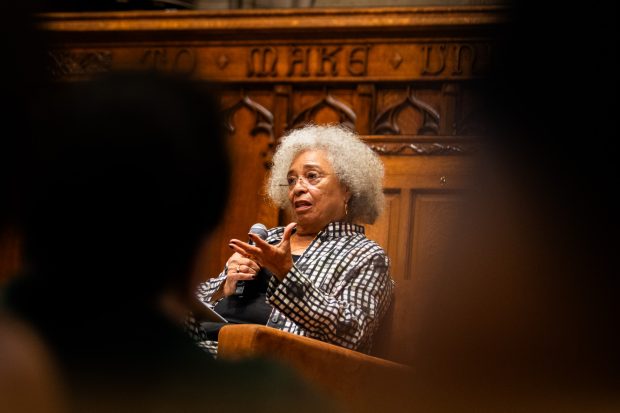
Marcia Ochoa, a professor from the University of California, Santa Cruz, spoke about transgender issues in Venezuela as a part of the women, gender and sexuality studies “Decentering the West” lecture series.
Ochoa, who researches gender, sexuality, race and ethnicity, among other topics, has published a book on femininity among women in Venezuela, which was the focus of her talk.
In particular, Ochoa described two different types of people who represent femininity in Venezuela: the “miss” and the “transformista.”
In Venezuela, a “miss” is a contestant in a beauty competition, or a person who looks like a beauty queen. On the other hand, a “transformista” is a person who is born as a male but displays feminine characteristics from an early age and begins to transform her body to reveal her gender.
Rose Miyatsu, a graduate student studying English, noted how these disparities between the “transformista” and the U.S. idea of the transgender person surprised her.
“I thought it was very interesting when [Ochoa] talked about how the ‘transformistas’ did not have to go through a coming-out moment or clinical interventions,” Miyatsu said.
“I hope this lecture would broaden ideas of what transgender means [for Washington University students], not just thinking about [transgender] as crossing a binary,” Dredge Byung’chu Kang, a post-doctoral fellow in women, gender and sexuality studies (WGSS) said.
According to Ochoa, the Venezuelan beauty pageants create a feminine discourse that impact the “miss” and “transformista” by providing them with an idea of feminine beauty and glamour.
However, unlike the “misses,” the “transformistas” still undergo violence and lead difficult lives in Venezuela; Ochoa said that Venezuela must develop an acceptance for sexual diversity.
“I think understanding trans people as absolutely essential parts of society, as people who are created by the society we live in, is very important. It is really crucial in creating a space that is open for a lot of different gender variations,” Ochoa said.
Stay in Touch!
Get the latest and top news from StudentLife delivered to your inbox