Staff Columnists
The Ivory Soapbox: Spin, baby, spin
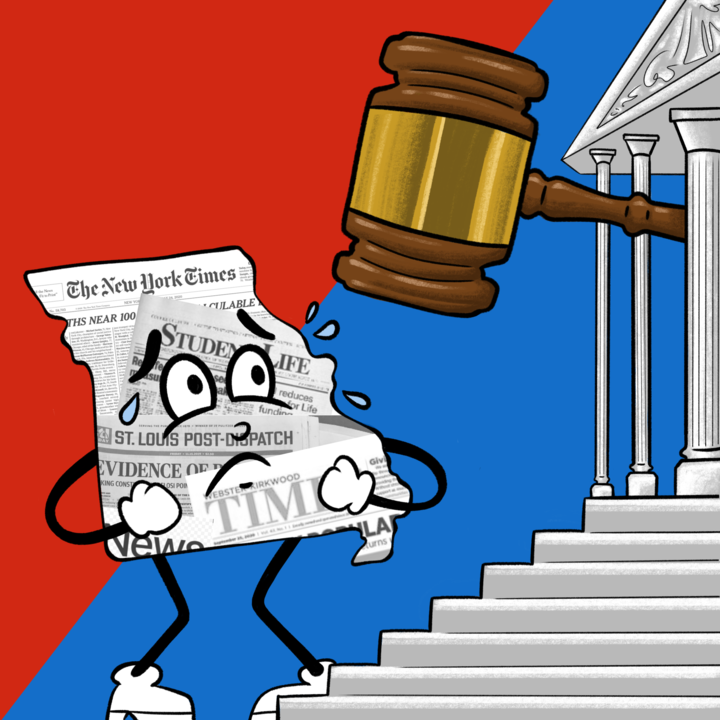
The general election season is excruciatingly long—speculation over the next election begins at the conventions, and in the current season, Republicans have been going at it since 2010—and given that this has always been Barack Obama’s election to lose, many Americans are understandably losing interest in the incessant coverage. Which is why, ever since the Denver presidential debate, the media has been selling an exaggerated, borderline false narrative. News outlets have been overly dramatizing and misconstruing, I suspect intentionally, the candidates’ debate performances to keep viewers more interested.
The first debate, in the media narrative, was a watershed moment for Mitt Romney. It was the moment he escaped from the tar-and-feather job the Democrats have been doing since May and delivered a resounding knock-out punch to an enfeebled president. Ever since, the media claims, momentum has been with Team Romney, and life was injected into a near-dead campaign. The idea that Romney won by an overwhelming margin, however, is absurd. All the criticisms leveled against the president were not imagined, but to viewers, Obama was only a little fatigued, and Romney was not deserving of the praise heaped upon him. Additionally, much was made of the fact that Romney leapt ahead in the polls, winning nationally as well as coming up ahead in Florida and Virginia, and the fact that such short-lived bounces are common was conveniently glossed over.
In the vice presidential debate, things were reversed. An exaggerated, over-the-top Joe Biden leapt at his opponent, cackling whenever Paul Ryan said something disagreeable. At best, his performance merited some eye-rolls; at worst, and as many apparently felt, his chuckles were symptomatic of being a rude, condescending old man. In the judgment of the media, however, and to use its phrase, Biden staunched the flow of blood from the Obama campaign and did his man proud. Ryan, for his part, put on a solid, acceptable show.
Continuing the false narrative, the media announced no clear winner in the second presidential debate, with RollCall claiming that the two men “fought to a draw… but it was bloody, with each candidate scoring points in several heated exchanges.” The very language evokes tense, exciting sports, and one can almost imagine that the journalist was describing a game of one-on-one basketball. The media also politely skimmed over two points in the first half-hour in which the president allowed himself to be interrupted and talked over by Mitt Romney, sadly trailing off into insignificance. The highlight of the debate—did Obama call the Benghazi attack terrorism?—was also heavily spun. In media reports, the president sounded angry, and the two men were speaking to each other as equals. Never mind that Obama was in the background, sounded thoroughly meek and needed the moderator to jump in on his behalf to smack Romney down.
Given the previous three debates, can anyone have been surprised that the final presidential debate was sold as a smashing victory for the president? The media tells us he crushed his opponent and is up once again in the country and in Virginia and is neck-and-neck with Romney in Florida. To the careful observer, however, absolutely nothing has changed. Obama is up nationally, in Ohio, in Virginia and in other swing states, and Florida is being as unpredictable as usual. The president has dipped a few points, but as the debate format generally favors the challenger, putting him on equal footing with the POTUS, this is to be expected. We are essentially where we were three weeks ago.
The media may well be creating such a narrative for selfish, economic reasons, but there is something to be said for tinkering analyses somewhat. After all, the past three weeks have flown by in campaign time, and the story of a president valiantly coming back after being initially unseated by a Republican upstart unquestionably interests voters more than one in which the president is ahead, as per the usual. And just as unquestionably, men and women who are interested in an election are more likely to vote in it. For that reason, then, perhaps we should allow the media its iffy coverage and hope for a good turnout on Nov. 6.
Stay in Touch!
Get the latest and top news from StudentLife delivered to your inbox