Forum
Stop having takes, or at least have fewer of them
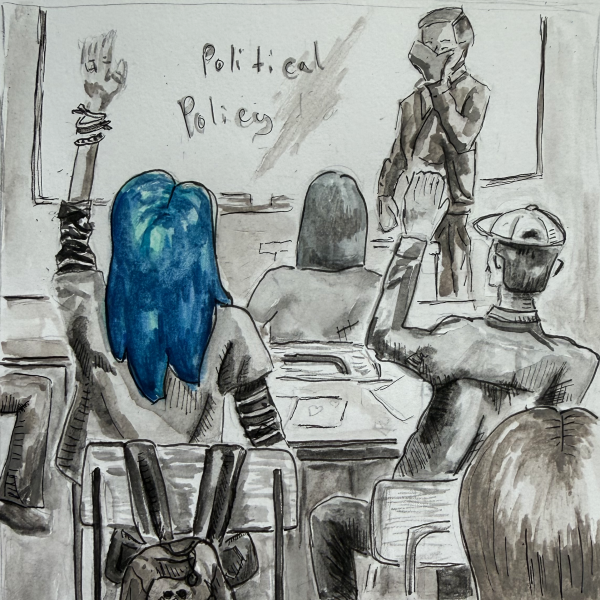
Stop having takes? This sounds antithetical to an opinion article. To have a take is to have an opinion that you feel is worth voicing into the ether of all the takes that came before it. And today, one feels increasingly compelled to have a take, or more accurately a hodgepodge of them: an opinion on immigration,an opinion on who should win best new artist at the Grammys, and also an opinion on if there was a flag on the play last Sunday.
The fast-paced world of internet rants and 24/7 news cycles means we are exposed to a never-ending flurry of takes, usually in a non-nuanced form so that talking heads can align themselves with certain morals. Rants about a political or social issue that simply, by virtue of their timeliness, don’t have room for nuance and detail. Still, this exposure has an upside: Never in human history has the individual had the opportunity to hear the breadth and depth of takes that exist more than right now.
In some ways, the educational opportunities are endless. One minute the individual could be hearing about China’s Uyghur persecution and the next about Argentine inflation under Javier Milei.
But herein lies the problem: With a large quantity of takes and not much quality in them, people must be able to discern “truth,” or at least something close to it. Before the social media landscape, how individuals received news and developed their takes was pretty linear. We had experts in the form of professors and more accredited journalists serve as the curators of information. Disinformation runs free now that anyone with a phone and the will to voice their opinion can disseminate their take to the world, regardless of their expertise on the subject.
Still, there is nothing inherently harmful about the individual attempting to discern what to believe. Instead, I argue that many individuals are motivated less by accuracy than by loyalty to their political affiliations when they evaluate takes they hear online, so as for them to accept claims that favor their side with little scrutiny while dismissing those that don’t. This process of interiorization soon compels the individual to offer their own takes on the subject, often mirroring the nature of the takes they see online.
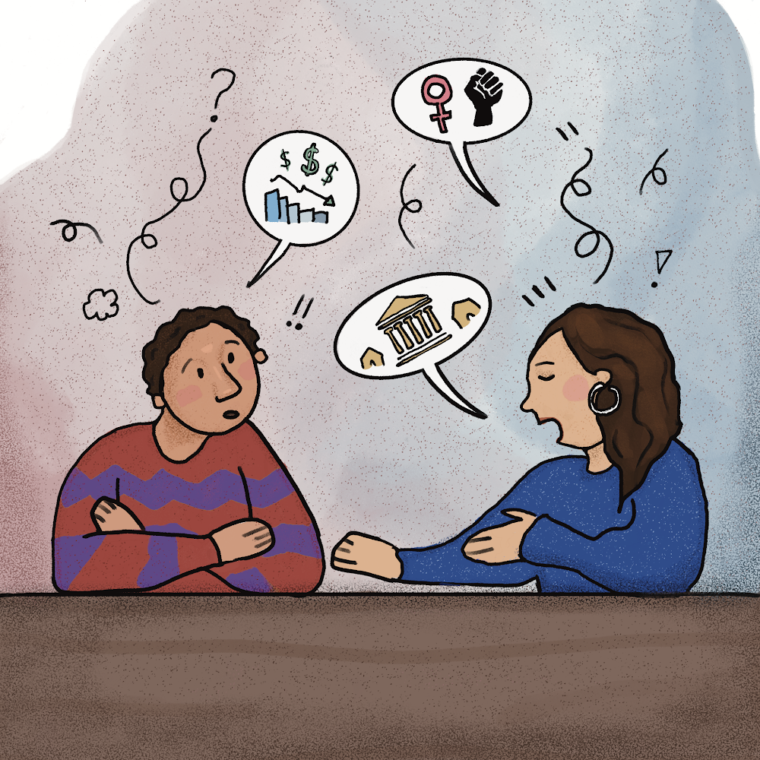
I don’t think the question of fault falls on a single individual. We simply live in a culture that rewards the loudest voice and doesn’t allow for serious engagement with disagreeing perspectives. To be culturally relevant, both online and in the tangible world, people feel they must take a stake-in-the-ground-esque stance on everything, all the time. Thus, it is only natural that ideology is communicated in the most streamlined, devoid-of-nuance, and not-considerate-of-alternative-perspectives way possible.
Consequently, we are left with a population that largely feels inclined to voice their opinions on everything and anything. Conflict in Crimea, and suddenly everyone is an expert on American intervention in Russia. Persecution in Palestine, and suddenly everyone is a Middle Eastern scholar. Boko Haram persecution of Christian communities in Nigeria, and suddenly, everyone is an — oh wait, this issue isn’t important enough for the public discourse; but that’s a different article for a different day.
There’s nothing wrong with having an opinion on these issues, but I harken back to the old saying that the uninformed are better than the ill-informed. And while people with takes aren’t always ill-informed, they are often minimally informed in ways that can be detrimental.
Instead, I ask you to engage in serious intellectual arguments about these topics. The goal is not to keep your head down if you don’t know something, but rather, if you’re curious about the world and want to take the pursuit of engagement more seriously rather than just a way for you to align yourself with a certain moral code, then read a long-form piece of writing. Listen to experts who share your opinion, as well as those who don’t. In doing all this, you begin to take steps toward being a more original and engaged individual, not one whose opinions are algorithmic fabrications and incapable of understanding different perspectives.
Stay in Touch!
Get the latest and top news from StudentLife delivered to your inbox