Forum | Student Love 2026
Finding love and intimacy outside of romance
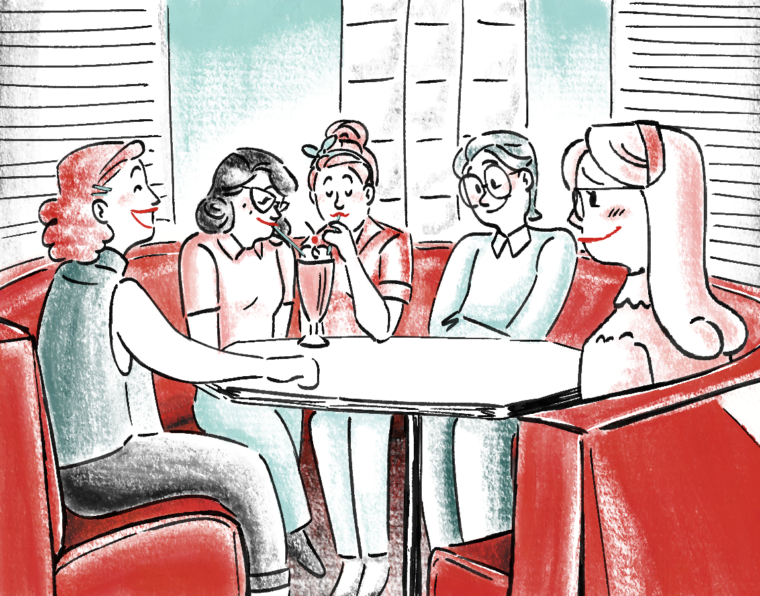
Elma Ademovic | Staff Illustrator
One of the most hot-button articles of 2025 posed the question, “Is having a boyfriend embarrassing now?” The Vogue piece claims that women are now more hesitant, and even embarrassed, to publicly share their boyfriends, while others proudly share that they are single. The article sent people into a social media frenzy, with some starkly opposing and others deeply resonating with the sentiment.
The diminishing social value of “the boyfriend” is apparent at universities, including WashU. We are taking far longer to “hard launch” our romantic relationships or even give them a label (keeping it at a “talking stage” or “situationship”). At the same time, many of us share a profound appreciation for our platonic connections.
According to one study, 40% of single adults said that a serious romantic relationship was “not at all important to their lives.” At the same time, media like the new TV shows “Adults” and “I Love LA,” and the rise of platonic dating apps, are centering friendship over romance. Take the revived cultural obsession with “Sex and the City”; although the show focuses on women’s struggles with sex and dating, it is ultimately loved for the main group of female best friends.
At the end of the article “Is having a boyfriend embarrassing now?”, the author speculates that “maybe we’re being forced to reevaluate our blind allegiance to heterosexuality.” Indeed, two phenomena have contributed to the decreasing value of the heterosexual relationship, or at least publicly sharing it. The increasing recognition and validation of queer relationships has reduced society’s attachments to heterosexual relationships and their pursuit, as more people acknowledge that relationships aren’t exclusive to this limited vision of romance. There has also been a steady shift toward valuing women, single or in a relationship, for their person rather than their relationship to a man. While there are exceptions, more and more women no longer have to rush to find or publicly display their boyfriends to receive societal recognition or opportunities.
As the social value of heterosexual relationships dwindles, we should reevaluate the friendships that society has long cast aside as less valuable or notable.
While I have never been in a long-term romantic relationship, saying that I have never been in love would be inaccurate. My first love was the group of home friends whom I anxiously await seeing on breaks. My second love was the group of girls who lived on my first-year floor, who are still my best friends as a senior. My third love was the people on Student Life who are like a second family.
When I introduce a best friend to my parents, they should take that equally, if not more seriously than meeting a romantic partner. Frankly, the former is much more likely to last the test of time. In the same vein, I should be able to bring my best friend as a plus-one to a wedding or other important event.
We need to change our understanding of intimacy, too. Non-sexual touch, like cuddling and hugging, releases oxytocin, the chemical released during sex, which sparks feelings of intimacy, bonding, and trust. I have recently revived my love for sleepovers with my friends (which I believe we should normalize as a part of adult life), and I can name no better form of intimacy than gossiping, cuddling, and giggling until the early morning.
I, too, have faced the trials and tribulations of talking stages, situationships, and short-term relationships. Yet I have learned the most important lessons about love, intimacy, commitment, and trust from my friends.
I’m not saying that boyfriends are embarrassing, but, instead, that close friendships are just as meaningful and admirable as romantic ones. In addition to granting them equal value, you should also invest equal (if not more) time and energy into your friendships as you do your romantic pursuits.
Plan more friendship dates and routine hangouts, write your friends love letters, and bring back the friendship sleepover. For those who find themselves craving male (or preferred romantic partner) validation, start finding validation in the love you give and receive from your friends.
You’d be surprised by the love you find when you stop centering romance.
Stay in Touch!
Get the latest and top news from StudentLife delivered to your inbox