Forum | Housing Guide 2025
Your guide to roommate relationships
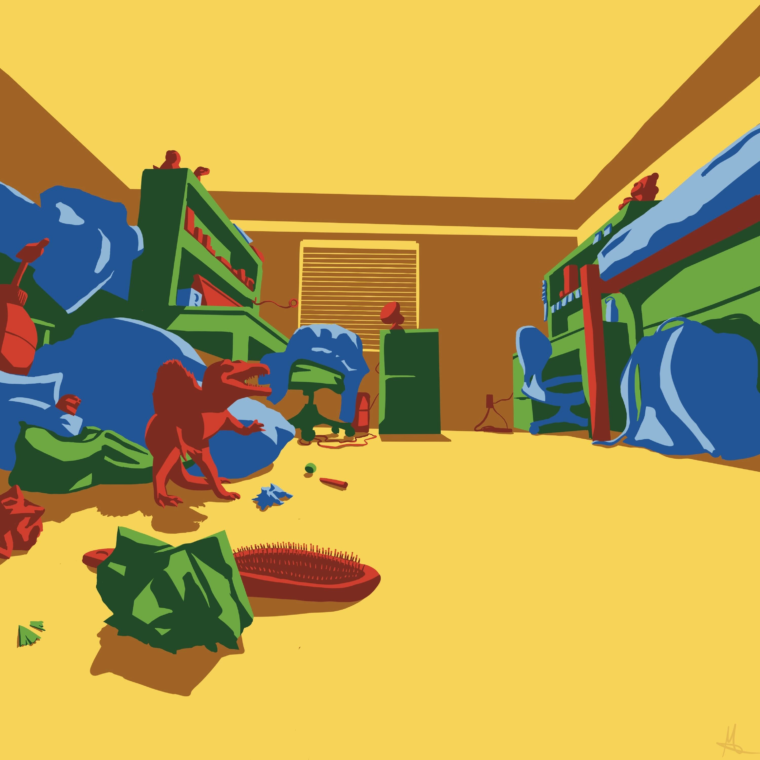
Mateo Kahoun | Staff Illustrator
Sharing your space is one of the most challenging transitions that college students face. We’ve all heard horror stories of random roommates gone wrong whose gross habits make you scared to touch any surface in your dorm. It’s even harder when you room with a friend with one quirk that drives you up the wall. Roommate disagreements lead to awkward conversations that we naturally avoid, but complaining to your friends in hushed voices in the dining hall won’t help your situation.
The solution seems obvious: healthy and constant communication, a suggestion shared by every adult in my life going into college. I was overconfident coming in, breezing through the suitemate agreement. All of my worries seemed like common sense. However, some of the habits that you’ve grown up valuing are minor to others. Assuming that your roommate’s standards align with yours is a pitfall that sets your relationship up for failure.
Starting the dialogue early is the only way to prevent conflict. Fill out the suitemate agreement and take it seriously. Take your time with the discussions about minute grievances that, if left undiscussed, will affect your living space. Having the conversation before any incidents happen will decrease conflict later. Not only will you already know each other’s preferences and pet peeves, but you’ll be more comfortable with talking it out the next time discord arises.
Sometimes, bigger issues require more substantial solutions. Yes, there are people out there with no respect for others’ space. You may get one month into the semester and realize you do not mix well with the person you’re living with. More commonly, it’s just everyday annoyances. Often, there’s a natural tendency to avoid confrontation with someone you have to see for hours every single day. Nobody wants to fall asleep across from somebody angry with them.
However, confrontation doesn’t have to be scary. If you’re not communicating about the habit that’s frustrating you, there’s a good chance your roommate doesn’t even know about it. If you have communicated, and they haven’t changed, it may be more nerve-racking. Some people are okay with conflict — if so, have a conversation. Sit down, and empathetically lay out your issues. Go into the conversation with the best intentions.
I will admit, confrontation scares me. At the slightest hint of a rebuttal, I clam up. Sometimes, it’s best to write someone a letter. This may seem excessive, but it gives you time and space to outline your frustrations so that you don’t get flustered in the moment. It also avoids some of the awkwardness of a face-to-face interaction.
Having conflict with a roommate or suitemate shouldn’t be something to fear. A lot of people boast they have the “perfect roommate,” but I promise their roommate will forget to refill the Brita a few times, and someone will be left stewing in annoyance. There are no perfect roommates. Our rooms are where we go to shed the mask of manners from the day, and that will always lead to a few slipups. Lead with empathy and the hope that whoever you’re living with respects you enough to course-correct when they’ve made a few mistakes.
Stay in Touch!
Get the latest and top news from StudentLife delivered to your inbox