Cadenza
The Best of Harold Ramis – a Cadenza Tribute
Harold Ramis will be remembered for his versatile talents; he was a brilliant comedy actor, writer and director but also an incredible person and a great family man. Washington University lost an alumnus when he died, a fact that not many students knew until Monday. He was one of our most notable alums and also an alumnus of the Wash. U. chapter of Zeta Beta Tau fraternity. Though it’s a small gesture for such a monumental man, Cadenza chose its favorite Ramis movies and television shows to pay tribute.
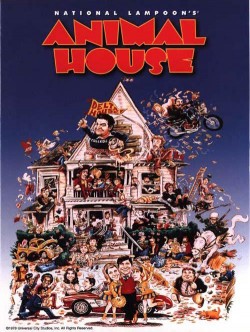 ‘Animal House’
Ramis left behind an impressive comedic legacy, but “National Lampoon’s Animal House” is arguably his most influential film. Aside from being widely regarded as one of the best comedies of all time, the 1978 movie also launched a whole series of “National Lampoon” films and jump-started entire comedy subgenres, including gross-out humor and college comedies. The film, which Ramis co-wrote with Douglas Kenney and Chris Miller, follows the shenanigans of several brothers as they try to prevent their fictional Delta Tau Chi fraternity from getting kicked off campus. “Animal House” still serves as the basis for many modern-day Greek life stereotypes, showcasing practically every fraternity trope known to man, from toga parties and binge drinking to toilet humor and hazing. And even though Dartmouth College—co-writer Miller’s alma mater—is usually credited as the inspiration for the film’s fictional Faber College, elements of the script were also influenced by Ramis’ experiences in ZBT at Wash. U. “Animal House” is simply a classic college movie and one that should be considered required viewing for all incoming college freshmen.
–Katharine Jaruzelski
 ‘Groundhog Day’
What would you do if you lived the same day over and over and over and over again? Ramis and Bill Murray raised that question and answered it in a delightful way with “Groundhog Day.” Murray as Phil the weatherman goes from a jerk to the greatest guy in Punxsutawney, Pa. Both funny and smart, the film is classic Ramis and Murray and a classic movie on its own. “Groundhog Day” is obviously a comedy, and Murray’s attempts to find the limits of his universe and complete disregard for consequences are endlessly delightful, but the eventual love story, while sappy, is still absolutely perfect. And the philosophical question of what you would do if you lived the same day over and over again never gets old.
–Trevor Leuzinger
 ‘Caddyshack’
“Caddyshack” was Ramis’ directorial debut, as well as one of his many writing credits. The rest of this write-up should just be lines from the movie because it is one of the most eminently quotable films. Not a lot really happens, but it is all hilarious. Bill Murray as the gopher-killing greenskeeper Carl Spackler is the highlight, but Chevy Chase and Rodney Dangerfield aren’t far behind when it comes to one-liners. What makes it even more impressive is that each has his own style of humor so none of it gets old. Without a doubt, Ramis has a hole-in-one with this film.
–Trevor Leuzinger
 ‘Ghostbusters’
Harold Ramis co-wrote “Ghostbusters” with Dan Aykroyd and co-starred with Aykroyd and Bill Murray. The movie is an undisputed comedy classic. Ramis’ character, Egon Spengler, acts as the subdued nerd to Murray’s goofball attitude and Akroyd’s over-enthusiasm. It’s hard to stake a comedic claim when acting with commanding presences like Murray and Aykroyd, but Ramis’ deadpan speaks volumes when contrasted with his co-stars’ ridiculousness. He nonchalantly throws in lines like, “That would have worked if you hadn’t stopped me” after Murray’s character reminds him of trying to drill a hole through his own head. “Ghostbusters” was one of the first comedies I remember loving and quoting as a child. Lets say a Twinkie represents all of Harold Ramis’ influence on comedy. According to “Ghostbusters,” it will be a Twinkie 35 feet long and weighing approximately 600 pounds.
–Noah Jodice
 ‘Analyze This’
In 1999, Ramis directed and co-wrote “Analyze This,” which revolves around a mobster (Robert De Niro) having anxiety attacks and the often-unwilling therapist (Billy Crystal) he enlists to cure him. The greatness of this film is its ability to flip every mobster movie trope on its head and mash them all together with the stereotypical therapist. Ramis’ comedy is intelligent and dense but still ridiculous. A favorite scene is the meeting of Crystal and De Niro at a Catholic funeral, where they try to have a serious discussion while continually rising and being seated. The movie works best when Ramis allows Crystal and De Niro to play off each other, but it is packed with funny throwaway gags, too, such as a mobster threatening a cow at gunpoint. Ramis’ direction keeps the action of the movie fast-paced and light, even in moments of emotional intensity.
–Noah Jodice
‘A Benihana Christmas’
This season-three episode of “The Office,” one of the greatest sitcoms of the past decade, featured direction from Harold Ramis, one of the greatest comedy writers in history. Ramis took to the mockumentary style like he had spent his whole career directing in it, mastering the hop from character reaction to character reaction. Jim’s camera acknowledgment is especially hilarious in this episode. Ramis also gives every member of the ensemble a chance to shine, whether it’s Kelly singing “We Belong” to Ryan, Creed stealing a present from the toy drive, or Meredith and her handle of vodka (because a margarita is too sweet). The episode was packed with both sight gags and amazing lines, including Michael lamenting his fresh breakup on the ground behind Pam’s desk with only his legs in sight and Dwight’s description of how to kill a goose (“There’s gonna be a good amount of blood. Don’t let it bother you. Have a bucket there.”). The episode was so full of material that Michael Schur, one of the writers and producers, recently tweeted that they decided to make it an hour-long episode instead of the traditional half hour. Season three is widely considered the season that “The Office” took a huge step forward in quality, and Ramis’ direction helped elevate it from good to great.
–Georgie Morvis
Stay in Touch!
Get the latest and top news from StudentLife delivered to your inbox