News
WashU experts discuss Minneapolis unrest
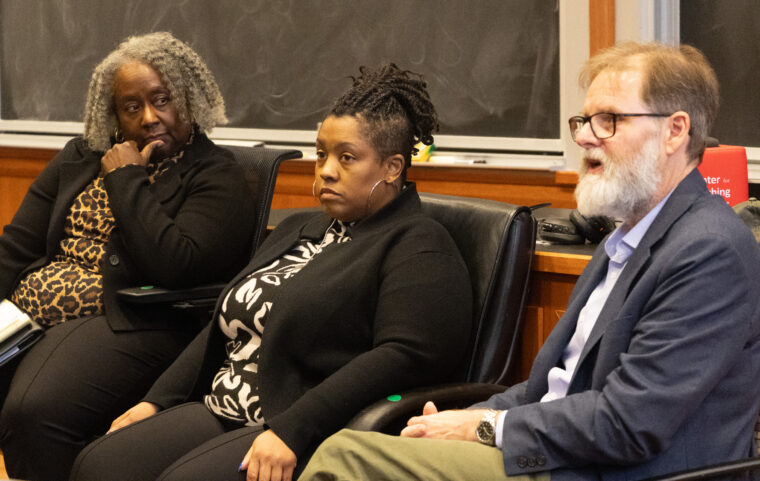
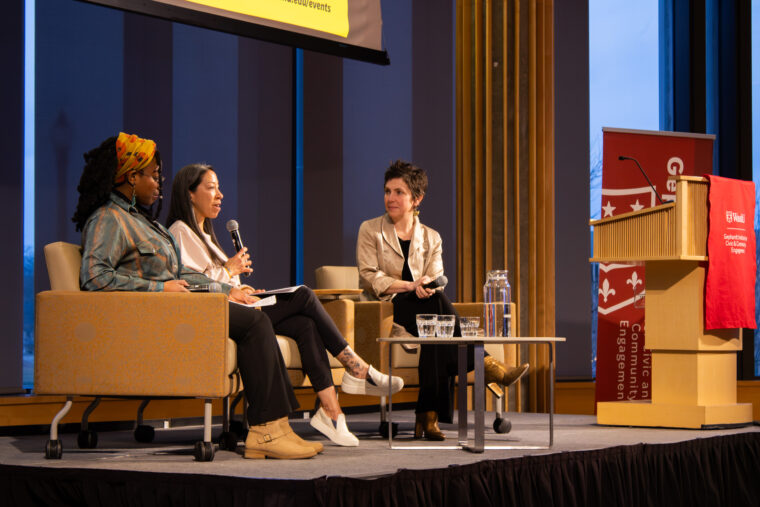
WashU panelists analyze the impact of the recent protests in Minneapolis (Benjamin McKinley | Contributing Photographer).
Amid rising tensions in Minneapolis surrounding Immigration and Customs Enforcement (ICE) raids and reports of public brutality, a panel discussion was held on Tuesday, Feb. 17, examining the significance of current social movements and the role civic action has played in shaping their impact locally and across the United States.
WashU’s Departments of African & African American Studies and American Culture Studies held a discussion about the current social movements in Minneapolis and across the U.S. The panelists were Vetta Sanders Thompson, E. Desmond Lee Professor of Racial and Ethnic Diversity at WashU’s Brown School; Andy Andrews, sociology professor and director of graduate studies in sociology; and Sherita Love, a facilitator at Crossroads Antiracism Organizing and Training in St. Louis, sat down to share how civic action has contributed to the significance of these movements. The event was moderated by Kia Caldwell, professor of African & African American Studies.
Since the start of 2026, ICE has killed two bystanders in Minneapolis, inflaming a social movement throughout the city as people protest ICE’s actions. The discussion opened with panelists reflecting on the significance of this moment, marked by growing unrest in Minneapolis and across the nation. Love began by recognizing similarities between activism today and past movements, highlighting past successes, and encouraging people to try to learn from them today.
Love also stressed the importance of continuing the movement even when the initial spark dies down.
“We learn lessons from those who came before us. Who matters? Who doesn’t? Who gets to say what justice is and what it’s not?” Love said. “And what do we do in the interim, when the cameras go away, when this is no longer a headline?”
Andrews analyzed the different protest movements throughout the first and second Trump administrations, noting the inability of movements to capitalize on previous opportunities to create long-term political, cultural, or social change. He explained that although the Trump administration has attempted to suppress protest efforts through heightened violence, this has instead created more anti-ICE sentiment.
“There have been moves by the Trump administration that, in a sense, have played into the hands of weakening its larger project,” Andrews said.
Sanders Thompson then analyzed the situation from her background in psychology, explaining the mental toll that social movements take on participants. She said that as protesters are put on the front lines, handling difficult situations and often police brutality, it is a mental challenge for all those involved.
“What I see as a [clinical] psychologist is the potential for a mental health crisis,” Sanders Thomspon said.
She continued by explaining the reduction of resources for psychological support in the U.S. and warning how that may affect protesters. She cautioned people considering partaking in activism to be mindful of their own mental health.
“The significant level of anxiety, stress, and trauma that have occurred under this administration, with the funding cuts that we have seen, completely stripped the major agencies responsible for community response to mental health,” Sanders Thompson said.
The floor was then opened to audience questions, with one attendee asking whether the current period resembles any previous moment in U.S. history or if the present circumstances are unique. Love argued this period in American history is truly unprecedented, claiming that checks and balances in the U.S. have been broken down and that the Trump administration has discarded the rule of law.
“How long can we not think of this as a fundamentally different moment?” Andrews said.
When asked how individuals can best engage in activism, the panelists emphasized that there are many different ways to participate in social movements. Andrews explained that if front-line protesting is not something that you are willing to do, there are other forms of “low-cost activism” that people can engage in. He said this could mean engaging in social media work and volunteering in ways that aid protesters without joining them.
Sanders Thomspon stressed the importance of self-care and setting limits.
“Everyone can’t do everything,” Sanders Thompson said. “You need to figure out where you fit.”
Another audience member asked how individuals can cope with feelings of hopelessness when it seems that much of the government they once knew and trusted has eroded. Sanders Thompson emphasized the importance of unity and continuing the current effort.
“As long as hope is present, people will act,” Sanders Thompson said. “When people are so overwhelmed that they won’t activate anymore, that’s when hope is lost.”
Stay in Touch!
Get the latest and top news from StudentLife delivered to your inbox