AI has proven to be an immensely powerful tool for improving productivity; however, it should not be seen as a replacement for human skill, but instead as a complement to it.
We don’t have to dismiss AI just because it is currently in the hands of greedy corporations. We can make a conscious choice to shift the conversation to something productive and meaningful, instead of putting it down altogether.
It’s the hottest question in college philosophy debates, a question that is boiling the blood of many creatives and instilling a subtle but growing fear that the very core of what makes us human is being slowly usurped and nullified by machines: Can artificial intelligence make art? It seems that AI has done a pretty good job of convincing us that it can create works comparable to those of the great masters — sometimes doing it better.
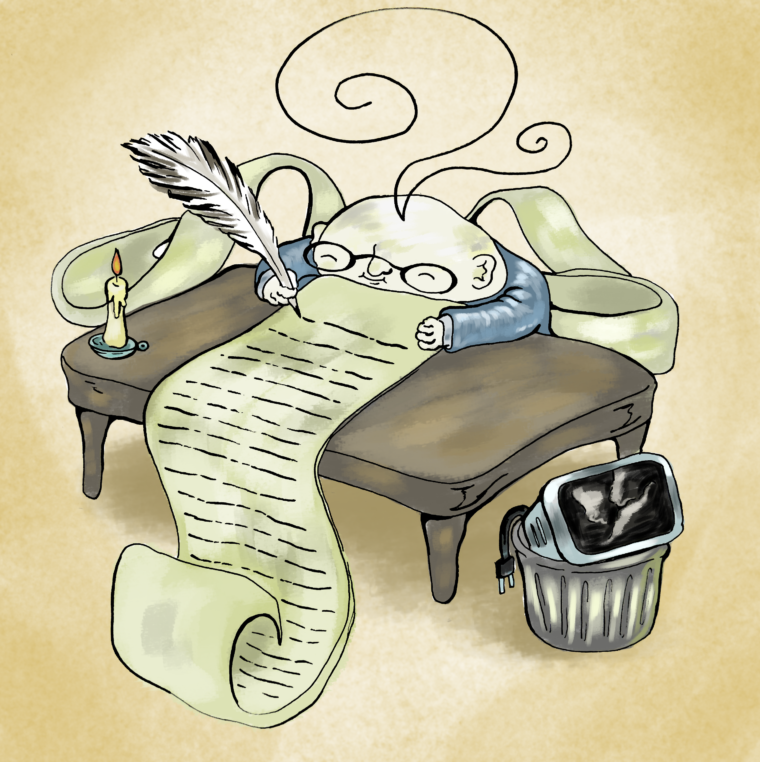
When we share our writing with others, we want it to look perfect because we want to look perfect. Of course, we are nowhere near perfect beings. Still, the desire for perceived excellence motivates many to AI-edit their writing long before another pair of human eyes lays rest to their work.
But what happens when Wikipedia becomes weaponized and used to advance an agenda rather than the truth? This is the question that author and WashU alum Stephen Harrison tackles in his debut novel “The Editors,” which comes out in August.
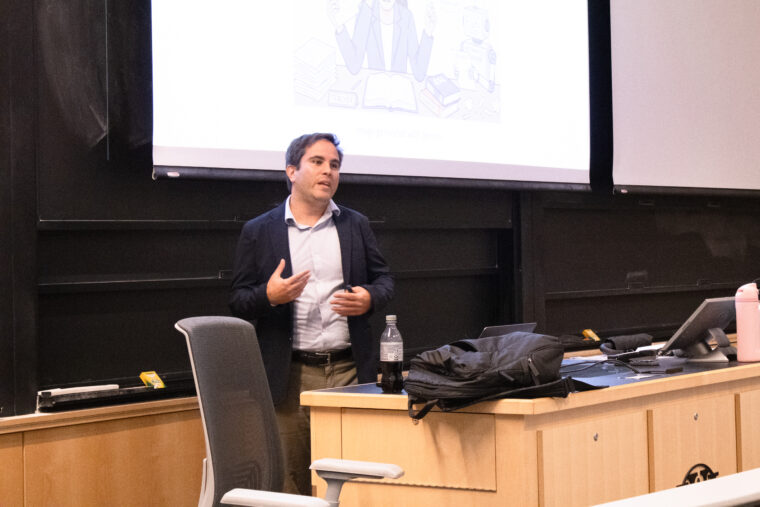
Washington University’s Prison Education Project (PEP) hosted Marisa Omori, Ph.D., to speak about how the development of artificial intelligence, specifically facial recognition technologies, may impact racial inequality in the criminal […]
Amidst the growing debate over AI’s role in the classroom, Student Life’s Managing Multimedia Editor, Sanchali Pothuru, and Multimedia Editor, Mireya Coffman, join three professors, Tarrell Campbell, Konstantina Kiousis, and Guy Genin, to see if they can distinguish between student essays and ChatGPT-generated content.
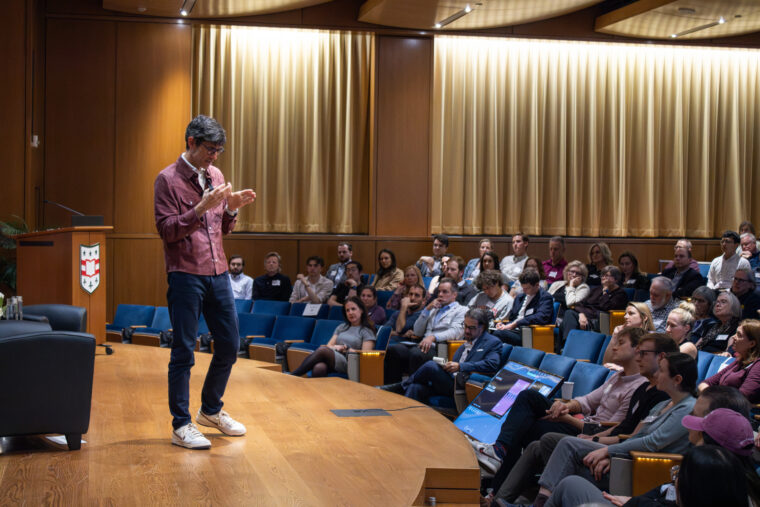
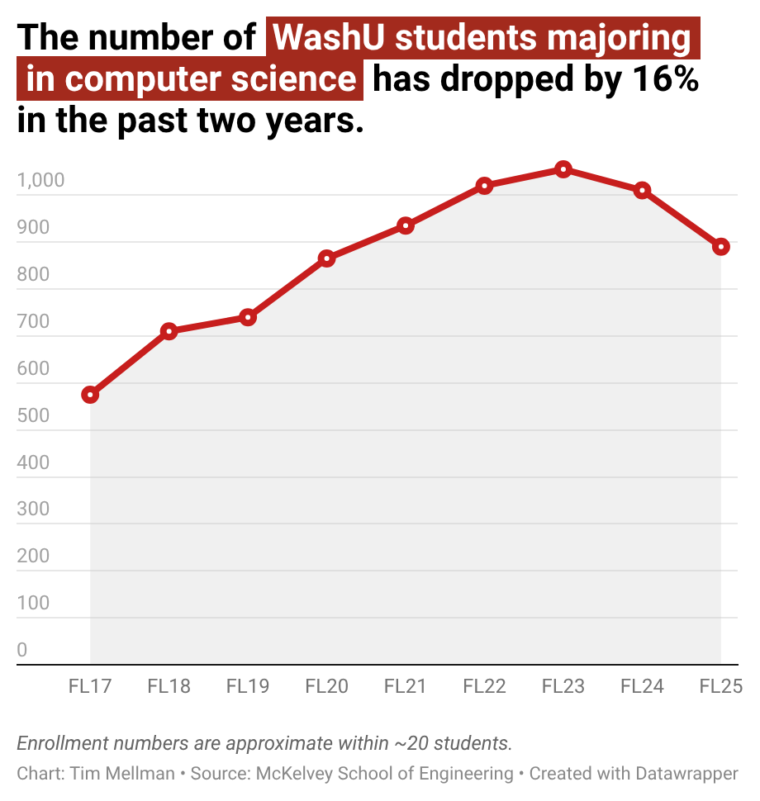
Faculty in the McKelvey School of Engineering are grappling with how to best prepare computer science students for careers that will be fundamentally changed by generative Artificial Intelligence (AI).
Chat GPT, an advanced artificial intelligence interface that can generate essay responses, solve mathematical equations, and more, is changing the field of academia and education.
Stay up to date with everything happening at Washington University and beyond.
Subscribe