Men's Soccer | Sports | Sports Feature
In the zone: How men’s soccer Sebastian Valdes & Miles Newman lock in for games
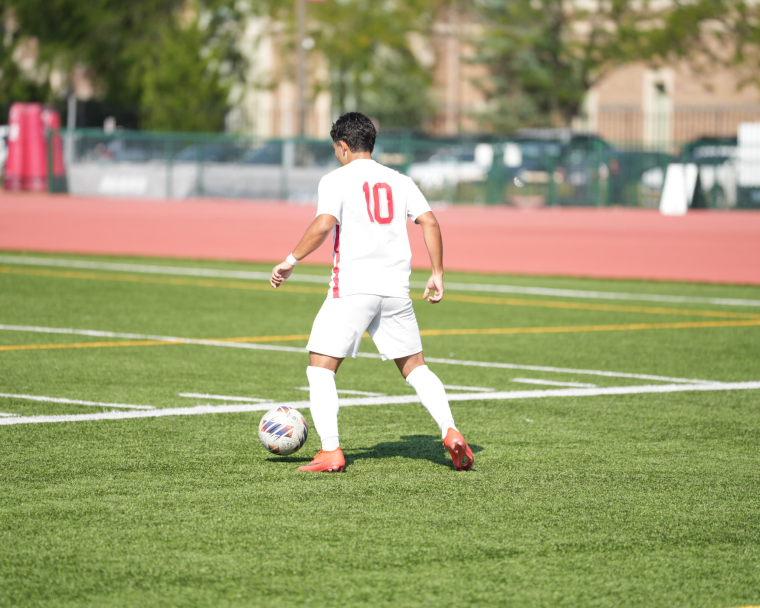
Sophomore Sebastian Valdes has a specific jewelry removal routine before every game. (Courtesy of Sebastian Valdes)
Collegiate soccer games always start the same way: Athletes warm up on the field, the national anthem plays, and the starting whistle blows. However, there is much more to athletes’ pregame routines that goes unnoticed. Many athletes develop specific habits and rituals to help calm their nerves and recenter their focus. From pregame snacks to breaking out of a team huddle, men’s soccer sophomores midfielder Sebastian Valdes and defender Miles Newman follow specific pregame rituals to help them get in the zone.
Valdes has been wearing the same pair of socks and underwear to games for the past two years. Newman makes sure to touch the hands of all of his teammates and coaches when he leaves the team huddle before jogging onto the field.
Newman does not consider himself superstitious, nor does he believe that if he fails to fist bump everyone, he’s going to have a bad game or the team is going to lose. Nevertheless, it has become a habit at WashU: Newman, who has started in all eight games this season, goes out of his way to make sure he fist bumps everyone before heading onto the field.
“I don’t really know when it started or why it started, but I just do it every time now,” Newman said.
Newman has changed his routine throughout his soccer career. In high school, Newman ate an energy gel before every game, and last year, he drank water with Liquid I.V. before every game, even when he may not have needed it. Now, he does neither. Since playing for WashU, Newman has meditated during the national anthem before games, a practice specific to his collegiate routine. While some athletes have maintained the same routine out of habit or superstition, Newman only uses pregame preparations that still serve him.
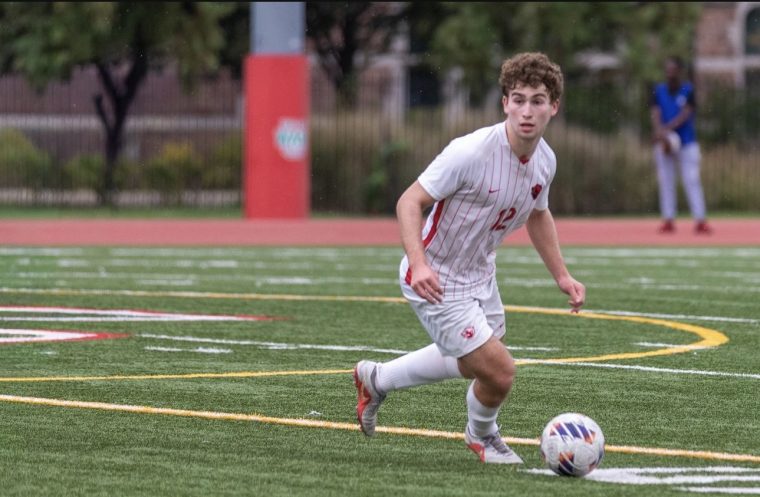
Sophomore Miles Newman makes sure to fist bump all of his teammates and coaches before each game. (Courtesy of Miles Newman)
‘Valdes, on the other hand, does consider himself superstitious, relying on soccer-related routines and habits for as long as he can remember. However, Valdes has changed his rituals based on certain circumstances, such as playing back-to-back days on the road.
When he plays well in the first game, Valdes likes to walk into the locker room for the second game wearing the same outfit he wore to the previous one. But without access to a washing machine on the road, Valdes washes his outfit in his hotel room sink with hand soap, ensuring it is ready to wear the next day.
“If I miss[ed] a little step in my routine, I’d be like, oh my God, I’m [going to have] a terrible game,” Valdes said.
Now, his routine is more compressed, which he credits to gaining maturity and now having to share a locker room with teammates at WashU. While playing for a club team in high school, part of Valdes’ pregame routine happened in the car rides to games. Now that he plays for WashU, he is expected to get to the locker room 90 minutes before game time. Valdes still tries to maintain his pregame rituals as much as possible, such as having a banana and Bodyarmor Flash I.V., cracking his back on a soccer ball, and removing his jewelry in the same order.
“I’ll do my left bracelets and my left earrings and then my right earrings the same way every time,” Valdes said. “And I can’t let any of it touch the floor; it needs to go straight into my little bag.”
While athletes’ niche routines may seem odd at face value, science backs them up: A study of semi-professional soccer players suggests that following a personalized pre-kick routine can reduce physical anxiety before taking a penalty kick — one of the highest-pressure scenarios in sports. While superstitions aren’t based on fact or reason, many routines are, even if subconsciously. The predictability and reliability of routines help athletes feel calm, prepared, and in control.
“It’s like almost a mental checkpoint for me, where if I do this, I know I’m ready to go,” Newman said.
Stay in Touch!
Get the latest and top news from StudentLife delivered to your inbox