Scene
Where the ‘F’ is St. Louis in ‘DTF St. Louis?’
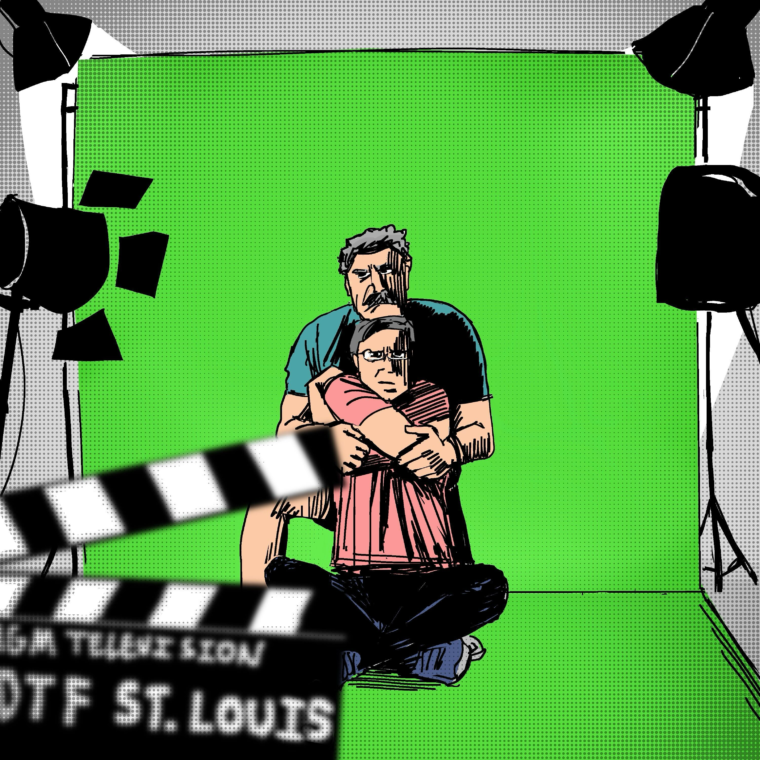
Kevin Kan | Illustration Editor
For the American Midwest, a simultaneously bustling and building region, any recognition in mainstream media is rare and worth celebrating. Missouri especially, whose culture lives and breathes in St. Louis, never gets the limelight. But, the time has come for WashU’s beloved city to launch into pop-culture relevance with the release of HBO’s “DTF St. Louis.”
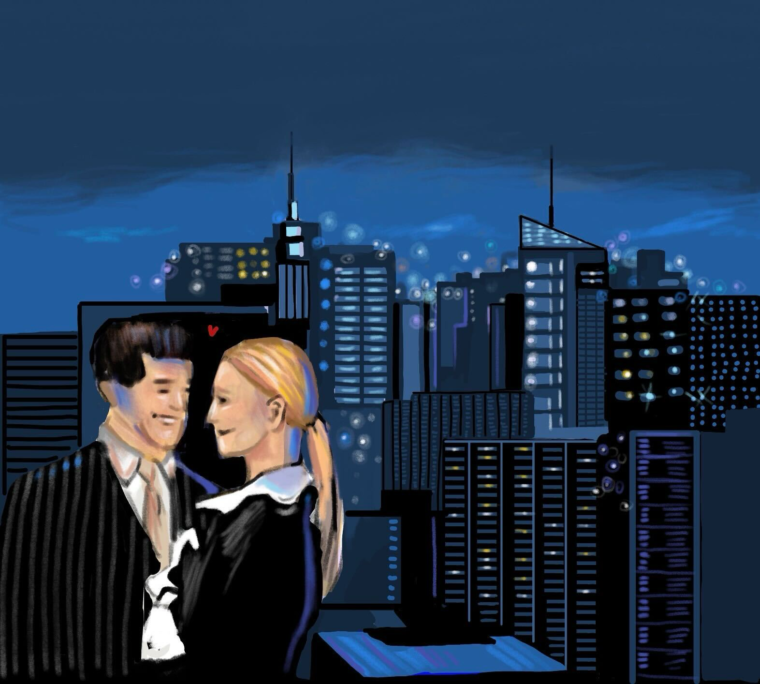
Created by Steven Conrad, the mini series follows middle-aged friends, Clark Forrest (Jason Bateman) and Floyd Smernitch (David Harbour), who work at a local news channel in suburban St. Louis and are sexually dissatisfied in their marriages. Forrest sees a news segment on the hookup app “DTF St. Louis” for married people and ropes Smernitch into making a profile. Somewhere down the road, Smernitch is found dead at a community pool with no evidence of murder. As Detectives Donoghue Homer (Richard Jenkins) and Jodie Plumb (Joy Sunday) try to solve the case, the affair between Forrest and Carol Love-Smernitch (Linda Cardellini), Smernitch’s wife, is revealed.
While a promising dark comedy chock full of crazy plot twists and complex characters, “DTF St. Louis” also shockingly lacks true St. Louis representation. Given the title, one would expect at least a mention of the most iconic parts of the city. For many St. Louisans, that means Forest Park, the Delmar Loop, Central West End, and the Gateway Arch, or food specialties like toasted ravioli and gooey butter cake.
That’s not to say Conrad didn’t try to showcase St. Louis, but his sparse efforts are overshadowed by rampant cultural and geographic inaccuracies that a 20-second Google search would solve.
So, just in time for its final episode, here’s what WashU students with St. Louis pride should prepare themselves for when binging the show:
The Midwest doppelgänger
The biggest gripe St. Louisans should have with “DTF St. Louis” is the fact it wasn’t filmed here. Yep, you read that right. The series was actually shot in Atlanta, Georgia, a light eight-hour drive from the Gateway City. According to Conrad, this state-sized elephant in the room was ultimately a matter of cost, but he claims that his characters’ mistakes are universal and can be made anywhere, from St. Louis to Atlanta, as justification.
Why then, if the city doesn’t matter, were the flashbacks of Smernitch’s job interview in episodes two and five filmed on location in Chicago? Maybe because Conrad happens to be based in Chicago, but who’s to say? This hypocritical decision affects more than just setting when Forrest and Love-Smernitch secretly go to a Cardinals game. The St. Louis audience will be completely taken out of the scene because there are zero shots of Busch Stadium’s exterior and the interior is filled with high school football-looking bleachers instead of folding seats. These haphazard attempts to feel like St. Louis when the show could’ve taken place anywhere else begs the question: Why is it even called “DTF St. Louis?”
Jamba what?
Another problem with television set in one place but filmed elsewhere arises when it comes to depicting a city’s food scene. In St. Louis, there are plenty of region- and city-specific joints like Culver’s, Corner 17, Kaldi’s Coffee, and Clementine’s Ice Cream. With already high production costs, it tracks that Conrad couldn’t recreate these iconic eateries in scenes outside the suburbs. But having the truth behind Forrest and Love-Smernitch’s affair revealed in a Jamba Juice? Smernitch making his DTF profile in an Outback Steakhouse? Just looking up “food in St. Louis” will show these are not common restaurants. The nearest Outback Steakhouse is in Sappington, Missouri, 25 minutes from St. Louis.
Whether a symptom of product placement or sheer laziness, neither is an excuse for overlooking the perfect opportunity to get funding from advertisers while still representing St. Louis: Panera Bread! Or, as WashU students may know it, St. Louis Bread Co. Since going from small business to national chain, Panera can be found all over Atlanta, so filming there would be both a financial benefit for Conrad and a niche reference for St. Louisans.
How to lose at STL trivia
From made-up streets and suburbs to calling Cardinals tickets “expensive,” there’s a whole host of miscellaneous facts about St. Louis that Conrad either forgot or didn’t care to get right.
First off, the town Forrest and Smernitch commute to work from is called Twyla. Even though Conrad has every right to make a fictional setting for “DTF St. Louis,” it’s a fine line between creating something unique and relying on existing locations to build a narrative. So, writing dialogue and plot lines about nonexistent “Center Street” or “Kevin Kline Community Pool” come across as contrived when Greater St. Louis has real surrounding cities and public centers to choose from. Not to mention the show’s weather station is called WTGK, which means it would be broadcasting east of the Mississippi River since it starts with a W. Hopefully Conrad knows that St. Louis, the “Gateway to the West,” is west of the Mississippi, but would it really be a surprise if he didn’t?
For “DTF St. Louis” viewers who aren’t from St. Louis, these offenses may seem excusable or go completely unnoticed, but knowing the little details isn’t that hard when the information is freely on the internet. Despite its confused setting, however, the show is a fascinating watch and should be praised as an example of how to balance slow-burn thriller with humor. Just don’t expect to see the real Gateway Arch or anything.
Stay in Touch!
Get the latest and top news from StudentLife delivered to your inbox