Scene
Everclear frontman Art Alexakis on resurgence, relevance, and rock’s future
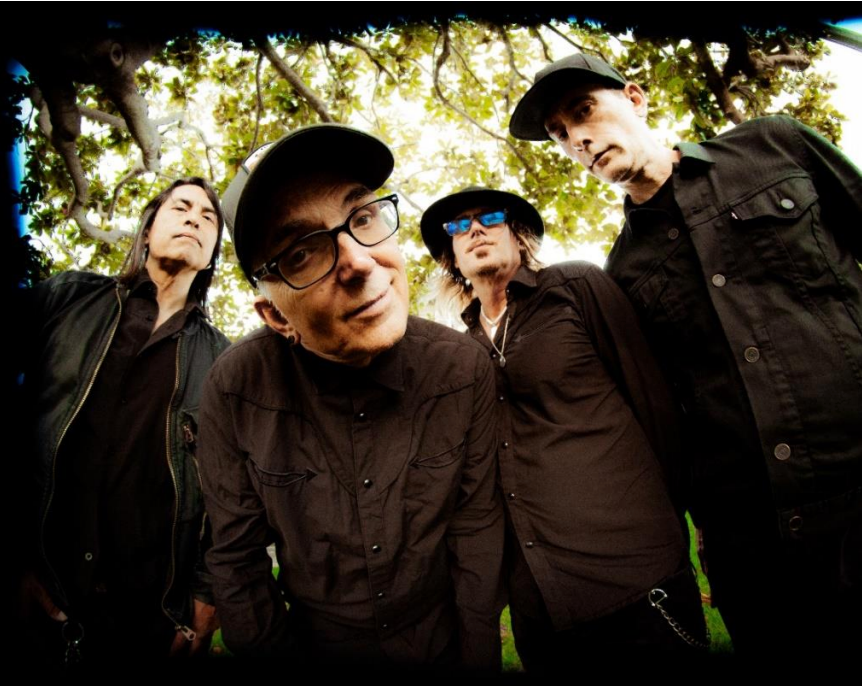
While Art Alexakis, frontman of Everclear, has been adamant in the past about not making a new album, he says that Trump-era America has inspired him to write one. Everclear fans can look forward to a new album possibly in 2026 (Photo courtesy of Brian Cox).
“It’s amazing how music and art can transcend generations,” Everclear frontman Art Alexakis tells me during our phone call. His voice sounds twice as gritty over the phone as it does in his songs when he mentions he’s drinking what’s probably his second or third cup of coffee that morning. He needs the energy, though, to “talk about [himself] endlessly for two hours,” which is how, I then assume, he plans to spend the next few hours of his morning.
Everclear, a leading alternative rock band from the ‘90s, is currently on tour for the 30th anniversary of their sophomore album, “Sparkle and Fade.”
The Portland band was formed in 1992 by Alexakis, who was originally joined by bassist Craig Montoya and drummer Scott Cuthbert. The band’s lineup has changed since then, but Alexakis remains its lead singer and guitarist. Everclear reached the height of its popularity in the ‘90s and 2000s. Their second, third, and fourth albums are all certified platinum, with their third, “So Much For The Afterglow,” going double platinum in 1998. In 1999, the band was nominated for a Grammy Award for Best Rock Instrumental Performance.
The band hasn’t released a new studio album since 2015. That’s why it’s all the more impressive when Alexakis says that in the past few years, especially on Everclear’s current tour, he has been noticing a resurgence in the band’s popularity with a younger, teenage audience.
“Last night, I met a bunch of 15- and 16-year-olds who knew Everclear on their own, not from their parents, not from people in their family,” Alexakis said. “They found us online, and they got their moms to take them to the show, and their moms are super into it now.” He tells me that 30% of Everclear’s crowd now is composed of a younger audience.
“Most of those kids,” –– that is, people between their late teens and in their 30s, Alexakis says –– “weren’t around when we had a hit song.”
Alexakis hypothesizes that the growth in Everclear’s younger audience has to do with the younger generation’s growing frustration with contemporary music.
“What they tell me is that … they’re really frustrated with contemporary music. They want rock music and they don’t really feel like anyone now is doing it. And so they gravitate to the ‘90s,” Alexakis says.
Alexakis opts to focus on the positive, something he does often throughout our conversation: “The fact that younger people are running on to our music and the 90s bands, it really shows the relevancy that good rock and roll has.”
One of the reasons people continue to be drawn to Everclear’s music, even 30-something years on, is due to the deep connection they feel in the songwriting. Alexakis explains that his songs are split into three kinds of storytelling: autobiographical, semi-autobiographical, and fictional. One of the band’s most popular tracks, “Father of Mine,” falls into the first category.
“But the whole point is, if I can write from those three ideas and you as the listener can’t tell the difference, then I’m doing my job,” Alexakis says.
Alexakis was raised by a single mother alongside his four other siblings on the west side of Los Angeles. Despite having a difficult upbringing, he repeatedly cites his mother’s positive influence on the way he approaches nearly everything in life.
“One of the things I learned from growing up with a single mom is tenacity. Not giving up,” he says. “I think that if you are doing something that you believe in … you have to be tenacious.”
These learnt qualities that are so deeply ingrained in Alexakis’ life have been the force behind many songs that have changed the lives of others.
“People started telling me that it was because of my music that they were trying to get off drugs. When ‘Father of Mine’ came out, people told me that it helped them through their relationship with their father,” Alexakis mentions.
Alexakis traces his penchant for storytelling back to when he was five years old and another kid asked where God came from.
“And I came up with this elaborate, ridiculous story about how two bats were flying out in the middle of space, and there was no stars, and they got together and they had a baby bat. And that baby bat became God. And then they believed it,” Alexakis says, laughing.
Alexakis’ own influences include other alternative acts from the ‘90s, such as the Pixies. He tells me the story of the first time he listened to “Surfer Rosa,” Pixies’ first full-length album. A friend of his had just bought the album and hated it. “A friend of a friend,” Alexakis clarifies. Before this friend could return the tape, Alexakis bought it off him.
“I was married to my first wife at the time, and I told her about it, and she got in the car, and we just drove all over San Francisco, up into the open Golden Gate Bridge, and listened to that tape probably six, seven times,” he says.
While “Surfer Rosa” “changed a lot” for Alexakis, he says that Pixies’ second album, “Doolittle,” changed his life.
I mention that I saw Pixies just two nights ago and that my friends and I were easily the youngest people in the crowd.
“Your parents were probably in college or high school when the Pixies came out,” he tells me. “And isn’t that great about music and art? It’s universal, man. A person can never [not] look at a Van Gogh and just get those chills.”
The first time Alexakis saw a painting by Van Gogh was also the first time he ever visited New York City.
“I was a poor kid growing up. I grew up in a housing project. Never travelled a lot,” he tells me, saying that the first time he visited the city was when he travelled with his previous indie bands in his 20s. During his trip, Alexakis visited the Museum of Modern Art (MoMA).
“I remember just walking up and looking at this one picture, going ‘Wow.’” The painting that gave Alexakis the chills was “Gothic” by Jackson Pollock. “He’s one of my favorites.”
When he walked to the gallery where Van Gogh’s “Starry Night” hangs on the wall, Alexakis remembers he “went into the bathroom and kind of cried a little bit. Art and music just really, really, really resonate with me.”
In the past few years, Alexakis has said that Everclear does not plan on making a new album any time soon. In fact, Alexakis even said in an interview with Louisville Public Media that the idea of making a new album “sounds like 10 root canals.” That’s why I am so taken aback when Alexakis reveals that Everclear is currently working on a new album.
“I’ve got about six songs pretty done,” he says. “I’ve got a bunch of ideas.”
Alexakis says he’s been writing for the last eight months. The band plans to step into the studio and start recording from January to March. So what changed? The United States’ current social-political climate is what’s inspiring Everclear’s next record.
“I wasn’t gonna make any new records. But then, with all the political stuff that’s going on and just the way society’s changing, we’re on a precipice,” he explains.
Alexakis hopes to release the record sometime in 2026.
Everclear is set to perform at The Family Arena in St. Charles on Sept. 26.
Stay in Touch!
Get the latest and top news from StudentLife delivered to your inbox