Profile | Scene
Interim provost Marion Crain discusses her role, serving student interests and the search for Thorp’s permanent successor
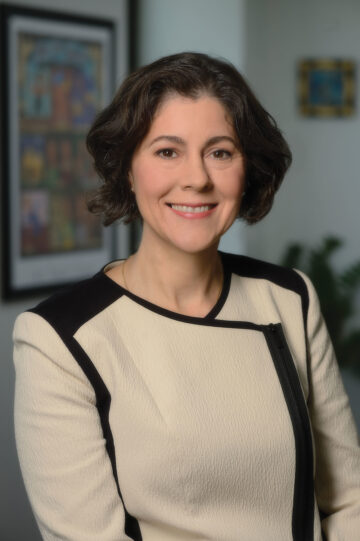
Although Marion Crain began to serve as interim provost after Holden Thorp concluded his term on July 15, many students have yet to be introduced to her. Some still wonder: What exactly is a provost?
The Washington University Office of the Provost website describes the role as the “chief academic officer” of Washington University, overseeing academic curriculum and research, faculty and institutes such as the Gephardt Institute for Civic and Community Engagement.
“The provost works with the deans of the schools kind of as a musical conductor would in an orchestra,” Crain said. “So if you think about the schools as each being a section of musical instruments, you know there’s the flutes and the trombones and the drums, each one makes a beautiful sound by itself, but it’s the provost’s job to kind of coordinate them all, bring them together, and find synergy between them so that they can produce a more harmonious and beautiful sound that’s bigger than the sum of its parts.”
Crain has extensive experience in the provost’s office, serving as vice provost for seven years before becoming interim provost. She was also a faculty fellow in the office between 2009 and 2012. She views these experiences as instrumental in setting her up for success as interim provost.
“That more than anything, I think, prepared me for this job because it helped me learn about Wash. U. and many of the people who are loyal and committed here at Wash. U., faculty and staff alike, and to meet some of the students and get involved with them as well,” Crain said.
Much of Crain’s background is in law, as she has served as the Wiley B. Rutledge Professor of Law since 2008. She is a scholar of employment and labor law, also focusing on class inequality and social movements.
Crain noted that coming from the School of Law, rather than an undergraduate school or department, has allowed her to be as objective as possible throughout her time in the provost’s office.
“I don’t have a horse in this race,” Crain said. “I don’t favor any one of the undergraduate schools because I’m not affiliated directly with them as a faculty member and don’t teach in those schools. So it gave me just a little bit more objectivity, a little bit more space to appreciate and learn about them, and I came into it with no set of assumptions about what was going on here.”
As a scholar of collective action and social movements, Crain expressed the importance of student activism at Wash. U. and on college campuses at large.
“I am always excited to see students at any of the institutions where I have taught stand up for what they believe is right and just, whether it involves workers or inequality or any other social-justice-oriented kind of topic,” Crain said.
She appreciates students’ willingness to question the status quo in order to continue to improve the University community.
“Part of what we hope you students will get at college is the ability to question received wisdom, to question authority and to ask ‘Why?’” Crain said. “It causes us then to look more carefully at what we are doing as an institution and ask ourselves ‘Why?’ And sometimes the answer is, ‘Here are the reasons,’ and they’re good reasons. And sometimes the answer is, ‘Hey, we hadn’t thought about that. Maybe we should change this or that structure or situation in order to accomplish a better result.’ So I think activism, whether it’s students or anyone else, it’s really important to help society change and evolve for the better.”
Although the provost works closely with faculty, Crain highlighted the importance of the work the office does to serve Wash. U. students.
“Students are at the core of everything the institution is here for,” Crain said. “So we obviously can’t accomplish much if we aren’t always thinking about student interests and student needs and what’s going to produce the kinds of students and the kind of education for students that we’re here to provide.”
Chancellor Martin and a 10-person committee are currently in the midst of a search for a permanent provost. Crain plans to aid Martin throughout the search process and advise candidates on the responsibilities and necessary skills of the provost position. Crain expressed a clear hope for the talents the next provost should possess.
“The ability to work well with people,” Crain said. “The skills to be able to help people get from A to B and to take input from those folks who know the institution… collectively better than any one provost will ever know it. So their advice and council is absolutely critical and so is their engagement. That’s faculty, staff and students. So finding somebody with those people skills I think is probably the most important task we have.”
Stay in Touch!
Get the latest and top news from StudentLife delivered to your inbox