Facilities and Construction
The Lofts LEED the way with new certification
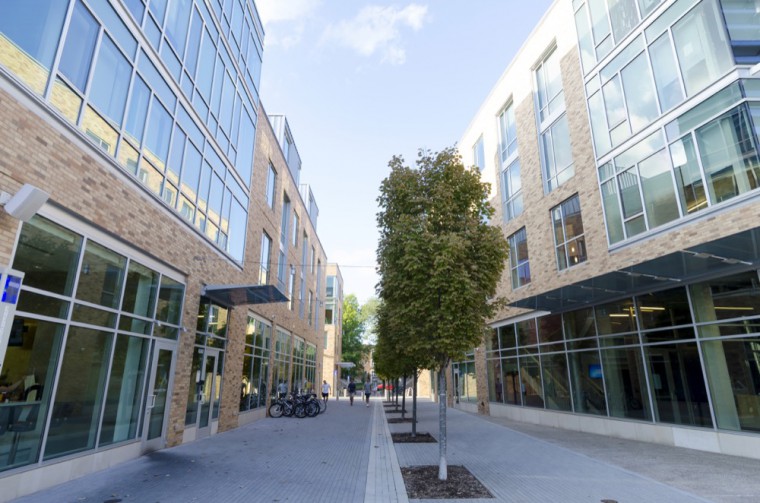
The Lofts of Washington University, the most recent student housing project, have achieved the highest level of LEED certification and become the first campus buildings to achieve platinum status.
Leadership in Energy and Environmental Design is a rating system developed by the United States Green Building Council that provides clear goals for construction projects to create green and sustainable living. The ranking works on a point-based system; to be awarded the lowest level, LEED certified, the building must accumulate at least 40 points. Silver, gold and platinum certifications can be achieved at various increasing point values, with a minimum of 80 points needed to achieve platinum.
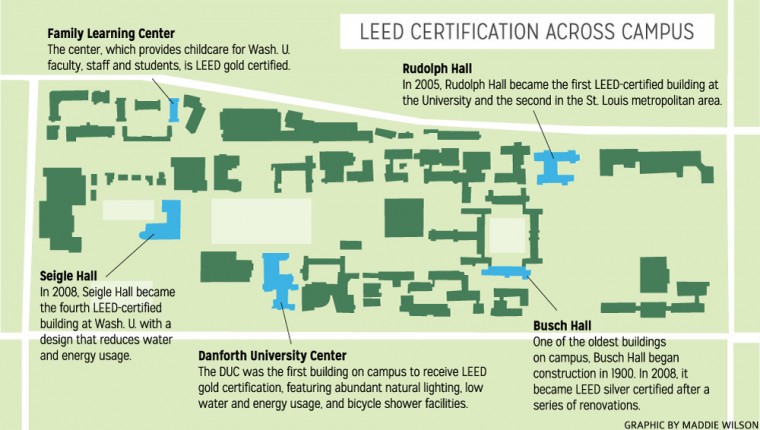
According to Project Manager Nancy Marshall, Washington University began designing projects according to the LEED standards in the early 2000s. The first LEED-certified building constructed on campus was Rudolph Hall in 2005, with the Lofts nearly a decade later becoming the first to reach the highest level with 84 points.
“It was a challenge because it’s a lot of points to get, so they pushed us to explore more options,” Marshall said. “We made it and had four points to spare.”
According to Marshall, all new University buildings are now required to earn at least a silver certification, which requires at least 50 points. Points can be earned in areas such as water efficiency, energy and atmosphere, materials and resources, and more.
Assistant Vice Chancellor for Sustainability Phil Valko said that one aspect that contributed to the increased sustainability of the Lofts was the push to use more efficient energy.
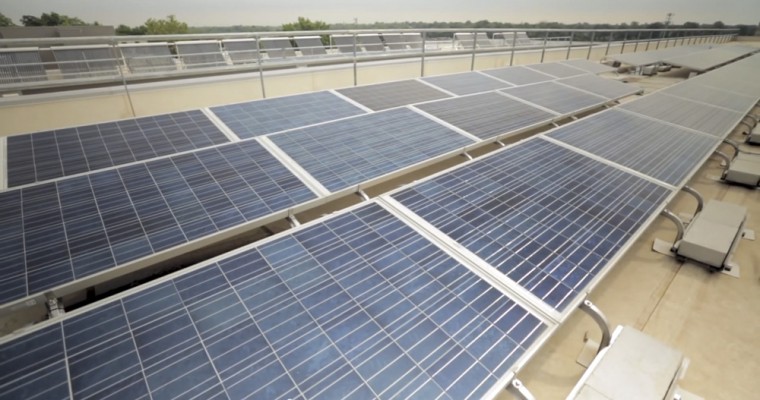
“The key things that bumped us into the platinum zone relative to past projects included designing building[s] that [are] more efficient than some of our other buildings, so really looking very, very closely at the energy usage of the buildings and making sure that they’re as efficient as possible,” Valko said. “Other key elements are the two solar panel systems on the building. There’s solar-powered water, which provides about 25 percent of the domestic hot water to the buildings, and then there are solar panels that provide roughly 10 percent of the electric use of the buildings.”
 Courtesy of WUSTL Public Affairs
 Solar panels sit on top of the Lofts of Washington University, which recently achieved LEED platnium status. Features such as energy-efficient appliances and light-retaining shades helped the new buildings receive the prestegious label.
The Lofts’ design and construction earned points in areas that no Washington University project had previously earned. The Brownfield Redevelopment point, for example, was achieved by building on a contaminated soil site. According to Marshall, the space where the Lofts currently exist was formerly a muffler shop that left the soil contaminated. Before construction began, that soil was removed and replaced.
Valko also noted that this certification marks not one but two major milestones for the University: along with being the first project to be certified LEED platinum, it is the University’s 20th LEED-certified project, with more to come.
“Hopefully each of our future projects in some way serve as a milestone,” Valko said. “With each project we really should be looking to try new and different things. The new Brown Social Work building is on track to be our first LEED-certified platinum building on the Danforth campus…A number of the things that have helped us reach platinum were lessons learned from the Lofts.”
The next LEED project scheduled is the long-planned reconstruction of Rubelmann House.
“Ruby will be LEED gold for sure at a minimum,” Marshall said. “We’re doing some redesign on it now, but the project starts in the spring. We’re starting demolition in May.”
For now, LEED project coordinators are happy with the success they’ve had at the University.
“I’m pretty excited about [the Lofts]. It’s not perfect, but for our first significant venture off campus, and not doing a traditional kind of construction, I think it’s been pretty successful,” Marshall said.
Stay in Touch!
Get the latest and top news from StudentLife delivered to your inbox