Academics
What’s in a name? Several programs on campus looking for departmental status
A pair of girls at a recent Alpha Phi date party brought to light a little-known fact: Women, Gender, and Sexuality Studies (WGSS) and African and African American Studies (AFAS) are programs and not, in fact, departments.
Seniors Louisa Kornblatt and Ariel Frankel, who are both majoring in WGSS, were bored of dressing up as flappers for the all-too-prevalent “Great Gatsby”-themed parties, deciding to go as suffragists instead. Frankel held a sign that read “Chancellor Wrighton, How long must WGSS wait until it is a department?”
“We thought, ‘What’s our other favorite thing from the ’20s?’ The women’s right to vote. Along with that, we wanted to make it relevant to what’s going on here on campus. We were our own version of suffragists. And the fact that WGSS is only a program is not widely known to the general student body. Most people just assume it’s a department, especially since it is so popular,” Kornblatt explained.
The two reportedly were asked several questions about the WGSS “department” that evening which, in their eyes, accomplished what they had set out to do. After receiving so much attention, they are now focusing their efforts toward a petition to raise awareness about the issue and show the University administration the student interest.
“Formally, we can’t do as much because we’re a program, but informally, I think that we probably don’t have as much status within the Wash. U. academic world,” Kornblatt said. “I think there’s still a lot of people in the women’s movement who feel like they need to prove this is a discipline that is worthy of study.”
Recently, a committee has formed to discuss the importance of the College of Arts & Sciences’ programs and whether any action should be taken to promote the status of those that are underrepresented. While most American universities and colleges have chosen to establish women and gender studies as a program, some have elected to raise it to departmental status, including the University of Missouri; Rutgers University; University of Arizona; University of Massachusetts Boston; University of Massachusetts Dartmouth; University of California, Los Angeles; University of Michigan and University of Oregon.
Barbara Schaal, dean of the faculty of the College of Arts & Sciences, noted that the primary difference between departments and programs is the respective disciplinary focus. While departments tend to have set disciplines within academia, programs tend to combine several disciplines for their courses of study.
Schaal pointed out that not all programs want to be departments for fear of losing their interdisciplinary abilities. She noted that the International and Area Studies program prides itself on its interdisciplinary work and does not feel that it should be made into a department.
“It’s not like this is a hierarchy where programs are less than departments, but they’re different than departments,” Schaal said. “There’s no underlying principle of a program. Each one has to be considered separately. What’s most important is flexibility.”
Professor William Tate, interim director of the AFAS program, felt that the definitional differences were more based in the power of appointment but did not see the distinction as a major problem.
“Historically, the difference between a program and a department at Washington University had been that programs did not have tenure-line faculty members…but that was changed a few years ago, and now [some] programs…actually have members whose tenure resides in the program. In many respects, the distinguishing feature between a program and a department has disappeared at Washington University,” Tate said.
While the tenure issue has been changed, Mary Ann Dzuback, director of the WGSS program, held a different opinion on the matter.
“If programs don’t have that power or if they always have to work with a department in order to appoint faculty, that means that because departments are more powerful institutionally than programs are, departments will often keep programs from doing what they want to do only because they have different priorities,” Dzuback said.
“In many ways, WGSS functions like a department—an interdisciplinary discipline, but a discipline nonetheless. The problem is that it turns on this power of appointments because departments do have more power when it comes to appointing faculty; they have more power when there are joint appointments,” Dzuback continued. “Unless the University has policies in place that could clearly define how you bring faculty to tenure and promotion, then who participates in that decision-making process? And is that equal? In most institutions, there [are] not [policies]. So there is a hierarchy.”
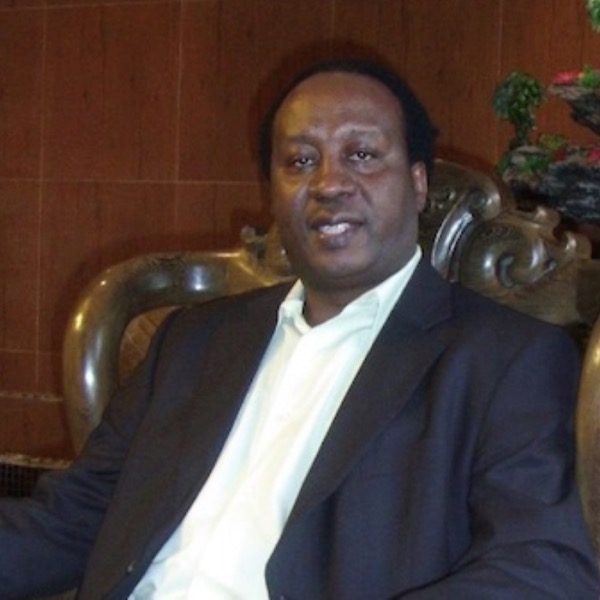
Garrett Duncan, an associate professor in the AFAS program, found the power of appointment to be an issue as well but was not sure that a transition to departmental status was in the program’s future.
“One of the named problems is having to rely on departments in order to have faculty in the program. In order to have a tenure line, they have to have been appointed in another department. All but one of our tenure-line faculty members are appointed in another department,” Duncan said. “Ever so often there is a conversation about moving AFAS to be a department. That conversation has come up just among colleagues, not at any official level. There haven’t been any proposals.”
Duncan, however, found the discussion of departmental status to be a disconcerting issue when it focused primarily on marginalized groups.
“I wish when folks speak of why [African and African American Studies] isn’t a department, I wish they would apply that same discourse to American Cultures studies and other programs because it takes on very racialized and sexist overtones,” he said.
Kornblatt and Frankel are still not giving up hope.
Frankel said, “The areas of study that end with ‘studies’ are really the programs that really teach you how to think critically. I think it’s so valuable to put a lot of emphasis on treating those areas with as much equality as any other study.”
“I think a large part of what WGSS has given us is that it really is an interdisciplinary field where in our classes we are learning about psychology and social work and we’re looking at history and literature,” Kornblatt said. “The fact that it is not based in one discipline is actually one of the strengths of the program, even though that might be what is working against the program as well.”
Stay in Touch!
Get the latest and top news from StudentLife delivered to your inbox