News
WashU meets with White House to discuss Trump higher ed compact
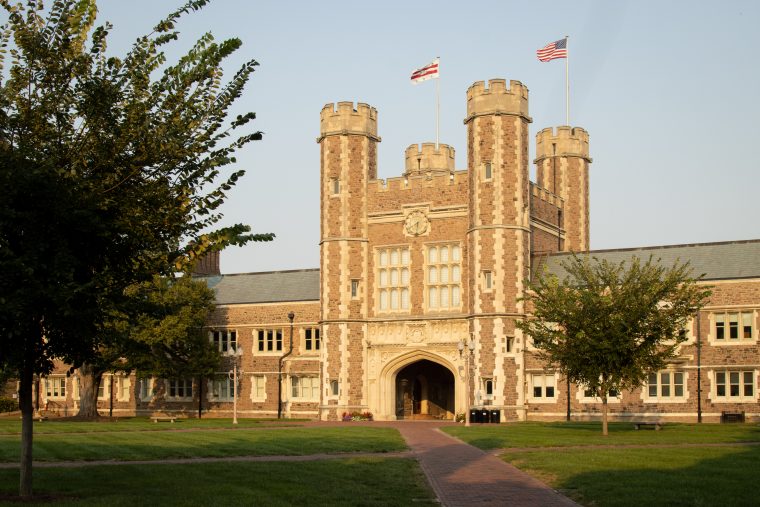
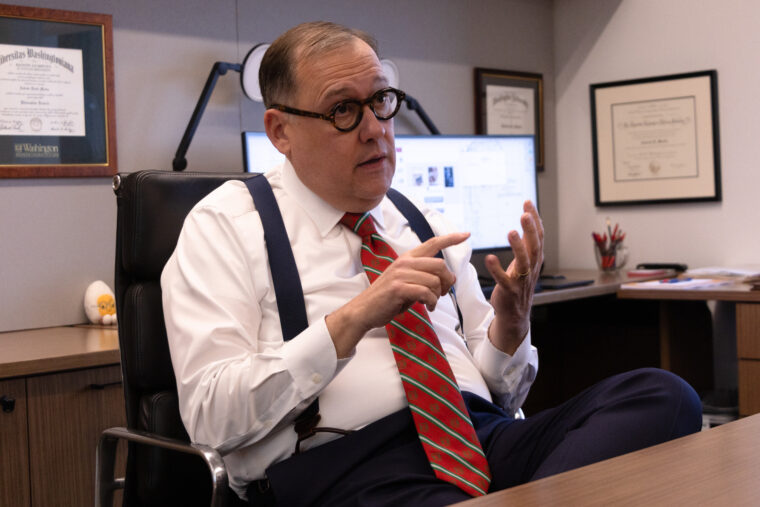
Chancellor Andrew D. Martin met with White House representatives to discuss President Trump’s compact for higher education Friday afternoon. (Curran Neenan | Student Life)
Chancellor Andrew D. Martin met virtually with White House representatives on Friday afternoon to discuss President Trump’s higher education compact, which asks universities to commit to a range of policy changes in exchange for preferential access to federal funding, per Vice Chancellor of Marketing and Communications Julie Flory.
WashU was one of eight universities invited to the meeting, which aimed to answer university leaders’ questions about the compact and explore shared priorities, according to the Wall Street Journal. Education Secretary Linda McMahon and other Trump officials were expected to be in attendance.
Trump’s 10-page proposal, titled Compact For Academic Excellence in Higher Education, has been the subject of significant controversy since its release on Oct. 1. No universities have accepted it as of Friday afternoon.
The compact calls on schools to limit international student enrollment; restrict diversity, equity and inclusion (DEI) programs; define gender based on “reproductive function and biological processes”; freeze tuition for five years; and commit to institutional neutrality, among other provisions.
Though the compact was initially sent to nine research universities, not including WashU, the request to sign the compact was extended to all universities last Sunday. Before the meeting, Flory had previously confirmed that WashU was “reviewing” the compact.
WashU was one of only three schools not among the original nine invited to participate in the White House meeting, the others being the University of Kansas and Arizona State University.
WashU’s chapter of the American Association of University Professors (AAUP) released a statement on their website Friday morning expressing strong opposition to the compact.
“We must stand with those who resist,” the statement reads. “Every school that signs Trump’s compact will encourage the worst impulses of leadership at other institutions. Yet every school that publicly stands in opposition makes it easier for the next one to do so.”
Five schools, including The Massachusetts Institute of Technology and Brown University, have publicly declined Trump’s offer. One of the schools invited to the meeting, the University of Virginia, announced their rejection of the compact Friday afternoon.
Gregory Magarian, a WashU law professor with an expertise in constitutional law, said that the compact is “horrifying.” He believes it is an unconstitutional attempt to evade First Amendment protections by coercing universities into suppressing certain viewpoints in exchange for funding.
Magarian noted that universities are, at their core, institutions devoted to public discourse and open intellectual inquiry.
“[This] compact and these efforts by the Trump administration to stifle what universities do are threats to free public discourse, academic freedom, and open intellectual inquiry,” Magarian said. “Without those things, there is no university. There is no meaningful institution left doing what universities are supposed to do in society.”
Magarian added that trading compliance with the Trump administration in exchange for preferential access to research funding is “unconscionable.”
The WashU AAUP also argued that signing the compact would not protect the school’s federal research funding.
“[That] Penn, Columbia, and other major universities that have endured further threats from the Trump administration after meeting its original demands clearly demonstrate that the blackmailer simply returns for more,” the statement reads.
“Despite conspicuous efforts by our administration to tout its institutional neutrality, our apparent rewards so far have been lawsuits challenging our diversity programs, canceled federal grants, and a higher endowment tax,” they added.
Liz Huston, Assistant Press Secretary to the White House, said in a statement to Bloomberg that “any university that refuses this once-in-a-lifetime opportunity to transform higher education isn’t serving its students or their parents — they’re bowing to radical, left-wing bureaucrats.”
After the University of Pennsylvania rejected the compact, Huston said their funding would be at risk.
“Any higher education institution unwilling to assume accountability and confront these overdue and necessary reforms will find itself without future government and taxpayers support,” Huston wrote in a statement to The Daily Pennsylvanian.
Huston did not respond to requests for comment by the time of publication.
Student Union executives declined Student Life’s requests to comment at this time. WashU Republicans and WashU Democrats also declined to comment for this article.
Magarian said that if WashU were to sign Trump’s compact, he believes there would be significant opposition.
“I think there would be massive, organized non-compliance by people within the University community, massive public outcry, protests and pushback,” he said.
Stay in Touch!
Get the latest and top news from StudentLife delivered to your inbox