News
New Athlete Ally chapter looks to highlight LGBT issues in athletics
In all levels of sports, an overwhelming theme surrounding discussions of sexual orientation and gender identity is no discussion at all. The Washington University Athletic Department assumed that its leaders’ silence signified a culture of acceptance.
“What we’d chosen to do is that we just kind of ignored it,” Associate Athletic Director Joe Worlund said. “By not addressing it, we thought we were just letting everyone do their own thing, and that was good.”
But senior athletes Austin Vanbastelaer and Lizzy Handschy, both members of the cross-country and track-and-field teams, found the school’s hands-off approach less than supportive.
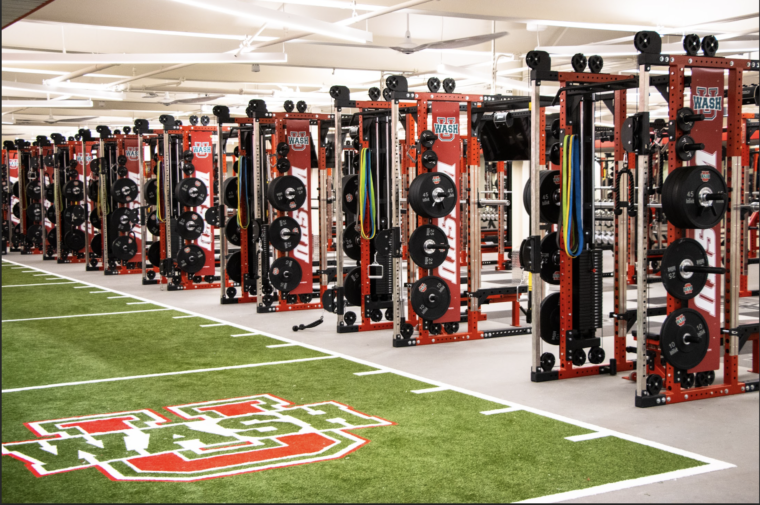
“It’s not uncommon to go into the weight room and hear homophobic language or hear a coach using terms that shouldn’t be used,” Vanbastelaer said.
The product of the runners’ thoughts and discussions is Athlete Ally, a student group intended to make athletics a safe place for the lesbian, gay, bisexual and transgender community. In their first year, Vanbastelaer, Handschy and the group’s third founder, junior volleyball player Lauren Yung, hope to make allies out of as many athletes as possible and act as a resource for the LGBT sports community.
“One of the main reasons I felt disconnected from the LGBT community on campus was because I am an athlete, and I felt way more connected to the athletic community than I did to the LGBT community,” Handschy said. “For the people that fall into those groups, there’s been a lack of a way to bridge that gap.”
Although Handschy finds the athletic community here more tolerant toward LGBT athletes than at many other schools, she explained the importance of a vocal support group.
“Nobody has ever really made an effort to announce, ‘Yes, this is an accepting, safe place to be,’” Handschy added. “Especially with athletics outside of Wash. U., it’s really easy to assume that [the athletic community] inside of Wash. U. is not going to be accepting because athletics is a really hard place to be LGBT.”
Athlete Ally’s Washington University chapter held its first meeting last Monday, distributing tie-dye T-shirts to the roughly 70 students in attendance. Many were teammates of the three founders, and women’s basketball also had a strong showing, Handschy said.
Athlete Ally is a national organization founded by former University of Maryland wrestler Hudson Taylor, who frequently overheard homophobic humor and terms in both athletic and broader campus contexts. Taylor decided to act as a public ally for LGBT students on his campus, wearing the Human Rights Campaign’s equal sign logo on his headgear during matches.
The organization is now active on more than 50 college campuses, according to its website, and it is also prominent in professional sports, with 83 pro ambassadors listed on its website. Recent additions include the first ambassador from the NBA, Denver Nuggets forward Kenneth Faried, along with WNBA guard Kristi Toliver, NFL punter Chris Kluwe and recently retired tennis star Andy Roddick.
Vanbastelaer said that an atmosphere of intolerance and bias sometimes exists in sports because discussing a different gender identity or sexual orientation is considered selfish.
“I have no problem being out on the cross-country team, but I do think there’s kind of a double standard with LGBT athletes where you’re expected to be an athlete first and your individual self after that,” he said.
Head women’s basketball coach Nancy Fahey, who has acted as a liaison between coaches and Athlete Ally, questioned whether LGBT athletes can talk about their relationships as comfortably as most of their teammates can. Though coaching is her priority, she said that that she wouldn’t be doing her job by not providing support for athletes in their personal lives.
“I’m not a counselor—I’m a coach…but I certainly hope I take the time to get to know my players,” she said. “I think it would be a sad commentary if all of us were not sensitive enough to all the things that go on with our players and try to get to know them beyond just 12 points and five rebounds.”
Worlund said that his perspective has evolved due to his conversations with Handschy, Vanbastelaer and Yung.
“We think it’s a safe environment, but we want everybody to feel that it’s a safe environment,” Worlund said. “And I don’t know that that was the case previously.”
He added that it isn’t just athletes who need to feel comfortable in the Athletic Complex because students unaffiliated with University teams frequently work out there.
“What I would hope is that through this relationship we have [with] the new group…they might come up with some suggestions,” he said. “Maybe it’s posters; maybe it’s something that you at least communicate what it is you’re looking for within that environment.”
Fostering an atmosphere of acceptance also includes setting an example for athletes and fans from other schools. Handschy proposed spreading awareness by having “rainbow-out” games or wearing rainbow bracelets.
“We would be competing against another team having that bracelet on—making a very clear stand that we are supportive in our [athletic community] and wherever we go,” she said.
Some recent efforts have been made within the athletic department to increase awareness. In early August, most full-time employees in the department underwent training from Safe Zones, a lesbian, gay, bisexual, transgender, queer, questioning, intersex, asexual and ally awareness group on campus.
“When we had the training session, they chose to go through some vocabulary, and they went through ‘lesbian,’ ‘gay,’ ‘bisexual,’ ‘transsexual,’ ‘queer’—some other things,” Worlund said. “You start getting to some of those [terms] and then start talking about the mixtures of those things, and you can just see everybody going ‘OK, you lost me.’ That’s still the reality of it.”
Attitudes toward LGBT athletes also can depend on the sport and the culture traditionally surrounding it.
“There are certain teams that everyone in the [Athletic Complex] knows are less open to the idea of LGBT athletes,” Vanbastelaer said.
While Vanbastelaer would not specify which teams he personally views as less accepting, there are certainly teams whose players have much less experience than others competing alongside LGBT athletes.
For instance, head men’s basketball coach Mark Edwards said that he has not coached an openly gay player in more than 30 years at the University. In a much shorter three-year tenure, head baseball coach Steve Duncan has also not coached an openly gay athlete, though former baseball and football player Adam Goslin came out under a previous coach.
As far as Worlund knows, no one at the University has coached an athlete that identifies as transgender or transsexual, which is another major issue that the athletic department may soon have to tackle.
“Are we prepared to do it? Maybe, realistically,” Worlund said. “We have the information necessary to do it from a textbook standpoint, but in reality, is that how it plays out?”
Stay in Touch!
Get the latest and top news from StudentLife delivered to your inbox