Forum
Rethinking study abroad at WashU
Arya Catna | Contributing Illustrator
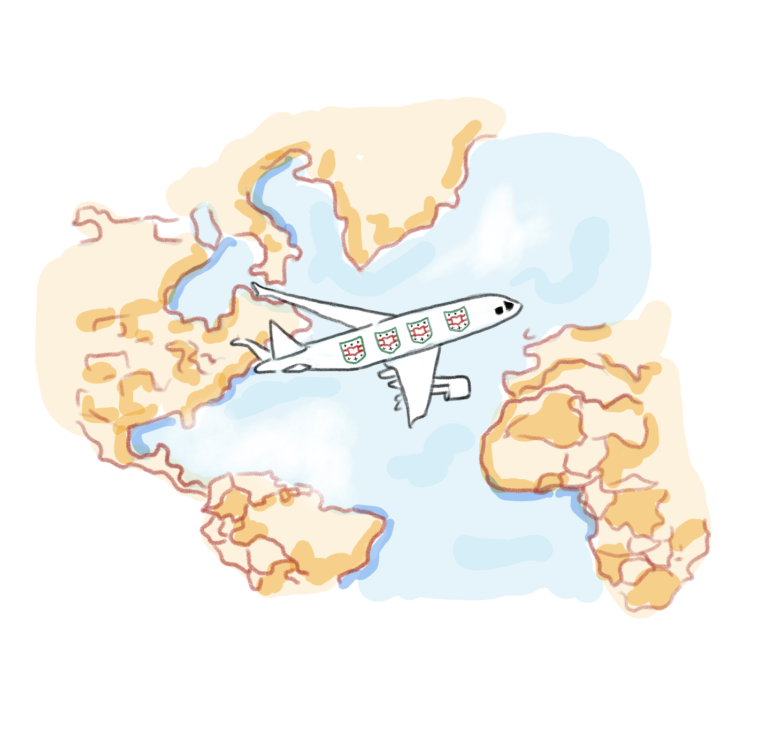
At WashU, studying abroad is often framed as a defining part of the undergraduate experience. Around ⅓ of WashU students end up studying abroad for a semester or longer. WashU proudly offers 100+ overseas programming options, promoting them as gateways to cultural immersion, personal growth, and global awareness. Beneath this idealized description, however, lies a more complicated reality. Many study abroad experiences are carefully structured around American students, limiting engagement with the local cultures that students travel so far to encounter. Additionally, programs in Europe and Japan are promoted more than programs outside of Europe (in countries with lower GDP per-capita), showing that non-Eurocentric cultural immersion is not a priority for both WashU as an institution and students going abroad.
WashU needs to work to promote non-European study abroad experiences, and students should be open to these programs.
Europe is not a uniform continent where countries can be lumped together. Whether you go to Estonia or Portugal makes a huge difference for your experience (even though WashU seems to disagree in their choosing a picture of Amsterdam, Netherlands, to promote my (Ricarda’s) home university of Tübingen, Germany, on the Study Abroad Website). WashU claims that a study abroad program will help you “understand different cultures deeply”, and we think that statement is debatable and depends on how you spend your time abroad.
If you choose to enroll in one of WashU’s popular programs, like the four-month program in Copenhagen, oftentimes the courses are specifically designed for American students. When you spend most of your time with other American students and spend all of your weekends hopping from city to city, you are not actually “understanding different cultures” — you are a long-term tourist. Intercultural exchange happens when you come in contact with the local student population, and through them, you’ll get to know youth culture, current politics, traditions, and the best spots in the city.
These long-term tourism programs in Europe consistently rank as the most popular study abroad destinations for WashU students. Cities like London, Paris, and Florence dominate promotion materials, as these locations are often pierced as accessible and academically aligned with American institutions.
However, WashU offers a far broader range of programs that receive far less attention. Opportunities exist in places such as Samoa, Nepal, Cameroon, Jordan, and Tunisia, where students can engage with cultures, languages, and perspectives that differ more significantly from their own. But the current imbalance in visibility matters. When WashU primarily markets programs in high-income countries, they make a statement about what their students’ study abroad experience should look like and which countries are of most “value” to visit. As a result, it seems to us many students never seriously consider programs outside of Europe, not because of lack of interest, but because those options feel less accessible or not as “prestigious” as opportunities in high-income nations. With this lack of interest, students miss out on the very valuable knowledge, culture, and practices non-European countries have to offer.
Studying abroad should be rooted in genuine curiosity, a desire to learn about a specific culture, language, or region. The culture around studying abroad at WashU seems to have another focus. When talking to people from WashU, it sometimes feels like every decision is weighed by how it will look on your cover letter (CV). It’s less of a transformative life experience and more of another thing to check off a never-ending to-do list. Inform yourself carefully and apply for a program that you are truly interested in instead of choosing what feels like the path of least resistance.
WashU has a responsibility to broaden their presentation of study abroad. When promoting their Study Abroad programs, the places they mention in the first sentence don’t have to be Greece, Australia, and Tokyo. Instead, they should shine some light on the really interesting and diverse programs the university offers, such as going to Jordan, Cameroon, or Tanzania, and highlight their academic and cultural value.
Students, challenge yourselves to think more critically about what you want from your time abroad. Consider exploring less conventional destinations (even if you choose to go to Europe, perhaps choose a program that’s unique and prioritizes intercultural exchange). Ask yourself what cultures, histories, or communities you are genuinely interested in learning about, not which country has the most prestigious university (or the best clubbing scene). Once abroad, make a conscious effort to engage with local residents rather than staying in an American-oriented environment. Most importantly, approach study abroad not just as long-term tourism or travel, but as an opportunity for deeper cultural and intellectual engagement.
Stay in Touch!
Get the latest and top news from StudentLife delivered to your inbox