Swimming
Swimming and Diving open season against Division I opponents
The Washington University men’s and women’s swimming and diving teams will face stiff competition when they face a pair of Division I opponents in their opening two weeks.
 Mary Richardson | Student Life
Wash. U. swimmers face off against the University of Chicago in a home meet on Nov. 9, 2014. Both the men’s and women’s teams saw victory, with women winning 179-120 and men winning 154-145.
The Bears kick off their season this Friday when they host Division I Saint Louis University for their annual intercity bout. The Red and Green have managed just one win by the women in the past three years. Next week, they head to Columbia, Mo., to compete, along with other schools, against a University of Missouri men’s and women’s team that were ranked 14th and 18th respectively in Division I toward the end of last season. The odds of victory in either meet are slim. However, like other training-based sports, the final tally from the first two weeks carry little significance over the course of the season.
“In football or soccer, your national ranking and maybe your opportunities to have a postseason are compromised by not winning a certain number of games or a certain percentage of your games,” head coach Brad Shivley said of the contrast. “In the sport of swimming, cross country or track, it doesn’t necessarily keep an individual from making the NCAA championship meet or even the conference championship meet.”
The pre-meet training regimen reflects the same measured approach. Instead of tailoring to specific events, all swimmers participate in team-wide drills intended to re-acclimate them to the pool.
“Right now we are working on general fitness so there has been no differentiation in training. Everybody in essence has been doing similar things,” Shivley said.
Earlier this week, the entire Bears team participated in breaststroke drilling. Only some swimmers will go on to compete in breaststroke at a meet, but the multi-stroked approach becomes a type of cross-training.
“It allows us to train different muscles and even someone who doesn’t do it as part of their big meet schedule, there is still a lot of value in them doing it and being better at it,” Shively said.
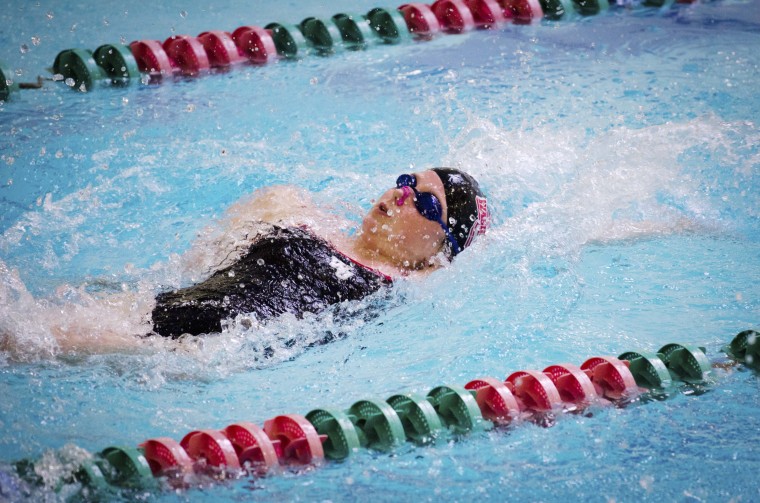
The women’s swim team faces off against the University of Chicago in a home meet on Nov. 9, 2014. Both the men’s and women’s teams saw victory with women winning 179-120 and men winning 154-145.
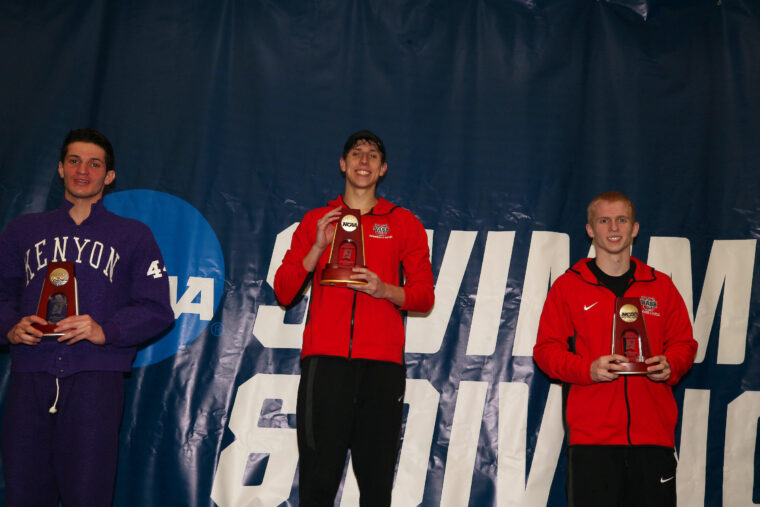
The swimmers will specialize into their respective disciplines as they prepare for the University Athletic Association Championship, Midwest Invitational and NCAA Division III Championships. Once the Bears reach the postseason, the men will have star power on their side. Senior Reed Dalton returns to the team after setting the national record in 100-meter butterfly a year ago to become just the fifth individual swimmer to win a national championship. He is joined by junior Michael Lagieski, who won the 100-meter breaststroke a season earlier. The duo garnered six All-American honors and two All-America honorable mention between the two of them.
Last season, the men and women finished sixth and eigth overall, marking the fourth time in school history that both teams finished in the top 10. This year figures to have comparable success given that each team will return nearly all of its All-American finishers. Of the 14 swimmers that combined for 23 All-American and All-American honorable mention finishes while setting nine school records last season, the men and women return five and six swimmers respectively.
“You could have an individual swimmer that is the best in the country, and you will get last in conference if you don’t have 22 athletes or a full contingent going to your conference meet at their very best,” Shively said.
While the Division III postseason remains the end game for the Bears, early meets against Division I competition will be a chance for swimmers to display their intangibles in a competitive setting.
“I think it will help this weekend that we have a competition because there is a difference between practice speed and race speed, and some folks are able to find that extra gear in a race that don’t necessarily show in practice,” Shively said.
Stay in Touch!
Get the latest and top news from StudentLife delivered to your inbox