Scene | Sports | Sports Feature
Behind the Bear: Who is Forest, WashU’s mascot?
(Reid Kellerman | Staff Illustrator)
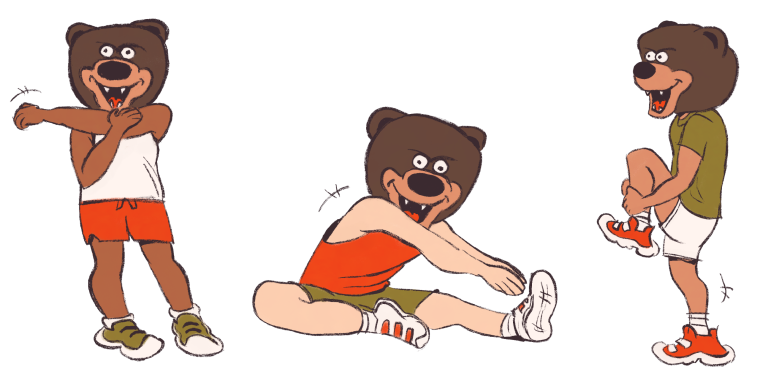
On a mundane Monday evening, as many WashU students hunkered into the library or rushed to Bear’s Den, six students secretly scurried to the basement of Village House to audition for a role unlike any on campus. Instead of prepping answers for a typical job interview, applicants were doing dynamic warmups and stretches, vying for the chance to become WashU’s Bear mascot.
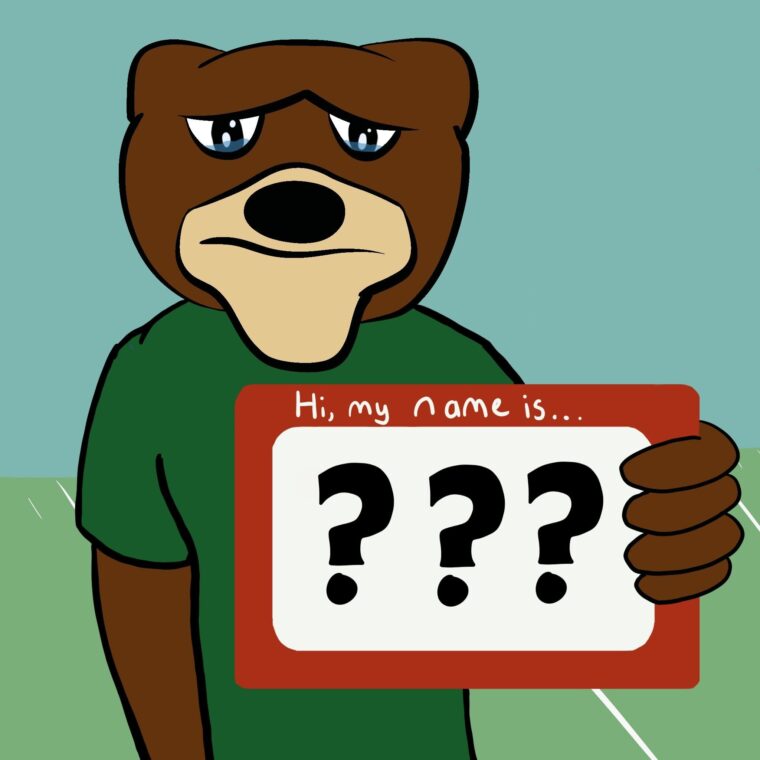
Since 1925 the Bear has represented WashU students. The grizzly companion has been a familiar presence on the Danforth Campus, making appearances at various events like sports games, Bear Days, and Dr. G’s Fun House. And while the costume had become a recognizable part of campus life, the role had never been formalized. This began to change over the summer, when the Bear was given a name, and, for the first time, a position within the University. The mascot program will now have formalized training, official coaches, and paid student positions — as opposed to the previous student volunteer position. Forest, as the Bear is now known, marks the beginning of a new chapter for WashU’s century-old mascot.
“Forest gives people a fun way to connect with WashU and with one another,” Director of Student Transitions & Engagement Ally Schipma wrote in a statement to Student Life. “From welcoming new students to celebrating at campus events, Forest can create shared moments that become part of someone’s university experience. We hope those moments help build school pride, belonging, and lasting traditions.”
The new program will make Forest a more consistent presence on campus and allow for even more Forest appearances.
“We’re still in the early stages of development for this program,” Assistant Cheer Coach Justin Barton said. “There has been a tremendous outpour of requests for Forest [appearances] … so we need more souls — spirits in the costume to be able to fulfill everything that the community is wanting.”
Under the direction of Barton, who previously ran Webster University and Lindenwood University’s mascot programs, the program will develop standardized training. This is essential to create a cohesive and recognizable Forest, regardless of who is inside the costume. The new program will create a shared set of behaviors and even have a formalized autograph that performers will be expected to perfect. Standardizing the role is essential as multiple student employees will share the role rather than a single performer.
WashU’s mascot program consists of three employees, two of whom were already hired, as they played the Bear last year. Additionally, the mascot performers all share a handler, someone who acts as the mascot’s assistant, ensuring the actors’ safety while they’re in the suit.
“I help [the performer] put on the costume, help them take it off,” current handler and junior JP Rogers said. “Sometimes there will be issues, like the gloves or the helmet coming untucked during a performance, so it’s my job to make sure that doesn’t happen — and if it does, to fix it.”
Due to the costume’s restricted hearing capabilities and limited visibility, the handler often works as the eyes, ears, and voice for the mascot.
“I make sure [Forest] has a clear path for where Forest needs to go,” Rogers said. “If Forest is unsure of what they should be doing, I can point out things for them to do.”
Barton explained that the creation of the mascot program with formal, paid student positions was the natural next step for the program.
“The focus behind this was really wanting to make it a student brand type of role,” Barton said. “There’s been opportunities in the past where they’ve hired professional individuals to come in and mascot. Why are we doing that when we have students here that need jobs on campus?”
And thus began the audition process.
Barton and the mascot search committee knew that they needed to find someone who captured Forest’s magical essence. But they also had to consider the physical demands the position requires. According to Barton, the constant movement and physical exertion also require Forest to have strong endurance.
“There’s a lot of cardiovascular [strength] that goes into this, and that’s why, when training actually happens, we will train [to] be in good cardio shape,” Barton said. “It comes down to being able to have that good, lasting cardio. … [It] is physically demanding.”
Barton also explained that it is between 20 to 40 degrees hotter inside the costumes than it is outside, which adds an additional layer of strain on the performer. To ensure Forest’s safety, Barton said, people are only allowed to wear the costume for a maximum of 45 minutes at a time. Barton is also purchasing two new costumes for Forest, each with their own internal ventilation system.
High endurance and regulated body temperatures aren’t the only skills needed to be Forest, though. To fully encapsulate the spirit of the University, Barton said that the mascot must radiate the magnetism and charm expected of Forest.
“Everybody loves the magic that surrounds the mascot,” Barton said. “It’s one thing for the cheer program to come out [and bring] that spirit because that’s their job. It’s another thing for that mascot to kind of bring that warmth, bring that curiosity, bring a little bit of mischievousness to the environment as well.”
In order to ensure that the new Forest displays all of these qualities, auditions were held that tested the potential Forests on their energy, improvisation skills, and physical performance. Specifically, the judges scored each person who tried out on their Forest-style gait and hypothetical tactics for hyping up a crowd.
“The scoring rubric covers four areas: movement and animation, interaction skills, professionalism and safety, and Forest’s personality,” Schipma wrote. “Candidates demonstrate skills such as communicating emotions through body language, interacting with fans, and engaging a crowd without speaking. The evaluation considers how effectively they portray Forest’s friendly, playful personality while moving safely and remaining in character.”
Tryouts were held in WashU’s Black Box Theater on Sept. 28. Six students signed up to audition, each taking turns putting on the Forest costume and responding to different prompts given by Barton. Without making any noise, the contenders were told to display several emotions using body language only, use a provided object to engage with the crowd, and demonstrate how they would walk when in character. Each candidate was rated out of a total score of 100 based on their performance. Though all prospects struggled initially to find their bear-ing in the heavy costume, they eventually managed to run around and high five members of the crowd with ease.
After auditions ended, Barton added all four judges’ scores together to see what each applicant scored out of 400. Decisions were then made based on both the scores and the overall feedback from the judges.
Now that a new Forest has officially been selected, WashU community members can expect to see Forest spreading University cheer outside of just sporting events. Students and faculty can even book Forest for their own events by visiting the “Forest the Bear Appearance Information” page on the Student Transitions & Engagement website, or by emailing [email protected].
Thanks to WashU’s official formalization of its beloved mascot, WashU pride is now on track to becoming stronger and better than ever.
“A mascot manifests the spirit of the university … it’s just a great representation of what the true heart and soul of a university is about,” Barton said.
Stay in Touch!
Get the latest and top news from StudentLife delivered to your inbox