Cross Country
Men’s cross-country finishes fourth in nation, three Bears named All-Americans
Injury and sickness marred the Washington University cross-country rosters at the NCAA Championships Saturday in Hanover, Ind. Yet the women’s team matched its national ranking, and the men’s squad attained a point total that would have tied for last season’s national title.
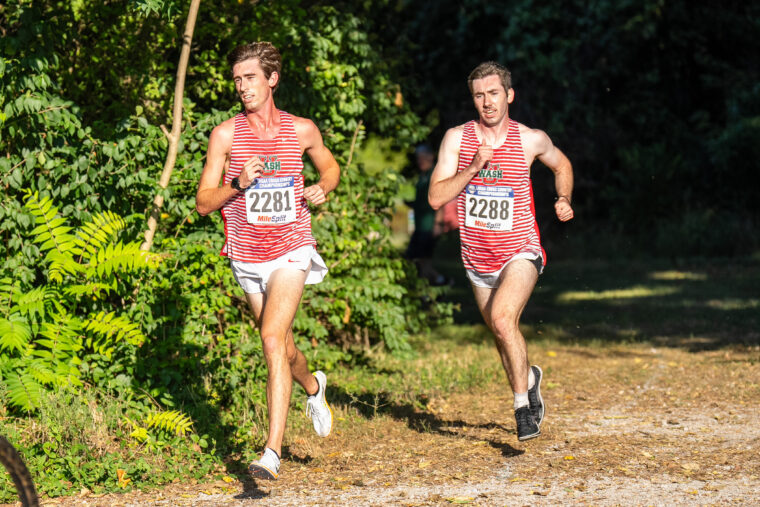
Three All-Americans drove the efforts. The men’s squad, led by senior Kevin Sparks and junior Drew Padgett, finished fourth overall, while junior Lucy Cheadle paced the 21st-place women’s team.
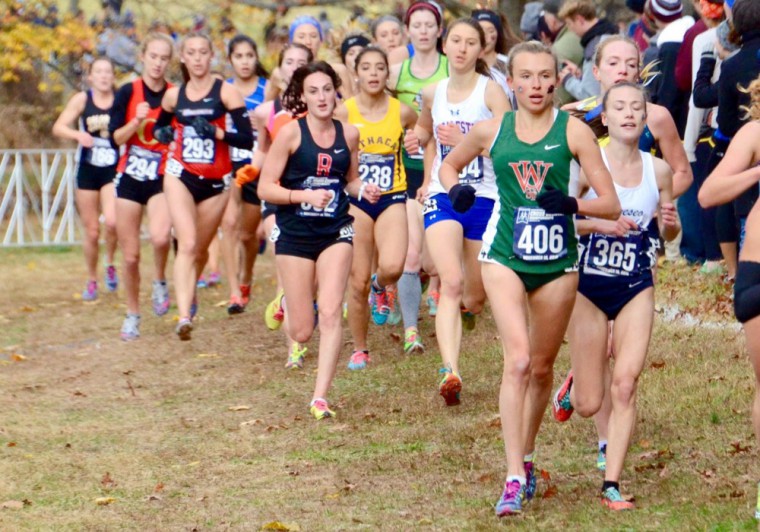
After placing 20th and 21st at nationals in the last two seasons, Cheadle ascended to a fifth place performance in Saturday’s 6-kilometer race. She became only the second three-time All-American in Wash. U. women’s cross-country history, joining Taryn Surtees. Cheadle will have the opportunity to become the first four-time All-American next season.
“I started off pretty far back and just kept moving up,” Cheadle said. “It was a pretty tough course. It was deceivingly tiring, and around [the 4-kilometer mark], I started feeling really bad.” Yet Cheadle pushed through the final two kilometers for the top five finish.
The men’s team finished behind Division III champion St. Olaf College, second place North Central College and third place University of Wisconsin-LaCrosse. St. Olaf secured an upset of heavy favorite North Central, edging the two-time defending champions by a score of 84 to 86. Wisconsin-La Crosse was well behind with 155 points, and the Bears’ top five runners totaled 167.
Sparks placed 18th overall in the 8-kilometer race, and Padgett followed him in 25th. After running through sickness at the Midwest Regional championship, Padgett suffered through a bout of food poisoning on Wednesday. Considering the circumstances, head coach Jeff Stiles was amazed that Padgett still turned in an All-American performance.
“I would be willing to guess that he was the top finisher of anyone who had food poisoning that week,” Stiles quipped.
Only the top 35 performers in each race earn All-American honors, so junior Garrett Patrick narrowly missed the distinction with his 38th place finish. Seniors Michael Ellenberger and Elliott Petterson finished 51st and 102nd, respectively.
Although the men’s team missed out on tying or exceeding its program-best finish of third place from 2011, Stiles did not deem it a letdown.
“I think the guys were disappointed and wanted to finish higher, but if you asked them, ‘could you run any harder? Would you really change anything in your race?’—probably not,” he said.
Ellenberger echoed that sentiment.
“There was an initial feeling of disappointment, but I think just talking to the seven of us that run—I think everyone ran literally as hard as he could. Most of us collapsed the second we crossed the line.”
Stiles commented that evaluating the Bears’ finish should also take context into account.
“In 2008, the men’s team was seventh in the [University Athletic Association] conference,” he said. “And you fast-forward, and somehow they’re supposed to be disappointed with fourth in the nation.”
The women’s team, with 499 total points, edged conference rival Brandeis University, which had 517 for 21st place. The Bears finished behind the University of Wisconsin La-Crosse (465) and Trinity University (486). The Bears missed the contribution of sophomore Bri Tiffany, who sat out the race with an injury. Senior Lizzy Handschy was the next Wash. U. finisher after Cheadle in 149th overall. Sophomore Ellen Toennies came in 152nd place for the Bears, followed by freshmen Annie Marggraff and Sarah Curci in 171st and 193rd, respectively. Curci had been dealing with a bad back all week, and Cheadle and Stiles lauded her for toughing it out.
“Sarah Curci could barely walk on Thursday morning when she woke up,” Stiles said.
Stiles added that Cheadle was the only runner on the women’s team with experience competing at nationals.
“To have those two things going on—having no experience and to finish where you’re ranked—I thought was pretty remarkable,” he said.
As for the men’s team, the Bears may have fallen short of their hopes for a national title or at least a top three finish, but the fact that those hopes were so realistic is a sign of positive growth.
“We put ourselves in position to win,” Stiles said. “And we have never done that in the history of Washington University. We have never been in position [at the 4-kilometer mark], if we close really well then we can win this…It’s like at halftime of a football game to be in position to win a national championship and then fall short.”
Stay in Touch!
Get the latest and top news from StudentLife delivered to your inbox