Club Sports | Sports
Why you should join club sports
The term NARP (non-athletic regular person) plagued me the summer before my first year at WashU. The sports I played in high school had given me and my friends motivation to start the day. But suddenly, I was at a school 100 times the size without a team to anchor me.
The harrowing realization struck me a week into classes: The routine I had spent four years building was suddenly gone. Throughout my entire scholastic athletic career I knew exactly where I needed to be and when I needed to be there. Now, for the first time, my schedule was completely my own. There were no practices waiting for me at 4 p.m., no coaches telling me to run laps, and no teammates expecting me to show up. Working out was suddenly something I had to find the time and motivation to do myself. That changed when I discovered the world of club sports.
As I strolled through the madness of my first WashU activities fair, I was bombarded with potential versions of myself: student journalist, political activist, a cappella singer, maybe even aspiring juggler. I walked aimlessly through the maze of tables, tuning out the chorus of club members calling for my attention. Then, right as I thought I had exhausted my options, I saw the rowing table.
I had never pictured myself playing a sport in college, but I figured I could commit to just one practice. That was a year ago. Since I officially joined in September 2025, rowing has brought back a familiar rhythm. I now have practices to get to, workouts to plan around, and a community to spend my mornings with. I have often come home from regattas with a handful of medals, met upperclassmen I never would have crossed paths with otherwise, and traveled all over the Midwest and South (I’ve even added Kentucky to the list of states I’ve visited). Most importantly, from WashU rowing, I have found fulfillment and a reason to get out of bed in the morning.
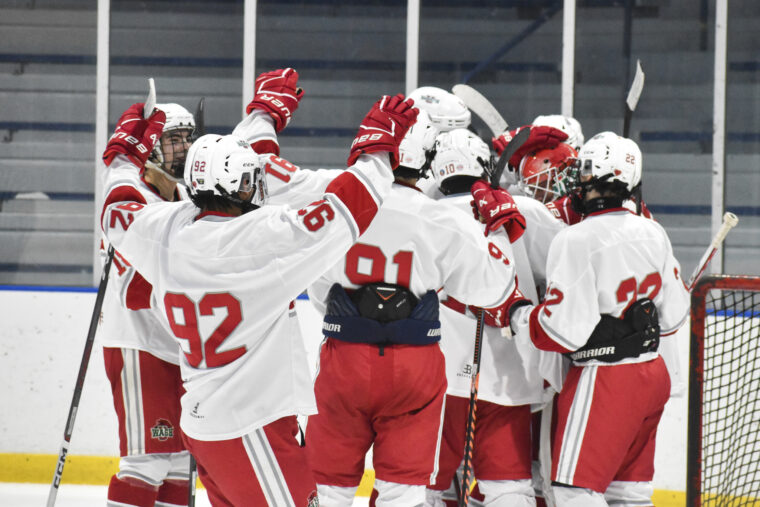
Rowing is just one of the 40 club sports offered at WashU, alongside everything from archery to triathlon, squash, and sailing. Together, these teams bring nearly 1,800 students into a community that extends well beyond campus, competing in over 300 events across 27 states. For many students, it has become a way to stay active, meet new people, and find belonging — while also providing an opportunity to compete at a remarkably high level. Last year, the women’s squash team claimed first place at nationals and the men’s rowing team brought home bronze.
Club sports are offered to both graduate and undergraduate students at WashU. Tryouts are either in the early fall or spring. Those interested in joining should consider a club’s intensity, with practice frequency ranging from one to five times a week depending on the sport. Additionally, teams vary in selectiveness: most are open to students of all skill levels while others, such as men’s and women’s club soccer, hold competitive tryouts. Students looking to join can reach out to their desired team via the WashU Rec website underneath the page “Club Sports,” or, depending on the club sport, through the team’s website.
For many college students, it can be easy to feel lost in the crowd. While in high school, extracurriculars are often built into your schedule, college students have to seek them out and have hundreds of clubs and organizations to choose from. Club sports offer a unique combination of competition, camaraderie, and commitment, giving students a team to rely on throughout their college experience. Additionally, athletics are a vital part of students’ mental health, with studies finding a strong correlation between participation in a team sport as an adult and positive mental well-being.
Choosing to be a part of a team, especially when it’s not for a gym credit or a required afternoon activity, means showing up even when you don’t have to. The commitment made by all club sport athletes makes each win all the sweeter. My year of club sports has taught me that sometimes the best communities are the ones you never planned on joining and that it’s always worth showing up for just one practice.
Stay in Touch!
Get the latest and top news from StudentLife delivered to your inbox