Best Of STL 2026
St. Louis’ musical landscape
Manuel Lopez | Staff Illustrator
While passively listening to your favorite rap, jazz, or rock playlist, you might not realize the artists’ origins or care to look into their backgrounds. These artists, however, are oftentimes closer to us than we think, and a 10-minute drive from campus to downtown St. Louis can reveal a musical story that was previously unknown. From the ragtime and blues of the past to the chart-topping hip-hop of today, St. Louis has been a breeding ground for musical innovation for decades. St. Louis’ music presence can be found in all of our lives, even if we don’t realize it. Engaging with the history of music in St. Louis can help us better appreciate the influence of St. Louis on the music scene of today.
As early as the 1890s (and even before then), influential composers resided and worked in St. Louis, a great example being Pulitzer Prize winner Scott Joplin. Joplin, also known as the “King of Ragtime,” lived in St. Louis for a short period, where he pioneered the American piano genre of ragtime, which blends syncopation, African polyrhythms, and European classical music structure. While we generally view ragtime as the stereotypical music playing in a saloon in your favorite old cowboy movie, this genre, and Joplin specifically, would come to influence some of the greatest classical and jazz musicians including Debussy, Stravinsky, Eubie Blake, and James P. Johnson. Today, you can pay a visit to his home in midtown St. Louis, where he helped create one of the first completely American genres of music.
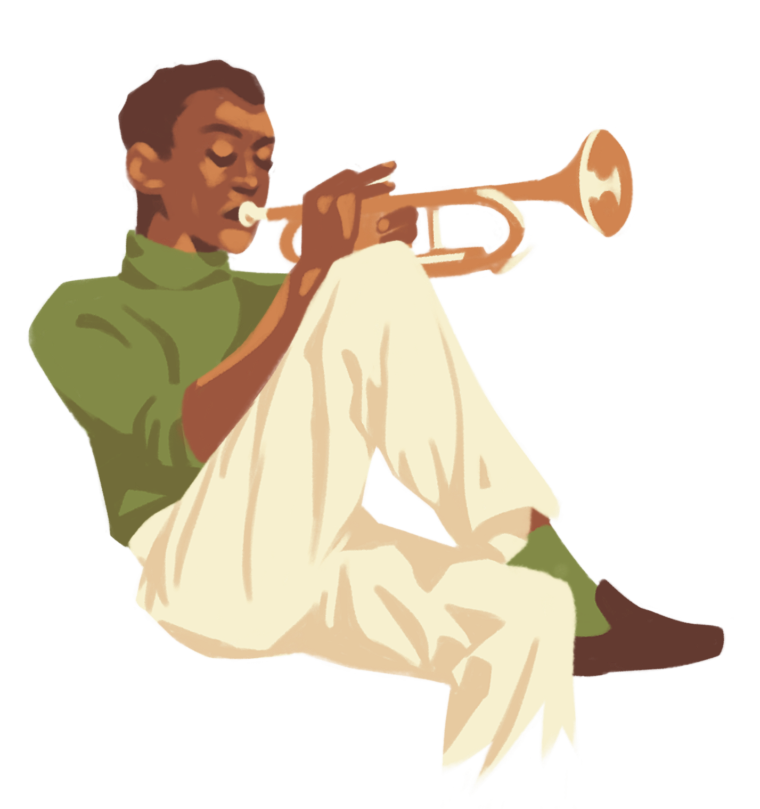
While downtown, you might also run into the St. Louis Blues Museum, where you can dive into the history of the blues scene in St. Louis. Blues, quickly followed by rock ‘n’ roll and jazz, flourished in St. Louis, with famous musicians Albert King (born on the same plantation as B.B. King) and Henry Townsend spending much of their musical careers in this very city. Chuck Berry, the “Father of Rock & Roll” and arguably one of the most famous rockstars of all time, lived and died in St. Louis, and even had a residency at Blueberry Hill on the Loop. Tina Turner, the “Queen of Rock ‘n’ Roll” went to high school in St. Louis. Miles Davis, a pioneer and legend in the evolution of jazz in the 1940s, grew up in East St. Louis and spent much of his career performing here. St. Louis was the home of legends in the genres that serve as the cornerstones of the music we listen to today.
In the present, we can still see the influence of St. Louis all over the music industry. Artists like Nelly, SZA, Smino, and, of course, Sexyy Red were all born and/or started their careers in St. Louis. The music video for one of Nelly’s most popular songs, “Country Grammar,” was filmed right in the heart of North City. Metro Boomin, an extremely influential producer and songwriter in our generation, was also born in St. Louis, and went on to produce music for Future, 21 Savage, Migos, Travis Scott, and even Lana Del Rey.
Whether it’s 100 gecs, who dominated the quarantine era with their hyperpop-driven synth sound, or Taylor Momsen, who began as Cindy Lou singing “Where Are You Christmas?” and later transformed into a full-fledged rock star, St. Louis has produced countless musical artists, past and present, who have left a lasting impact on the music industry. Even before we knew we would be attending WashU, the music of St. Louis has been ever present in our childhoods, our car rides, our playlists, and our lives. As students, we are living inside a launchpad for influential sound and culture, and are surrounded by a legacy of musical innovation. By supporting local shows, streaming STL artists, attending concerts, and exploring music venues across St. Louis, we can support the musical creativity emerging from the city. The next groundbreaking artists might be playing just down the street, so take your chance to be part of that story.
Stay in Touch!
Get the latest and top news from StudentLife delivered to your inbox