
Best Of STL 2026 | News
‘Midwest Nice’: More than a myth
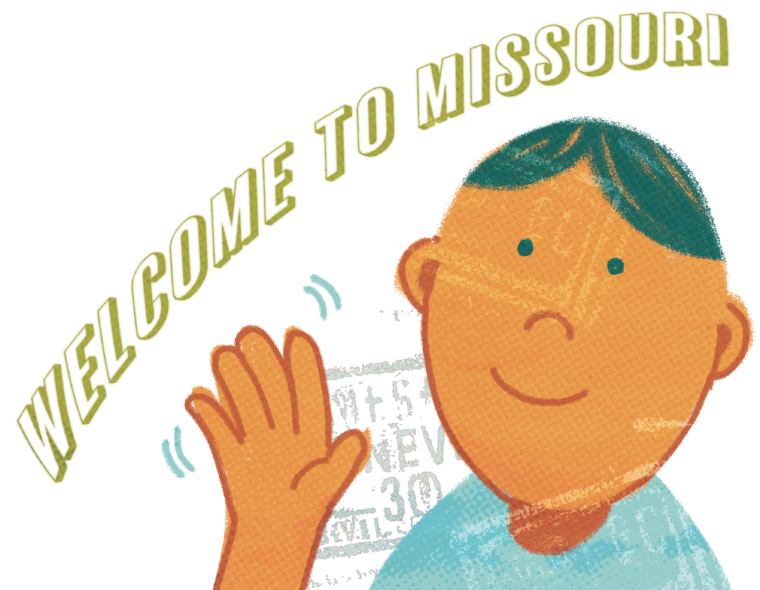
Lucia Thomas | Staff Illustrator
Picture this: A warm, sunny Friday afternoon in late October. My roommate and I were on an adventure to buy a set of glasses. We wanted to make homemade milkshakes, watch a movie, and bedazzle our lip balms, but I was adamant that we could not use just any old plastic cups; we needed nice glasses. After walking 20 minutes to visit a wildly expensive antique store and finding no luck, my roommate and I walked by a restaurant. “I know they’ll have glasses,” I said. “Let’s just go in and see if we can buy some from them.” Why not, you know?
I explained our predicament to the woman behind the bar who waved her manager over. After a brief consultation she turned back to us. “Just take them for free.” What!? My roommate and I turned to each other shocked, we couldn’t accept this! We went back and forth, and we ended up giving them 20 bucks and walking away with these beautiful glasses.
This interaction with the Sasha’s Wine Bar employees was one of many that makes up the culture of “Midwest Nice.” “Midwest Nice” describes the cultural behavioral pattern of people in the Midwest being overly kind and polite to strangers, writes Kimberly Haala, a clinical health psychologist in Psychiatry and Psychology, in an article from Mayo Clinic.
When I would tell people that I was going to college in St. Louis I would always hear about the concept of Midwest Nice. “The people are just better,” my junior year Chicago-born history teacher would exclaim. I would sort of smile and nod. I liked the people of my hometown, Boston, just fine.
But arriving in STL for the first time, I noticed a slight shift that became more apparent when I moved to WashU. It started when I visited on my college tour, and my parents and I went up in the Gateway Arch. Our tour guide asked if anyone knew any physics, and I tentatively revealed that I was taking AP Physics (which I fear I later dropped, but no matter). She was delighted by this fact and gestured directly to me, or “smartie physics girl” as she dubbed me, when she explained the engineering behind the landmark.
When I moved here for college, I noticed it more and more with my new neighbors. I had an extensive conversation with one of my Uber drivers about her dog. We went back and forth about her pitbull and my labradoodle, bonding over their similarities of waging war upon the mailman from behind the front window.
I sat next to a woman from Grand Rapids, Michigan on a connecting flight from St. Louis to Chicago, and we talked for the entirety of the 1 hour flight. I wasn’t convinced with her assessment that Grand Rapids was better than Boston, but I appreciated her enthusiasm when she talked about her hometown.
Actions speak louder than words, and this Midwest Nice can be found not just in conversations but in the majority of the interactions I have with strangers here. My friends and I went out to dinner, and a woman held the door for all five of us and complimented our outfits. This little moment made our night.
These little interactions, like holding a door for someone else, trickle down into the WashU community. Take the door example. On our campus, I have noticed that a distinct door holding culture exists. From classes, to the library, to the dining hall, my peers are exceptional at doing a glance over the shoulder and holding the door a few seconds longer for someone behind them.
This habit inspires me to take a few moments to hold the door for the people behind me, too. Even when it’s an awkward amount of time and you make uncomfortable eye contact and they have to jog a little, you still hold the door because that’s the right thing to do.
While nothing will ever compare to the love I feel for Boston, I have grown to adore the city that is St. Louis and the community that is WashU. I’m sure in my four years here I will gain insightful knowledge into the world around me and learn many important career skills. However, I already know that the most important lesson that WashU and St. Louis teaches its students and residents: the ability to be kind.
Stay in Touch!
Get the latest and top news from StudentLife delivered to your inbox
