News
WU officials approve extended passing time
The rush to get to class from Seigle to Brown will be a little easier in the fall of 2012.
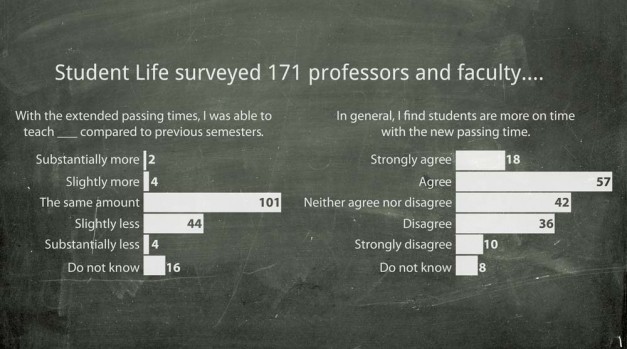
The Washington University administration has approved a plan to change the time between classes on the Danforth Campus to 10 minutes. The current passing time is seven minutes.
The administration says it hopes this change will enable more students to get to their classes on time.
“An extra three minutes between class times should make it easier on the students as well as lead to less disruption of classes with late arrivals,” Provost Edward Macias said in a press release.
The administration also wanted the change to reflect a larger campus than the one that existed when the so-called seven-minute rule was set.
“I think it’s a good idea because they’re building new buildings and putting more classes out by Brauer,” freshman Nick Hinsch said. “I don’t consider class time the only part of college that gives value.”
Many students agree with the University’s decision to extend the passing time.
“I think the ten-minute passing time is necessary because the teachers always have to repeat themselves when people come in late,” freshman Marlow Taylor said. “And there is a long walking distance for me from Seigle past Brookings that always makes me late.”
Other students do not see the benefits of the increased passing time.
“Seven minutes is already too much,” junior Mike Czurylo said. “I need more class time to go over the content.”
The change in passing time will decrease the length of each class by three minutes.
“I have mixed feelings about the change. It gives me more time to get to class, but at the same time three minutes add up over the semester,” freshman Rebecca Ye said.
The only exception to the schedule changes will be the law school, where passing time is currently eight minutes. The American Bar Association accreditation standards require 58,000 minutes of classroom time for law students. If the passing time were extended to ten minutes, it would not meet this requirement.
With additional reporting by Wei-Yin Ko and Michael Tabb.
Stay in Touch!
Get the latest and top news from StudentLife delivered to your inbox