Music
A Q&A with iLLPHONiCS
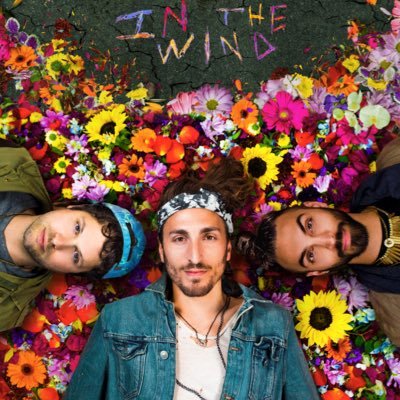
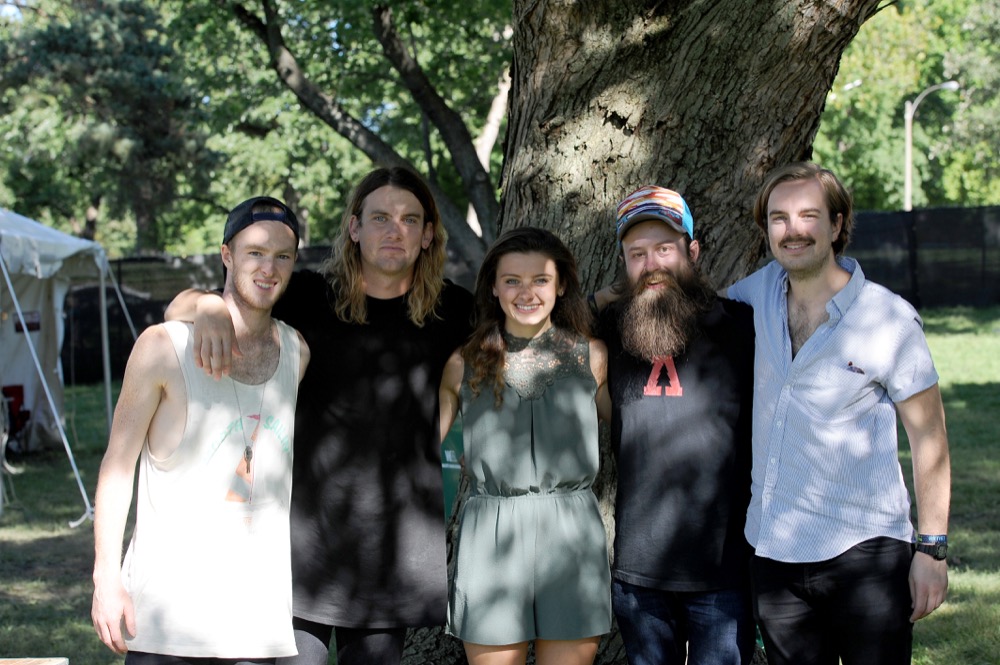
2016 has already been a big year for the musical group iLLPHONiCS, a hip-hop fusion group hailing from mere minutes away from Washington University’s Danforth Campus. They recently both celebrated their 10-year anniversary and the release of their new album called “Gone With The Trends.” The group, which was featured at LouFest this year, features Larry Morris as the emcee, Keith Moore on keyboard and vocals, Chaz Brew on drums and vocals, Kevin Koehler on guitar and vocals and Simon Chervitz on bass.
An alum of festivals like South by Southwest and RedGorilla, in addition to Wash. U. venues, iLLPHONiCS has opened for artists like the Roots, Lupe Fiasco and Wiz Khalifa.
I recently talked with Larry Morris about iLLPHONiCS’ influences, history, music and more.
SL:
iLLPHONiCS first formed in 2006. How did all the members meet each other?
LM:
Most of us actually are from the suburb next to Wash. U. called University City. The keyboardist and I have known each other since about the sixth grade; the drummer and I are cousins via my dad’s side and his mother’s side. They were playing in jazz band, and [Moore] and I were more into hip-hop music. He played keyboard in the cafeteria, and I would beat on the table and rap. Then we got to Webster University—I did—and when I got there I met the guitarist Kevin [Koehler]. He was coming there to start his college journey.He went to study abroad for a year and came back. [He] asked me to do some music with him because we were both in the audio program, and at that time I was already working with my friend Keith [Moore], the guy who plays keys in the band, so I kind of brought it together. And we decided that we would put the two projects together, and that was the beginning of iLLPHONiCS, but it was originally called “Fallout and Friends.” We were playing on the campus of Webster University during Fridays on an open mike that I helped co-host, and we kind of got a reputation. And from there, they asked us to open for Lupe Fiasco at Webster. And after we opened for Lupe Fiasco we changed our name to iLLPHONiCS because we wanted something more cohesive that represented where the group was going at the time.
SL:
Where did the name iLLPHONiCS come from?
LM:
We came up with it just sitting around one day, practicing on the campus of Webster. We wanted to change our name because we wanted something that sounded a little more professional, and we thought that Fallout and Friends sounded like a PBS special. So, we didn’t want to do that [any] more. And we just wanted to have ill lyrics and ill sounds, and phonics came to mind, and iLLPHONiCS was the one name we could agree on, so we rode with that.
SL:
So then, when you all got together, what did you want iLLPHONiCS to be?
LM:
Initially, we didn’t really have an idea of what we wanted it to be. We just were more about playing music that felt right to us and because we play music that felt right to us, I think the sound kind of came out of it. Two of the members—well,[Chervitz] is jazz straight up and down, [Brew] is jazz, but he comes from a gospel background. He plays not only the drums—he also plays the organ. He was a choir director. Keith comes from a [rhythm and blues] and jazz background. Me, I come from a hip-hop background. My father was into jazz, so I love jazz. My mother was into the Motown sound, so I love that. And [Koehler] came from a rock, like Nirvana and all that type of stuff, and jazz background. He was going to Webster for audio, and he also did some jazz classes as well. So, we all knew, when we got together, that we wanted to make a sound that would represent the music that we liked to listen to. And because we liked to listen to these different songs, we didn’t want to pigeonhole ourselves into just a straight hip-hop sound. We wanted to blend it and mix it, and, in the process, we got so much chemistry with each other that it worked out really well.
SL:
How did each of your individual music tastes shape how iLLPHONiCS made music?
LM:
I think each one’s individual music tastes shaped iLLPHONiCS because we were not focused on the sound being hip-hop. We were more focused on the songs that we wrote being what they were. For example, if [Koehler] brought a blues lick to the band and was like “I like this blues feel,” it wasn’t “How can we turn this into a hip-hop song”—it was more of “Let’s work with this sound.” And, me as an emcee, I’m going to figure out a way to make it work rhyme-wise. It’s never been one of those things where we have to be a hip-hop group. It was “If we like what we hear, and we feel what we hear, I’m going to find a way to make it work rap-wise.” And it works. Once a person has an idea in the group, and we bring it to the table, it becomes property of the group. If we love it, we take it, we fix it and everybody has the right to give their input on it. And if we don’t like it, you take it away, you work on it and you bring it back. So I think that plays a big role in how we function because it is not one of those things where one person does everything—I mean, I do a lot of writing, but the guys in the group—they come up with the hooks. Sometimes I come up with the hooks; sometimes they have an idea for song concepts—it’s all interchangeable.
SL:
So then creating songs, coming up with ideas and writing is all pretty communal then?
LM:
Yeah, it’s all very communal. We have a philosophy that if you’re writing in our group, and you can’t accept people putting their hands on your project, then don’t bring it, because that’s what’s going to happen. It’s just the nature of the beat—sometimes you get lucky and most of your idea comes out the way that you wanted it, but a lot of times you’re going to have to make concessions in some areas. But I think that’s what makes these songs great because we learn how to do that very well.
SL:
What artists were the biggest inspiration to you and the rest of the group?
LM:
Oh, man. It varies. With [Chervitz], I’ve been on the road with him a lot, driving, and he listens to a lot of Bela Fleck and the Flecktones. He’s a big Marcus Miller fan. [Brew], our drummer—he listens to a lot of gospel. But he also listens to a lot of street hip-hop; his library on the up and coming rappers that are from the streets. It’s pretty intense, [and] he listens to a lot of other music, too. [Moore] is very hip to a lot of up and coming hip-hop too. [Moore] and my friend Phil, who’s done photography for us—they were on Kendrick Lamar before a lot of people were. [Moore] listens to a lot of soulful rhythm and blues; he’s always been into R&B, especially a particular era (the early ‘80s to the early ‘90s). He’s really on it, but he listens to a lot of other music, a lot of jazz—I know that he was really into Ramsey Lewis for a while. [Koehler] is the guy who knows everything as far as indie rock; he works at Vintage Vinyl, too, so he knows a lot about music in general, but a lot of bands that are coming up he knows a lot about them. I know he’s a big Jeff Buckley fan; I listened to some of that with him on the road, and that’s been pretty cool. Me, as an emcee, I listen to a lot of hip-hop, but I also listen to a lot of jazz. I’m a big Pat Metheny fan; I’m actually probably going to see him when he comes to St. Louis at the end of the month. I just fell into Logic recently. I really like him, and I got a chance to see him. So, we listen to a lot of different music, and it changes—like there’s no set genre or person we listen to. One day, I might be listening to something more street, and [Brew] might be listening to something more jazzy, it’s so collective and it changes so much.
SL:
So you all introduce each other to different music then?
LM:
All the time—I mean, all the time.
SL:
You guys recently released a new album. What was the inspiration for that one?
LM:
“Gone With The Trends” was inspired by the fact that we’ve been together as a band for 10 years, and we’ve noticed that, over the years, a lot of artists get caught up with the trends to really capture certain demographics and certain age groups. And what happens is, when the trends dissolve, those artists tend to dissolve too. And for us we have a saying: “No shortcuts, no cheat codes.” I mention that in the song “Liquid Spaceships” because we work very hard to create a sound that’s our own, and we’re not really caught up with trying to fit in or fit for a certain group. We tell people, “If you like good music, come check us out, and we guarantee that you will walk away and you will say that you heard something that’s great.” “Gone With The Trends” goes with our mindset that we’re not going to follow trends; we’re going to create music that fits who we are, and we’re going to put it out there and remain true to who we are as artists. That doesn’t mean we don’t grow, and we don’t change our sound, but it means that you won’t ever pick up and iLLPHONiCS album and feel like you can tell like they’re trying to fit in. The flipside of that is we are very down to earth guys—we’re very respectable individuals. We don’t believe in trying to sell out to appease people and whatnot. That doesn’t mean we haven’t had to compromise and figure out ways to be creative, but, at the end of the day, we come from backgrounds where being real to your friends and family and being a true individual to yourself is more important than getting caught up in what’s popular now and trying to impress a bunch of people. Because when you walk off the stage, we see a lot of artists that go onstage with this image, but when they get off they have to fake it all the time, but with us what you see is what you get. you’re talking to me right now. and this is the kind of person that I am. and that’s what the whole “Gone With The Trends” thing came from.
SL:
iLLPHONiCS has been together for 10 years, and this is your fifth album, so how has the group evolved since the release of your first album?
LM:
I think the biggest evolution for us is in our songwriting. Now, it’s one of those things where it’s very communal, and you’re now starting to see more talents of the group on our album. On the first track, the piano player is actually [Brew], the drummer. We move around on the different instruments. We’re more experimental. There’s a lot more singing; we’ve added Lena Charlie—she’s now in the fold of the group. She was always a backup singer, but now we’ve been putting her on the stage up front with us because she holds down the third level of our vocals. Qe’re just expanding right now, taking our sound and stretching it out, and showing people that we can do a lot more than what they have seen in previous albums.
SL:
Does “Gone With The Trends” have a story that you want to tell?
LM:
Yeah, I mean, there’s a different story for every song. “Everything (Jammin’ for You)”—that’s a dedication to fans. It’s showing respect to the people who have stuck with us. And that’s one of the reasons that we’re still here.
“96to99” talks about my formative years coming into hip-hop, [it’s about] how I’ve always had love and respect for it and how I came into it and how we, as a group, came into hip-hop. “Sweet Missouri” is a play on living in the state of Missouri—how it can be very torturous to live here, but, at the same time, we love it here because it is so beautiful in so many ways, so you’re torn between being here and being gone.
“The Brown Frequency”—I speak on police brutality. That’s something that’s very real to me. I have friends that have been involved with the Black Lives Matter movement and the Ferguson movement. [On] “What D’ya Like,” I’m questioning and I’m talking about vice and addiction, and do you know when to draw the line? There’s a lot of different stories within the songs, but we didn’t want to write them to the point where it’s so powerful and overbearing that you feel like we were preaching at you. We more we wanted to take you along for the ride and give you our thoughts on certain things.
SL:
iLLPHONiCS is based in St. Louis. How has the city affected the band?
LM:
Well St. Louis is one of the toughest markets to play in, we’ve played in Los Angeles, we’ve played in Indianapolis; we’ve played in Chicago; we’ve played in Austin. We’ve played in a lot of different cities, and St. Louis is definitely a “show me” city. With St. Louis, people, if they don’t like it, they will dismiss it, so you really have to earn the respect of people here, earn their ear and attention and dollars. It’s impacted us because we’ve always had to be on our A game. Plus, we’re in a city where there’s a lot of different good artists, a lot of different great musicians that do what they do, and for us we’ve always wanted to earn our respect, every show, every album, everything we do. So St. Louis prepared us to be on the national level because we’re so used to having to prove ourselves. I think that’s the beauty in St. Louis because you have to bring your A game. It’s one of those cities where you just can’t get up onstage and expect people to like you or show up to your show. You have to earn it.
SL:
What’s your favorite spot to play in St. Louis?
LM:
I liked Off Broadway when we played there. The Pageant—I’m trying to get us back there—the Pageant is always fun to play at. It varies.
SL:
You guys are going to be playing LouFest this year, what are you most excited for?
LM:
I’m just excited to be playing at LouFest. We’ve been wanting to play LouFest since it first started—they could have told us to play in the parking lot for the guests coming in, and we would have said yes. I’ve been at LouFest before. I got the chance to see OutKast, one of my favorite groups ever. It was one of those situations where, being able to play in a place where so many different people from St. Louis go to get into music—I know one of the colleges has students that hang out at LouFest. It’s a good platform to play and show off your music and get that St. Louis vibe.
SL:
You guys have played a lot of other music festivals. Which one was your favorite?
LM:
My favorite was the first time we played RedGorilla in Austin, [Tx.], that was a few years ago…We played one of our songs that gets the crowd going, and you could see people on the street stopping and coming in to hear us play. And that was awesome because Austin is like a music mecca. And so, to have so many people rocking with us—the venue was packed to the back. It was great; that was a memorable moment.
SL:
What has been your favorite thing about being in iLLPHONiCS?
LM:
The camaraderie. I’m an only child, so everyone in the group is like a brother, and [Charlie]—she’s a sister now. We fight, [and] we interact like family members. The arguments we have are the funniest; we do have very serious moments where we go at each other, but we learn how to get past it and keep moving. It’s amazing to see people around you grow over the years not only as artists but as people. That’s been really awesome, just seeing things come to fruition as a group, and we couldn’t have had imagined when we were doing this for 15 minutes at an open mic 10 years ago.
SL:
What experiences have you and the rest of the group drawn on when writing music?
LM:
We’ve drawn on a few. We had this terrible manager who was stealing money from us when we were three or four years in. We look at a lot of the world events around us. Love—a lot of us have been in ups and downs in relationships, and we draw on that. When we write feel-good music, [it’s] how we want to feel when we go out and kick it. It varies. The subjects pop up that show that we’re starting to get older; “96to99” is about nostalgia. We’ve seen people’s fascination with the ‘90s, and we grew up in the ‘90s, and so, for us, that’s pretty cool because it takes us back to a time when we were younger and the world wasn’t seemingly as crazy.
SL:
I’ve noticed a lot of elements of ‘90s rap in your music.
LM:
Oh, yeah. We’re definitely influenced by that. I mean, I came of age when Tupac [Shakur] was at his peak, Biggie [Smalls] was there, Big L, Wu-Tang [Clan], 8Ball & MJG, OutKast—all that stuff influences us. We love that stuff. And we’re not one of those groups that’s like “We hate new rappers.” But it’s one of those things where we know what influenced us. Some of it I can’t rock with, but a lot people can’t rock with the stuff we like, too.
SL:
When you guys all got together, what message did you want to send?
LM:
For us, we didn’t really have an objective. It was more we just really wanted to make really good music. I know where I stand as an emcee; I don’t really talk about street stuff like that because, even though I have friends and family that are from the streets and I have grown up in areas that aren’t too easy to live in, I was not a “street cat.” And just following the codes of hip-hop. you didn’t talk about things you didn’t live, so I don’t do that. But as far as it goes with the music and whatnot, we just always wanted people to enjoy our music and have a good time. It’s not party music, but it’s music that when you listen to, hopefully you feel like “This is cool,” so that’s what it turned into. We just want to make sure that people remember it; people listen to it, and they remember that hook, remember that feeling.
SL:
You guys have been together for 10 years; what are the big things that you have learned in that time?
LM:
The big things we have learned—oh, there are many. One, you have to learn to do everything for yourself. I think a lot of folks are expecting for someone to come and help them. And it typically doesn’t work that way. We’ve learned patience, patience and paying dues. Especially now, we’re around a lot of younger guys that get a lot of quick success and have a bunch of video views, and then when everything kind of drops down, they don’t know what to do. To really build up a true fan base of followers, it takes time, and you really have to keep working at it. And the third thing is understanding the business and understanding the logistics of how everything moves because if you can understand that you can go far, especially because record labels aren’t really signing anybody—you will be able to create your own way, and your own sources of revenue. And I guess a fourth one is love. You have to have love for this, and you have to have love for other individuals. Because we’re all human beings, and, sure, some days you don’t feel like being dealt with—people get on your nerves. And imagine having six people in a room once a week—at some points it’s more, on the road for three or four days or for a weekend—and people are going through problems at home, and they might not feel well. And you have to learn to have a certain love and respect for individuals to make it through. Those things have been major and why we’ve been able to go so long.
SL:
How has being together for so long affected the band?
LM:
We make fun of each other; we know the quirks of each other. We know how we operate and how we move, so you are less surprised about the decisions or the things that people do, and that’s not a bad thing. They know that I can be really high-strung and very “let’s move and let’s get this done,” but they respect that because I do get a lot of stuff done. [Moore], he’s not going to say as much, but when he speaks he’s very to the point and very on point so you have to listen to him.
SL:
What has been your favorite act to open for?
LM:
For me, my favorite act to open for will always be the Roots because you aspire to that level of greatness. The Roots are the reigning kings of live hip-hop in the world; they are undisputed. There are a few great hip-hop bands in the country that we’ve played with that are very good, too. It’s one of those things where you want to have a career like theirs—you get to tour, you get to hang out on the Jimmy Fallon show and play. Questlove does all the most awesome stuff; he gets to do interviews and documentaries. I think that they are the crowning jewel of live hip-hop, and it’s well deserved. So, getting the chance to be in front of fans of theirs and show them that we are really good too was really, really cool.
Stay in Touch!
Get the latest and top news from StudentLife delivered to your inbox