Music
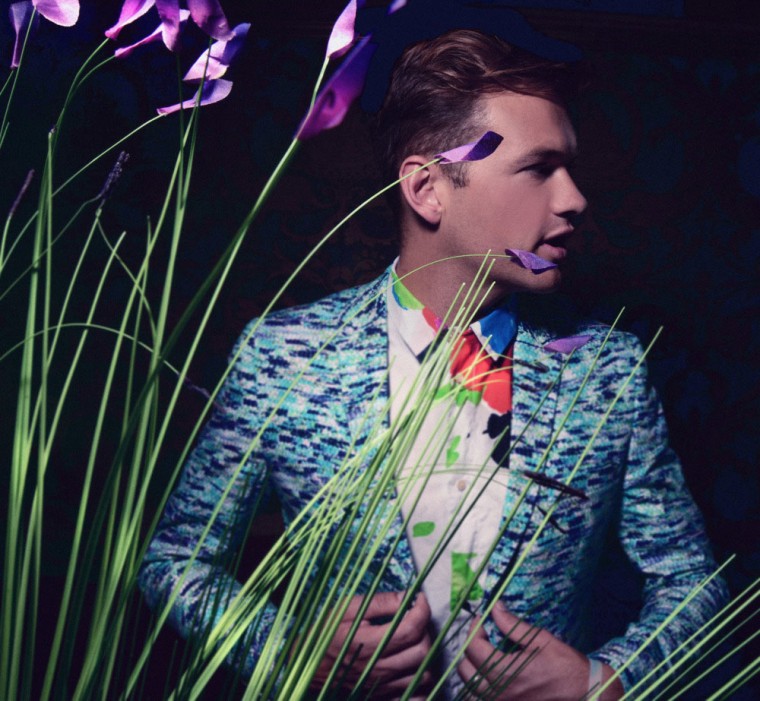
St. Lucia for all to see: A Q&A with frontman Jean-Philip Grobler
Just as lively and uplifting in conversation as they are on stage, indie pop band St. Lucia invited Cadenza to get the inside scoop on their backgrounds, music and lifestyle prior to their stepping foot on the LouFest stage this weekend. I had the chance to talk with band member Jean-Philip Grobler, who shared an honest and heartfelt recount of his start in the music world and the value that music holds firm in his life with me. Born in South Africa during the apartheid, traveling to Europe for school and finally going New York to begin his exponentially growing career, Grobler carries an outlook on life that can often be hard to come by, especially in a business so physically, mentally and socially demanding. Showing through his words an earnest appreciation for the unpredictability of life and a commitment to maintaining a positive attitude even outside of the upbeat tempo of his works, Grobler models a balanced lifestyle that many people strive for and makes music that you certainly can listen to again and again….and again. You do not want to miss his show, which is sure to be a highlight of the LouFest weekend.
Student Life:
You started your music life in the Drakensberg Boys’ Choir School of South Africa during a very influential time period. How did this experience influence your journey through the music business?
Jean-Philip Grobler:
I feel like I could talk about this for hours, but to think of a couple of things, it was such an incredible way to come into the world of music, where you’re learning music theory at such a high level and discipline. I think that’s really the key word: disciplined. The experience taught me to be disciplined in my approach to music. Even though I still don’t work with the mindset of, “Alright, I’m going to sit down and write a song now,” I try to keep an open approach to writing, but I am disciplined in the sense that I work a lot. I’m serious about my career, and in order to succeed, I remember the value of taking care of myself. So, I believe it taught me a lot about pacing myself from an early age.
SL:
You’ve traveled from South Africa, to England for school and to New York to begin your career as St. Lucia. What was it like transitioning between the music scenes of all those places?
JPG:
All of the music scenes were very, very different. When I was in South Africa, while I was in England and many of the early years that I was here in the States, I was still developing a lot as a musician and who I feel I am as an artist. In South Africa, while I was growing up and just starting to become involved in the music scene, there weren’t the obvious blogs and resources right at your fingertips that could tell you what the coolest tracks were. So, for me, moving to England was a big adjustment, based on how new and cutting edge everything was [that was] coming out of there at the time. Moving to the states really put me into the middle of the new indie movement, bringing on something new all its own as well.
SL:
Having grown up during the time of the apartheid, how do you feel this experience influenced you and the music you create?
JPG:
It was really fascinating growing up in a country where all of that cultural and racial tension was happening, and I feel like, in a way, it’s similar to growing up in the States, except that it was still institutionalized racism. And I never really understood it and never did entirely, but I’ve started to understand it a lot more, going back to visit every now and again. And I think what was so cool about that time and the period when Nelson Mandela became president was that it was a time of great hope and great unity between cultures. Even though it wasn’t all perfect, there was this feeling that Africa really could be this rainbow nation, where all of the races and all of the people got along. And it does definitely make for a lot of great songwriting material, as well.
SL:
I love that you hold to this optimistic attitude: It’s something that many people can struggle with while hashing out the little life problems that can arise. Can you speak at all to how you developed this outlook and what it entails?
JPG:
I went through several years of my life when I was very depressed. That was due partly to the new culture shock of it all, and partly the often overwhelming process of learning to be an adult. And I don’t know why, but I just started feeling really good about the world when I began to accept that we have a choice. Reality can be what you want it to be. You can have a very nihilistic point of view, or you can hold onto the idea that everything has a purpose. I hold to the idea that, in life, there are things we cannot understand, and that in itself fills my life with a lot of meaning. Even the negative things that come my way can speak to the person I am and [to] what will be. And I don’t believe that people thinking you are “uncool” for keeping an optimistic outlook should ever sway you and what you believe.
SL:
Looking at your two released albums, “When the Night” and “Matter,” there were three years in between their releases. What was the writing process like for each of these albums, and do you feel [like] the time in between both albums attributed to any changes between them?
JPG:
There was a change, but essentially it was the same writing process. I try to write from an intuitive place and not force myself to write when I don’t want to but rather let the ideas come to me. The first album was made in the first studio I had, and it was before we had really had any success or people knew who we were. We could just go in and flush out ideas, and I had access to all of my instruments for inspirations and experimentation, here and there. But then, with the second album, I no longer had that studio; we started touring a lot, and I couldn’t be in any studio at all, basically. So, it was at that moment that I realized I could either embrace this idea of not writing in a studio or wait five years to write my next album. I decided to learn how to write on the road and really let this experience assist my creativity instead of [hurting] it. A lot of people feel like they have limited creativity, unless they are in this perfectly ideal “piano in a sunlit room” situation. And instead I was put in these situations, where I’d be in a van or sitting in an airport on my laptop, and I found that that became a really inspiring way to write because I think, strangely enough, limitations can be really good for a person. So, that’s the difference with the second album. It was really written in many unideal situations, but that turned out to still be pretty effective.
SL:
How did you choose your name, “St. Lucia”?
JPG:
When I was looking for a name, I got to this point where I just couldn’t decide on a name for the life of me. So, one day, I just pulled out a map of South Africa, and I took a pen, and I closed my eyes and I put the pen down on the map, and on the fifth try the pen landed on St. Lucia. When I hit that, the aesthetic of the band felt cemented. But also, when you think of St. Lucia—whether it be the location in South Africa or that in the Caribbean—they’re all exotic places that you can have nostalgic memories about and [that] carry this tropical vibe, and at the time, the music I was making really had that feeling. And I think it still does have that sort of escapist feeling, and it follows this idea that our songs might serve as a music vacation or source of temporary escape. I try to make sure my music offers similar feelings to the music of my musical inspirations, and that is primarily this feeling of completely unbridled joy.
SL:
What does music mean to you?
JPG:
Music to me is almost everything. My musical journey is intrinsically tied to my development as a human being. My moods and how I go about life are just so inner-connected to the music I’m making at that moment in time. And I think what’s so beautiful about music is [that] you can hear one chord, and it will make you feel a certain way. Nostalgic, joyful, fearful—there is something so mystical about it.
Stay in Touch!
Get the latest and top news from StudentLife delivered to your inbox