News
How WashU first-years are feeling about the upcoming election
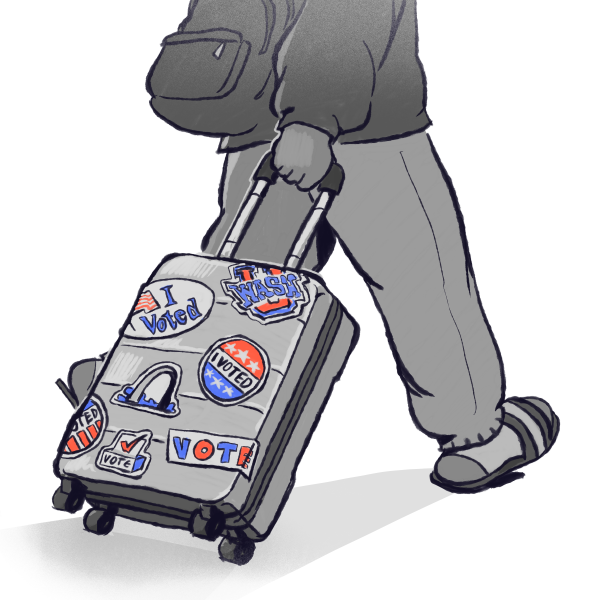
On Nov. 3, Election Day, many WashU students will go to the polls to vote, possibly at the on-campus polling stations. Some students will vote in their districts back home while others will vote in the Missouri general election. Student Life checked in with first-years to see how they are feeling about their first election as college students.
For those who do vote in Missouri, there will be several issues on the ballot.
The issue that has received statewide and nationwide attention has been Proposition A, which asks voters whether to adopt a new congressional district map in Missouri, which would allot Republicans an additional seat in the U.S. House of Representatives. Other ballot measures include Amendment 3, a proposal to the Missouri Constitution, which would limit the number of cases where abortions are legal, as well as prohibit gender-affirming care for minors. In addition, Amendment 7 would establish a permanent state-managed public endowment fund, with the eventual goal of eliminating the state income tax. Amendment 6 would enshrine the initiative petition process in the state constitution, allowing Missouri residents to place proposed laws and amendments directly on the ballot through a petition process. This process, known as a veto referendum, is how Missourians were able to add Proposition A to this midterm’s ballot. After the law was initially passed, citizens led by the group People Not Politicians accrued 300,000 signatures in order to challenge the map and put Proposition A on the ballot. Lastly, Amendment 8 would require the election of county sheriffs in most Missouri counties and limit the removal of sheriffs from office. There will also be several state and house legislative races and a race for St. Louis’ congressional district seat.
Some first-years said they believed this election in particular was incredibly important. First-year Levi Chabon said it was “crucial for the future of American politics.”
“I think everything rides on this election because everything rode on two years ago, but this is so critical for not letting what I think is [the] destruction of our country to continue happening,” Chabon said.
Additionally, several students expressed concern that the WashU administration does not reflect the broader student body’s values.
“I think that WashU, especially in a time where the current Trump administration has been very anti-academic academia and anti-intellectualism, … should take a little bit of a firmer stance against the current administration,” first-year Adam Dunbar said.
Chabon said he believed many campus organizations like WashU Votes made it easy to be engaged in politics. He said he paid some attention to political issues himself.
“I am aware of what’s happening to some degree. Could I be more involved? Yes, 100%, but I just try to keep up and be aware rather than be engaged.”
Other first-years, like Ethan Yang, felt that political engagement on campus was low.
“I don’t think students talk that much about who is getting elected … although I know that it’s emphasized, I feel like [there isn’t] huge personal engagement. I guess it’s more about ignorance,” Yang said.
When asked about redistricting specifically, some students, like first-year Jonah Velnosky, expressed skepticism about the proposition.
“I think it’s a problem on both sides. But I think like the party most responsible for gerrymandering has been the Republicans. The Democrats have just been doing it out of response to try to keep the playing field equal, but I definitely think that both sides are to blame for like the lack of representative districts in the U.S.”
Velnosky felt that it was important that young people pay attention to politics.
“Getting the thought in the younger generation’s head that being politically engaged is really important to the future of our democracy,” Velnosky said.
Stay in Touch!
Get the latest and top news from StudentLife delivered to your inbox