News
Faculty committee to provide non-binding recommendation on response to McMahon letter
A faculty committee will provide a non-binding recommendation on how WashU should respond to an Aug. 3 letter from the Department of Education (DOE) calling on universities to reform by the end of 2026, the University announced Wednesday.
The committee will provide its recommendations by Nov. 1 to the chancellor and the board of trustees, who will make the final decision. The committee is composed of tenure-track faculty and chaired by Tonya Edmond, a professor of social work and the president of the Faculty Senate Council, and Provost Mark D. West. The two also selected the committee members.
Edmond acknowledged that the committee cannot force the administration to respond a certain way, but she believes their recommendation would still carry weight.
“In my experience, the Chancellor and the Board are genuinely interested in faculty perspectives,” she wrote in a statement to Student Life. “Ultimately the DOE response will come from the Chancellor and the Board, but I believe they will take our recommendations seriously.”
The committee may choose to publish their recommendation after they deliver it to the chancellor.
The Department of Education letter calls on universities to explain how they will reform in several areas, including “merit in admissions,” “free speech,” “intellectual pluralism,” and “prioritizing American interests” by the end of the year. It also specifically praises the WashU- and Vanderbilt-commissioned report on the politicization of humanities scholarship.
In response to the committee announcement, the WashU chapter of the American Association of University Professors (AAUP) released a statement Wednesday evening arguing that WashU should not respond to the letter.
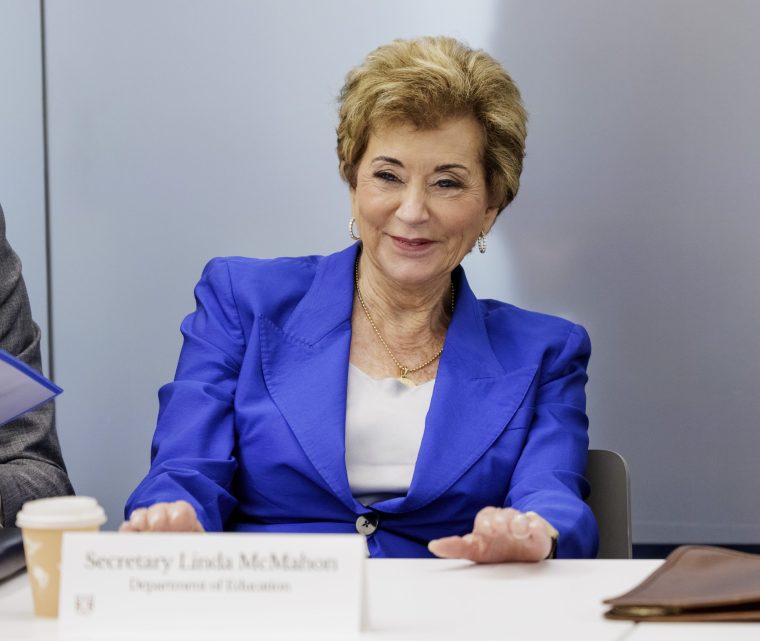
“The best response to [Education Secretary] McMahon’s ‘call to action’ is no response at all,” they wrote. “Her demands are either trivial or authoritarian. If they are trivial, no response is necessary. If they are authoritarian, any response amounts to collaboration with a malign government effort to bend higher education to its preferred ideology.”
“Any response to the McMahon letter must not give an inch to tyranny,” they added.
The AAUP also called on faculty and students to email the committee to express their views. They offered to compile a public online archive of such opinions, with or without attribution.
“The WashU community must make the most it can of the opportunity to register our views on the public record,” they wrote.
Edmond believes the letter’s questions presented a “partisan framing” and wrote that the committee would engage in a larger conversation about higher education.
“Accepting the premises and responding as a form of compliance would be in my opinion a mistake and a missed opportunity to engage in a more substantive conversation about the mission and purpose of the university,” she wrote.
“We can and should be engaged in meaningful discourse around ways to increase trust in higher education and our response can contribute to that national conversation,” she added.
When asked how the recommendation would be used, Kedra Tolson, the associate vice chancellor for University communications, pointed to the article in The Record about the topic.
The members of the committee are Heather Corcoran, professor of art; Adrienne Davis, professor of law; Gerald Early, professor of English and African & African American studies; Marcus Foston, professor of energy, environmental & chemical engineering; Andrew Knight, professor of organizational behavior; Dwight McBride, professor of African & African American studies; Steve Mennerick, professor of psychiatry and neuroscience; Cynthia Rogers, professor of psychiatry and public health; and Abram Van Engen, professor of English.
Stay in Touch!
Get the latest and top news from StudentLife delivered to your inbox